From Toynbee to TELCO via Chicago.

The evolution of responses to urban poverty and inequality.

Part 1. From settlement to social activism

Living and working in East London, I am interested in how our part of the city has been shaped by its past, how today’s inequality and social relations have grown from yesterday’s and how our history is intimately connected with that of other parts of the world. My interest also stems from having worked with The East London Citizens Organisation (TELCO) while at Tower Hamlets College in the late 1990’s and again more recently with London Citizens and Newham Citizens in Newham.

In early 2009, we ran an ‘Obama Day’ at Newham Sixth Form College (NewVIc) to celebrate the inauguration of Barack Obama as US president. I gave a short presentation to students on ‘Barack Obama – community organiser’ making the links between the East London settlement movement in the 19th century and the development of community organising in Chicago in the 20th century and back to London again via London Citizens.

The settlement movement in East London has played an important role in the development of social action to raise and address issues of poverty and inequality. This has been enriched by a transatlantic dialogue with similar settlements in the United States and both moved well beyond their paternalist and philanthropic roots.

We can trace the development of community action and community organising in East London from the university settlements created in the late 19th century via the urban settlement houses in the US which they inspired, back to East London with the community organising of (TELCO), now part of London Citizens.

Any historical account is partial and selective and this particular one is a narrative which links apparently contrasting responses to social inequality; following the thread from the 19th century through to the 21st.

I am aware that both the settlement movement and community organising have sometimes been critiqued as inadequate or apolitical responses to inequality, addressing symptoms rather than causes. Here I am taking a broad historical overview and touching on the class, gender and power relations which come into play when the better off choose to help the worse off.

This post sets the context and introduces the main characters and organisations. In the second post, I give a chronology of the main developments and some of the debates. I also look at the role of education and educational institutions in mapping and studying poverty, supporting, empowering and bettering people, promoting social change and social mobility and I suggest that a public education system which tries to address the needs of its local community could contribute to genuine urban and civic renewal in the 21st century.

Context:

The starting point is the desperate poverty in London and Chicago in the late 19th century; these two major industrial and trading cities both experienced rapid economic and social change leading to a massive concentration of both wealth and poverty, overcrowded, insanitary housing conditions, exploitation, malnutrition, poor health and low life expectancy.

The high levels of poverty in parts of both cities increased the cultural and geographical distance between people of different classes. The settlement movement can be seen as an early effort to bridge the social chasm between rich and poor, building on the philanthropic traditions of ‘visiting’ and charity work. For the well-to-do volunteers, this ‘slumming’ or ‘poverty tourism’ could also be dangerous and regarded as transgressive and subversive of the established order.

Charity and philanthropy are based on an asymmetry of power and privilege, they may also have religious ‘missionary’ roots, but they also involve compassion and genuine feelings of solidarity, often expressed in gendered terms as sisterhood / brotherhood or sometimes as ‘fellowship’.  Women in 19th century England had little power and their desire to make a difference to others were seen by many as undermining or threatening the very unequal ‘givens’ of Victorian society – the status quo in terms of women’s roles, family structure and the bigger social structure. The settlement story is often one of ‘new women’, often single, finding ways to respond to social inequality and testing the limits of the social order.

Key people and organisations:

Some of the key figures in the lineage are Samuel Barnett (1844-1913) and Henrietta Barnett (1851-1936), Jane Addams (1860-1935), Saul Alinsky (1909-1972). Other characters include: Charles Booth (1840-1916), Rebecca Cheetham (1852-1939), George Lansbury (1859-1940), Beatrice Webb (1859-1943), William Beveridge (1879-1963), Clement Attlee (1883-1967) and Barack Obama (b. 1961).

Rather than a sharp change from paternalism and charity to egalitarianism and campaigning, this is a story of a progression from philanthropy to solidarity, from the Barnetts at Toynbee Hall in Whitechapel via Jane Addams at Hull House, Chicago, Saul Alinsky’s Industrial Areas Foundation (IAF) in the US and back to Britain with Citizens UK.
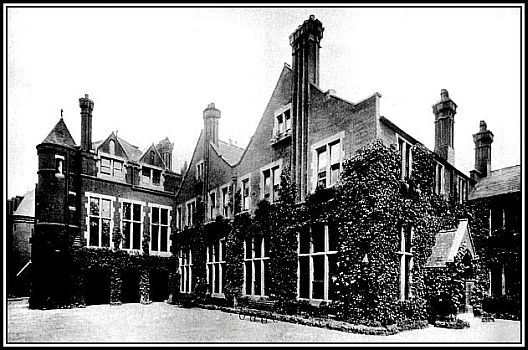
The aims of Toynbee Hall were described by Henrietta Barnett as: To learn as much as to teach; to receive as much as to give.
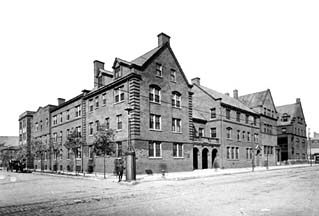
The aims of Hull House were: to provide a center for a high civic and social life; to institute and maintain educational and philanthropic enterprises and investigate and improve the conditions in the industrial districts of Chicago. Jane Addams advocated close co-operation with the neighbourhood people, scientific study of the causes of poverty and persistent pressure for reform.

Saul Alinsky’s Industrial Areas Foundation sees community organising as a power struggle to gain rights for marginalised communities.

Citizens UK organises communities to act together for power, social justice and the common good…We develop the leadership capacity of our members so they can hold politicians and other decision-makers to account on the issues that matter to them…Community organising is democracy in action: winning victories that change lives and transform communities.

This is the first of 2 posts based on a talk given to the East London History Workshop on 19th January 2017. The second is: From slumming to solidarity

See also:

Barack Obama community organiser

Jane Addams at Toynbee Hall

Women and the Settlement Movement  by Katharine Bentley Beauman (Radcliffe Press, 1996)

Slumming – Sexual and Social Politics in Victorian London by Seth Koven (Princeton, 2006)
Posted in History | Tagged , , , , , , , , , , , , , , | Leave a comment

More fictional dystopias

Reading Dystopias offered an introduction to the genre of dystopian fiction through 4 classic dystopian novels. Here are four more which are also well worth reading.

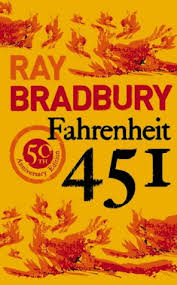
Fahrenheit 451 by Ray Bradbury (1953) [211 pages]

Fahrenheit 451: The temperature at which book-paper catches fire and burns.

It was a pleasure to burn.

It was a special pleasure to see things eaten, to see things blackened and changed. With the brass nozzle in his fists, with this great python spitting its venomous kerosene upon the world, the blood pounded in his head, and his hands were the hands of some amazing conductor playing all the symphonies of blazing and burning to bring down the tatters and charcoal ruins of history.

Guy Montag’s job is to burn books. He lives in a world where the word ‘intellectual’ is an insult and printed books are illegal. People are kept under control in ways which give them a sense of motion without moving, through mindless television programming and an education which promotes unquestioning obedience but leads to violent behaviour. Like everyone else, Montag knows that challenging the status-quo is a dangerous thing to do.

When Montag starts to question the foundations of his world he gradually finds out that memory and literature are still being kept alive by a minority of exiled book-lovers who have memorized entire books in preparation for a time when society is ready to rediscover them. This offers the hope that human inquiry and creativity could rebuild a new civilization.

The Handmaid’s Tale by Margaret Atwood (1985) [307 pages]

We slept in what had once been a gymnasium. The floor was of varnished wood, with stripes and circles painted in it, for the games that were formerly played there; the hoops for the basketball nets were still in place, though the nets were gone. A balcony ran round the room, for the spectators, and I thought I could smell, faintly like an afterimage, the pungent scent of sweat, shot through with the sweet taint of chewing gum and perfume from the watching girls, felt-skirted as I knew from pictures, later in mini-skirts, then pants, then in one earring, spiky green-streaked hair.

In March 2017, Margaret Atwood wrote in the New York Times about What The Handmaid’s Tale means in the age of Trump, when “fears and anxieties proliferate and basic civil liberties are seen as endangered, along with many of the rights for women won over the past decades.”

“Having been born in 1939 and come to consciousness during World War II, I knew that established order could vanish overnight. Change could also be as fast as lighting. ‘It can’t happen here’ could not be depended on…One of my rules was that I would not put any events into the book that had not already happened…nor any technology not already available.”

“Under totalitarianisms, or indeed in any sharply hierarchical society, the ruling class monopolizes valuable things, so the elite of the regime arrange to have fertile females assigned to them as Handmaids…The control of women and babies has been a feature of every repressive regime on the planet…Many totalitarianisms have used clothing, both forbidden and enforced, to identify and control people…and many have ruled behind a religious front.”

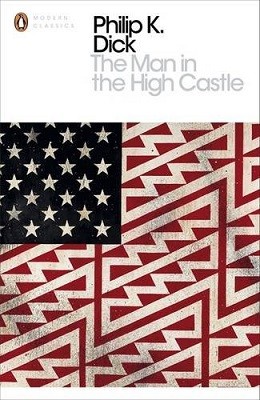
The Man in the High Castle by Philip K. Dick (1962) [249 pages]

For a week Mr R. Childan has been anxiously watching the mail. But the valuable shipment from the Rocky Mountain States had not arrived. As he opened up his store on Friday morning and saw only letters on the floor by the mail slot he thought, I’m going to have an angry customer.

…Then the phone rang. He turned to answer it.

‘Yes’, a familiar voice said to his answer. Childan’s heart sank. This is Mr Tagomi. Did my Civil War recruiting poster arrive yet, sir? Please recall; you promised it sometime last week.’ The fussy, brisk voice, barely polite, barely keeping the code.

The story is set in an alternative 1962, 15 years after the Nazis have defeated the Allies in World War II and the former USA is divided into 3 zones: the Japanese-controlled Pacific States of America (P.S.A.), the Nazi-occupied former Eastern United States and the Rocky Mountain States, a neutral buffer zone between the two.

The Nazis have drained the Mediterranean to make room for farmland, developed and used the Hydrogen bomb, and designed rockets for extremely fast travel across the world as well as space, having colonized the Moon, Venus, and Mars.

Robert Childan owns an antiques shop in San Francisco in the Japanese-occupied P.S.A patronised by the wealthy Japanese upper class prepared to pay high prices for American artifacts. Frank Frink is a Jewish-American former soldier making jewellery for the same market. Frink’s ex-wife, Juliana, is a judo instructor in the neutral Mountain States zone, where she meets a mysterious Italian former soldier, Joe Cinnadella. What political intrigue connects these characters? How are they guided by I Ching divinations? And what is the significance of The Grasshopper Lies Heavy, the banned alternative history of how the Allies won World War II, which nests within this alternative history of how they lost it?

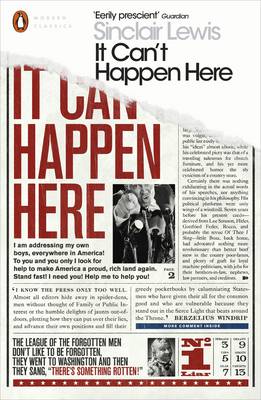
It Can’t Happen Here by Sinclair Lewis (1935) [381 pages]

The handsome dining room of the Hotel Wessex, with its gilded plaster shields and the mural depicting the Green Mountains, had been reserved for the Ladies’ Night Dinner of the Fort Beulah Rotary Club.

…the occasion was essentially serious. All of America was serious now, after the seven years of depression since 1929. It was just long enough after the Great War of 1914-1918 for the young people who had been born in 1917 to be ready to go to college…or to another war, almost any old war that might be handy.

Our hero is newspaper editor Doremus Jessup, who predicts the rise of a ‘real fascist dictatorship’ via the candidacy of the populist Berzelius Windrip for US president. His friends told him: ‘it couldn’t happen here’, but it does.

In It Can’t Happen Here, Sinclair Lewis imagines what it might look like if fascism came to America. At the time it was written, the fear was of a US version of Hitler. The message of this novel is: ‘actually it could happen here’. Americans have recently experienced some aspects of this scenario: the populist candidate blustering through to the presidency with a set of divisive opinions which call into question many accepted truths and norms as well as the rights of many Americans.

The novel has been described as ‘anticipating Trump’ 80 years before his election. As Beverly Gage says in the New York Times in January 2017, the novel’s president Windrip, like Trump, sells himself as the champion of ‘forgotten men’ determined to bring dignity and prosperity back to America’s white working class. Windrip loves big, passionate rallies and rails against the ‘lies’ of the mainstream press. His supporters embrace this message, lashing out against the ‘highbrow’ editors, professors and policy elites. With Windrip’s encouragement, they also take out their frustrations on vulnerable minorities. Windrip’s team believe in propaganda rather than information, which they feel: ‘is not fair to ordinary folks – it just confuses them.’

The read-across from fiction to truth may not be absolute in this case but, as Gage points out, this novel reminds us that at a time of sudden political change and social disorientation it can be hard to know what to do and to do what is right. In the novel, American values of democracy and pluralism prove unable to resist a descent towards the authoritarianism of labour camps, torture chambers and martial law. We must hope that in the real world, the US system would prove more resilient to any such threat.

Questions:

In addition to the 5 questions raised in Reading Dystopias, you might want to consider the following:

  1. What aspects of our own society could be considered as oppressive?
  2. What are the dangers of ‘strong’ leaders?
  3. What limits should there be on the power of elected governments and leaders?
  4. What trends could lead us towards a more authoritarian society?
  5. What stops us from moving towards a totalitarian system?

You might also want to use the 20 questions to ask about a book you’ve read to get you started.

Some key words to describe dystopian regimes:

Absolutist: Holding to absolute beliefs at all times with no compromise.

Authoritarian: Requiring strict obedience to authority rather than individual freedom.

Autocratic: Promoting absolute power, taking no account of different views.

Oppressive: Perpetrating the excessive and harsh treatment of people.

Totalitarian: A system of centralized, dictatorial power requiring total subservience from people.

More fictional dystopias:

Reading dystopias

Top 12 dystopian novels

20 best dystopian novels

Gulliver’s levels

Henry Tam’s ‘Dystopia of the Powerful’ novels


Posted in Culture, Fiction, Learning resources, Politics, Reviews | Tagged , , , , , , , , , , , | Leave a comment

In conversation with Eugenia Cheng

We were delighted to welcome Dr Eugenia Cheng, the author of Beyond Infinity and How to bake pi to Newham Sixth Form College (NewVIc) last week to talk about her passion for maths and her mission to rid the world of ‘maths phobia’. As well as having written these two very accessible books about maths, Eugenia is a senior lecturer in pure maths at Sheffield University and has worked at the universities of Cambridge, Chicago and Nice. Her brilliant YouTube lectures and videos have been viewed over a million times and she is also a concert pianist and an accomplished cook.

The idea of infinity is one of those mind-boggling paradoxes which fascinate people of all ages; a concept which seems to be beyond Maths and beyond comprehension. Eugenia spoke about how we can use the idea of infinity, which is by definition unquantifiable, to help us solve more concrete problems and how, for instance, it was useful in the development of calculus.

Eugenia also spoke about why there are still too few women working in Science, Technology, Engineering and Maths (STEM) fields and how the culture of these disciplines needs to change in order to attract a broader range of people.

Could Eugenia’s infectious enthusiasm and promotion of Maths as both a logical and creative activity help us address the national challenge of supporting those many students who haven’t yet achieved a GCSE grade C by the age of 16 and are struggling with their GCSE Maths retake?

Eugenia herself was not convinced that we should put so much store by this rather arbitrary measure and advocated deeper learning rather than rushed test-preparation. Our audience of students, teachers and parents were certainly persuaded by her account of turning around the perceptions of her Arts students, including many who had initially worn their ‘maths phobia’ as a badge of pride. She described how people can learn to approach maths problems in a range of different ways and overcome their fear of being absolutely wrong and that is when the barriers to understanding start to come down.

We asked those who attended to describe ‘what I like most about maths’ and the range of answers reveals many positive reasons for enjoying the subject:

It makes sense!

It’s a universal language understood by everyone.

Maths is the language of Science, Music, Computing, Engineering …

I couldn’t be a Physicist without it!

Mechanics is my favourite. What I like about it is that we are able to figure out unknown quantities without explicitly measuring them.

The complexity – where everything has its particular place in a complex whole.

The simplicity – finding explanations for complex phenomena.

The indisputable objective beauty in its structure – everything is connected.

It opens up a world of the imagination where any problem can be understood and solved.

The fact that there isn’t only one way to solve a problem and there are different methods to suit everyone.

Getting the answer right!

Solving problems.

Getting stuck!

…and finding a way out.

All of it!

Eugenia’s own description of why she loves maths:

It’s not just about getting to a destination…it’s about the fun, the mental exertion, communing with mathematical nature and seeing the mathematical sights.

This is a long way from the drudgery of being repeatedly asked to solve uninteresting problems, in fact it’s:

…mind-boggling, breathtaking and sometimes unbelievable.

Beyond Infinity is highly recommended for everyone who already loves maths as well as for everyone who doesn’t yet know they love maths.


Posted in Education, NewVIc, Science, Students | Tagged , , , , , , , , , | Leave a comment

A global crisis requires a global politics

A few days ago, on 10 March, Stephen O’Brien, the United Nations Under-Secretary General for Humanitarian Affairs reported to the UN Security Council on the largest humanitarian crisis facing humanity since 1945. Many global challenges vie for our attention, but this one is of such enormity and urgency that it should surely be the headline on every news bulletin and at the top of every media agenda day after day. The question ‘what are we doing about it?’ should surely be the first thing we ask all our leaders at every opportunity…and keep asking until we are confident that everything is being done that can be done.

Reporting on countries facing famine or at risk of famine: Yemen, South Sudan, Somalia, Northern Kenya and North Eastern Nigeria, the Under-Secretary General said:

“We stand at a critical point in history. Already at the beginning of the year we are facing the largest humanitarian crisis since the creation of the United Nations. Now, more than 20 million people across four countries face starvation and famine. Without collective and coordinated global efforts, people will simply starve to death. Many more will suffer and die from disease. Children stunted and out of school. Livelihoods, futures and hope will be lost. Communities’ resilience rapidly wilting away. Development gains reversed. Many will be displaced and will continue to move in search for survival, creating ever more instability across entire regions. The warning call and appeal for action by the Secretary-General can thus not be understated. It was right to take the risk and sound the alarm early, not wait for the pictures of emaciated dying children or the world’s TV screens to mobilise a reaction and the funds.”

He was referring to the fact that in Yemen, 18.8 million need assistance and more than 7 million are hungry and do not know where their next meal will come from. In Kenya, 2.7 million people are now food insecure, a number likely to reach 4 million by April. In South Sudan the man-made famine is worse than it has ever been; over 7.5 million people need assistance, 3.4 million people are displaced and more than 1 million children are estimated to be acutely malnourished across the country; including 270,000 children who face the imminent risk of death should they not be reached in time with assistance and the cholera outbreak that began in June 2016 has spread to more locations. In Somalia, 6.2 million people need humanitarian and protection assistance, including 2.9 million who are at risk of famine and require immediate assistance to save or sustain their lives, close to 1 million children under the age of 5 will be acutely malnourished this year. In the last two months alone, nearly 160,000 people have been displaced due to severe drought conditions, adding to the already 1.1 million people who live in appalling conditions around the country. In North-Eastern Nigeria and the Lake Chad region. 10.7 million people need humanitarian assistance and protection, including 7.1 million people who are severely food insecure.

Much is already being done:

“The UN and humanitarian partners are responding. We have strategic, coordinated and prioritised plans in every country. We have the right leadership and heroic, dedicated teams on the ground. We are working hand-in-hand with development partners to marry the immediate life-saving with longer term sustainable development. We are ready to scale up. This is frankly not the time to ask for more detail or use that postponing phrase, what would you prioritize? Every life on the edge of famine and death is equally worth saving.”

But much more needs to be done, the international community needs:

  1. to tackle the precipitating factors of famine; preserving and restoring normal access to food and ensuring compliance with international humanitarian law.
  2. to provide sufficient and timely financial support, humanitarians can still help to prevent the worst-case scenario. To do this, we require safe, full and unimpeded access to people in need. Parties to the conflict must respect this fundamental tenet of international humanitarian law and those with influence over the parties must exert that influence now.
  3. to stop the fighting. To continue on the path of war and military conquest is to guarantee failure, humiliation and moral turpitude and the responsibility for the millions who face hunger and deprivation on an incalculable scale because of it.

The warning couldn’t be clearer, this is not some unavoidable natural disaster:

“All these countries have one thing in common: conflict. This means we have the possibility to prevent, and end, further misery and suffering. The UN and its partners are ready to scale up. But we need the access and the funds to do more. It is all preventable. It is possible to avert this crisis, to avert these famines, to avert these looming human catastrophes. For 2017, the humanitarian community requires US$ 2.1 billion to reach 12 million people with life-saving assistance and protection in Yemen. Only 6 per cent of that funding has been received thus far.”

“I continue to reiterate the same message: it is only a political solution that will ultimately end human suffering and bring stability to the region…The situation for people in each country is dire and without a major international response, the situation will get worse.”

Whatever else we are, we are citizens of the world. Whatever we may disagree about, we can all see that these human conflicts threaten the survival of 20 million of our fellow human beings and jeopardise our collective security and our common humanity.

Challenges on this scale cannot be addressed by a politics which looks only inwards and puts domestic interests first. To rise to such challenges we need a global politics and global leadership.

The UN has set out the nature of this global crisis very clearly. We now need to respond as global citizens and demand the necessary global action.

See also:

The global economy of care (May 2016)

Instinct, heart and reason – the refugee crisis (August 2016)

Giving peace a voice (August 2015)

Democratic emotions in the face of barbarism (April 2015)


Posted in Politics | Tagged , , , , , , , , , | Leave a comment

Sixth form resolutions for 2017

2017Like its predecessor, this year will no doubt be full of challenges and opportunities for colleges and sixth forms. 16-19 year-olds remain the worst funded full-time students in England while rapid qualification and assessment reform continues to affect almost every course we offer.

On the positive side, the work of the area reviews is coming to a close and both our membership organisations, AoC and SFCA, have confident new voices to advocate for our sector.

A year ago, I made 4 New Year’s wishes. In this age of austerity it seems appropriate to reduce the number to 3, but also to upgrade the wishes to resolutions because we can all play a part in shaping our future.

So here are my sixth form resolutions for 2017:

This year, let’s…

  1. …ask ourselves what we mean by an educated adult and try to describe our educational aspirations for all 16-19 year-olds, rather than allowing ourselves to be limited by the ‘skills’ agenda and our students to be characterised as either ‘vocational or ‘academic’.
  2.  …try to find common ground between all 16-19 providers on funding and curriculum issues and make a strong case for the properly resourced, high quality sixth form education that all young people deserve and which is essential to our country’s future.
  3.  …build on the area reviews, working with school sixth forms, local and regional authorities and commissioners to start to plan provision and share good practice across their areas. This could lay the groundwork for a coherent, comprehensive 16-19 system capable of providing every young person in every part of the country with choice and entitlement to a broad and challenging education.

See also:

Going beyond (December 2016)

Education: what’s it all for? ( January 2016)

Imagining a better future is the first step (August 2015)

What’s at stake in the new post-16 Area-based reviews? (July 2015)

No austerity of the imagination (July 2015)

Posted in Education, Education policy | Tagged , , , , , , | Leave a comment

A 2016 guide to this blog.

2016I’ve continued to blog in 2016 and this eclectic collection of posts now numbers around 300; not all of which will interest everyone. To remain useful, such a resource needs to be well catalogued so I’ve tried to use categories and tags which help readers find what might interest them and I usually add a ‘see also’ section at the bottom of each post to provide some guidance. Here are a few strands, each of which offers a way in to a number of posts:

1. Most popular posts of 2016 (based on views after they move off the home page): Only one of the top 5 was actually published in 2016. It seems the vintage material is the most popular. Starting with the most read:

(i) What is powerful knowledge? (from 2015) about Michael Young’s book Knowledge and the Future School.

(ii) 20 questions to ask about a book you’ve read (from 2015) a resource for teachers and students.

(iii) Lessons without words: 10 things music teaches us about life (from 2014) a philosophical enquiry into the ineffable…

(iv) Let us be midwives! Sadako Kurihara (from 2015) a deeply affecting poem from the famous Hiroshima survivor.

(v) W.E.B. DuBois, black liberation and liberal education for all. The only post from 2016 to make the top 5.

2. Post-16 education: As a resource for the area review process, I published several posts on the uneven availability of ‘minority’ courses in our current sixth form environment, particularly in London: Dance, music, drama, philosophy, languages, the IB, research projects and classical studies. I also produced a sixth form profile for our East London sub-region and London as a whole. I have continued to argue for area collaboration and an adequate level of investment in our phase of education. I believe we should offer all students a broad, inclusive and challenging curriculum which values knowledge, skill and student research and it seems to me that the proposed National Bacc is a positive step in this direction. Other curriculum posts can be found here including Going beyond and Citizenship education and British values.

3. Education policyFollowing the Market Madness series of 7 posts critiquing market approaches to education, I have also argued against selection here and here. I am encouraged by the idea of a National Education Service and have suggested how to flesh it out and make it popular.

4. Challenging assumptions: I’ve tried to do this in an informed way: Is vocational education in England really ‘inadequate’? (January) The limits of social mobility (March) and Life in the qualification market (May) join previous posts such as: Do qualifications create wealth? Russell group university progression: dispelling the myths, Russell group numbers soar in Newham, and Is social mobility enough?

5. Philosophy: Amongst other things, I’ve been interested in levels of analysis, emergence, reductionism and the social origins of human thinking. I’ve continued with the series called the Economy of Ideas with posts such as  Capital as methaphorWhat is Social capital?  and The global economy of care. I’ve also shared ideas from: Gina Rippon, Theodore Zeldin and Jean Jaures.

6. Culture: Reviews of the work of: Joyce Carol Oates, Primo Levi and poetry by Rabindranath Tagore and Abdellatif Laabi. The specific challenges and joys of London, including its history, inequality, educational needs and achievements remains a regular theme. There are now also quite a few posts with historical themes.

7. France, Corsica and posts in French: I’ve drawn on the work of French educators such as Philippe Meirieu (often via the excellent Café Pedagogique) to show how our colleagues in a very different system are addressing some of the challenges we also face. I continue to write the occasional post in French in a vain attempt to remain functional in my ‘mother’ tongue.

8. Newham Sixth Form College (NewVIc): I can’t resist some promotion of the work we do and the success and progression of NewVIc students, for example Young people debate free speech in the House of Lords. Some of our wonderful alumni continue to contribute to the ‘My NewVIc story’ series and there is a series of parent guides to post-16 progression.

9. Politics: My general commitment is to policies which promote equality, democracy, solidarity, peace and sustainability and I have commented occasionally on issues such as the EU referendum,  xenophobia and the refugee crisis.

10. More personal pieces: such as Remembering John Playfair (April) and Four young men and one war (December).

I do hope you find something here that provokes or delights you. My overview of posts from 2015 can be read here and delving further back, this is what I blogged about in 2014.

Posted in Reviews | Tagged | Leave a comment

Abdellatif Laâbi: attesting against barbarism.

abdellatif-labi_285x0_264_290_90The brilliant Moroccan poet, novelist and playwright Abdellatif Laâbi is the epitome of the engaged writer. Born in Fez in 1942, he studied at the University of Rabat and was one of the founders of the literary magazine Souffles in 1966 which advocated social and political renewal in Morocco as well as cultural commentary and was banned in 1972. His political activity brought him into conflict with the authoritarian regime under King Hassan II in the so-called ‘years of lead’ and from 1972 to 1980 he was imprisoned and subjected to torture for ‘crimes of opinion’.

He has lived in France since 1985 and was awarded the Prix Goncourt de la Poésie in 2009 and the Académie Française’s Grand Prix de la Francophonie in 2011. His work is a lifelong confrontation with the barbarism humans are capable of:

“I think I know well miseries and luminosities, pettinesses and grandeurs, barbarism and refinement.” Le livre imprévu (2010)

Selections of Laâbi’s poems have been translated into English by André Naffis-Sahely, the latest is Beyond the Barbed Wire, published by Carcanet with support from English PEN.

In his 2013 interview with Christopher Schaefer he offers a critique of the divided Moroccan education system and says:

“School is where we form citizens, where we form democrats, individuals attached to democracy, to human rights, to humanist values that guard them against intolerance and extremism. That’s what I propose. But for me today, the political class as it exists is no longer capable of leading the fight for genuine democracy…We need the youth of today to take on that responsibility…”

In January 2015, in the wake of the terrorist killings in Paris, Abdellatif Laâbi offered the following poem as a “humble prayer that barbarism may not kill even hope”. This reminder of the necessity to draw a clear line between humanity and barbarism was taken up by many in France and across the world as a resource for hope and solidarity (this translation is mine).

I attest

I attest there that there is no human being

other than one whose heart trembles with love

for all their fellows in humanity

One who ardently desires

more for others than for themselves

freedom, peace, dignity

One who considers life

even more sacred

than their beliefs and deities

I attest there is no human being

other than one who struggles unrelentingly

against the hatred within themselves and all around

One who,

on opening their eyes in the morning

asks themselves

what will I do today

to not lose my quality and my pride

in being human ?

Abdellatif Laâbi, January 10th 2015

See also:

Early poems in The Rule of Barbarism (translated by André Naffis-Sahely)

Abdellatif Laâbi’s website – with a section in English.

Educating after the November 13th attacks (December 2015)

Giving peace a voice (August 2016)

Democratic emotions in the face of barbarism – Philippe Meirieu (April 2015)

Nazim Hikmet: Hiroshima and Strontium 90 (April 2015)

Posted in Culture, Education, Poetry | Tagged , , , , , , , , , | 2 Comments

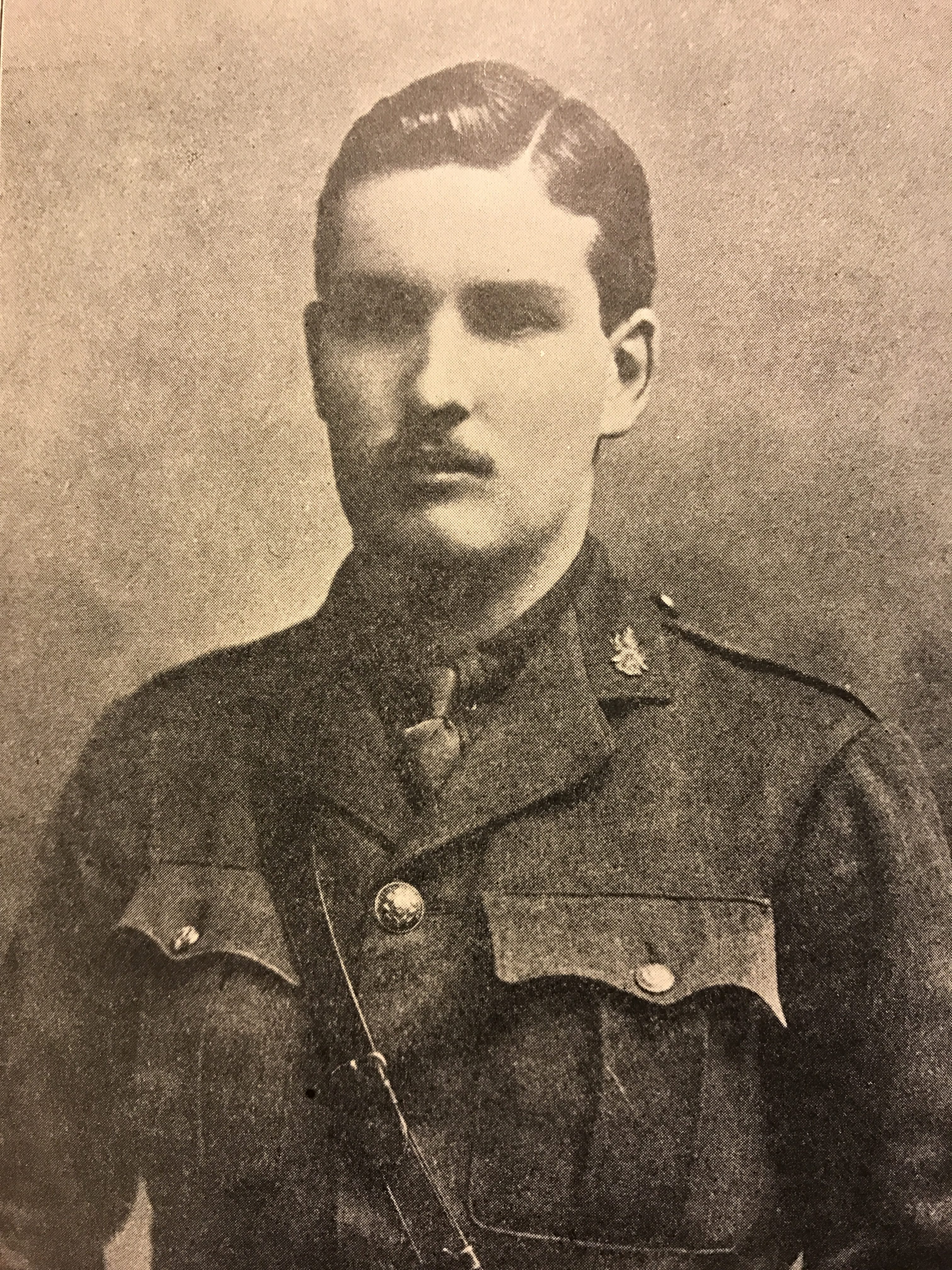
Four cousins went to war.

This is a very brief account of the lives of 4 young men from around a century ago; all members of the same Scottish family. The accounts are neither special nor representative and they form a tiny fraction of the story of what we call the First World War. They come from browsing a family history book which concentrates on family members who share the same surname and is therefore patrilineal by design; following the male line. While tracing such individual stories a different way would have provided a different selection, the meta-narrative they contribute to is the same.

In the year the war broke out, cousins Lyon, Lambert, Ian and Patrick were aged 26, 21, 20 and 21 respectively. Lyon, Lambert and Ian were more closely related, sharing a common great-great-grandfather, James (b. 1738) who had been Principal of the United Colleges of St. Andrews University from 1799 until his death in 1819. Lyon and Lambert’s great-grandfather was Surgeon-General George, Ian’s great-grandfather was George’s brother Hugh; provost of St.Andrews in the 1840’s and 1850’s. Patrick shared with the other 3 a more distant common ancestor, Robert (b. 1610) a tenant farmer from Coupar Grange in Angus, and the great-great-grandfather of Principal James.

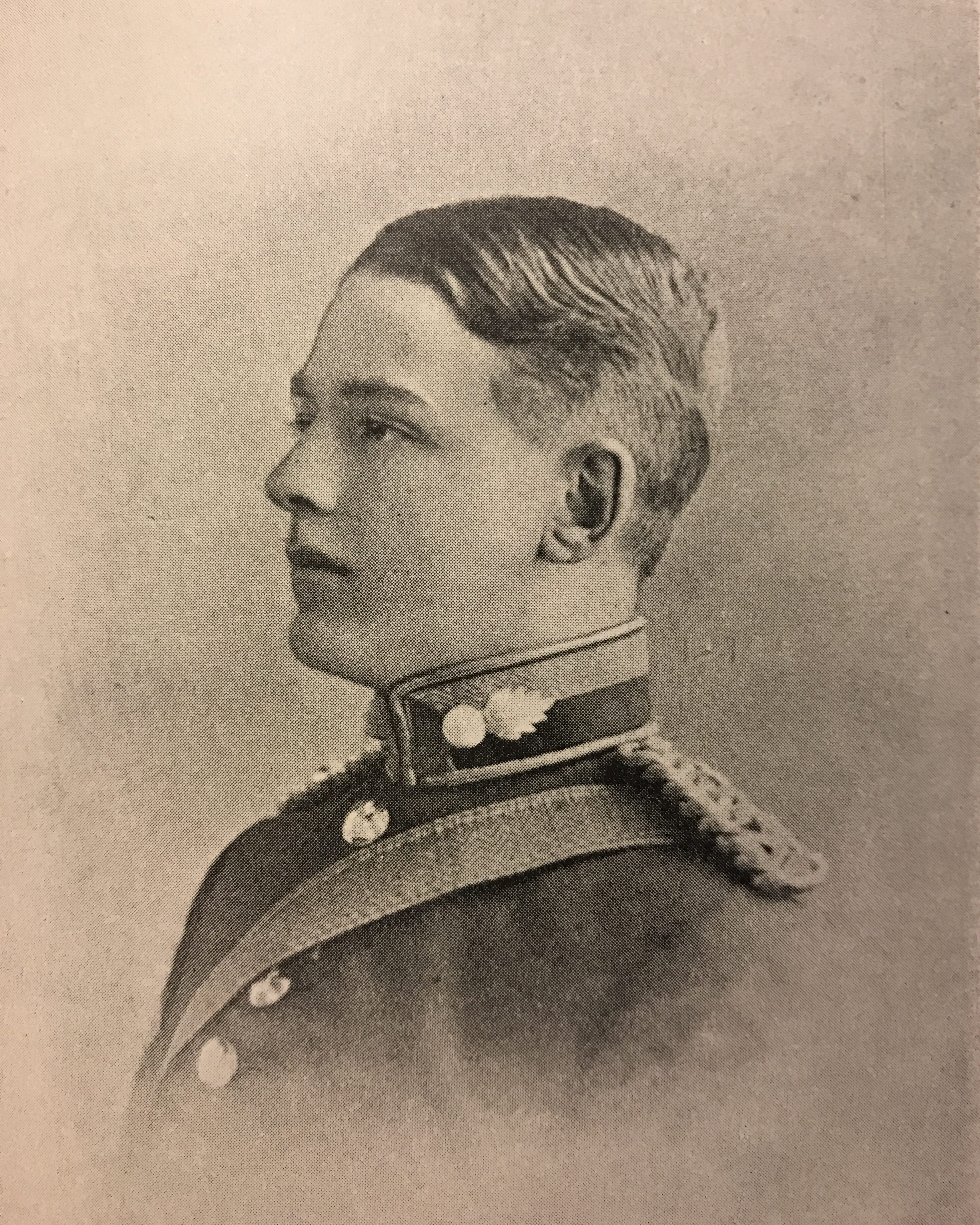
Lyon George Henry Lyon Playfair (b.1888) was a captain in the Royal Field Artillery who went to France at the start of the war and served in the retreat from Mons and the battles of the Aisne and the Marne.

Lambert Playfair (b. 1893) was a Lieutenant in the Royal Scots who returned from India with his battalion at the start of the war. He joined the Royal Flying Corps and was sent to France. On 6th July 1915 he was signalling the positions for enemy batteries near Ypres when his aeroplane was attacked by 2 enemy planes. He and his pilot fought back, despite having only 5 rounds of ammunition left.

Ian Stanley Ord Playfair (b. 1894) saw continuous service at the front as a Lieutenant in the Royal Engineers. He took part in the battles of the Aisne and Flanders (1914), Ypres salient and Hooge (1915), Somme and Ancre (1916), Arras, Monchy-le-Preux and Ypres (1917), Arras and Bethune, Le Cateau and Landrecies (1918). He was wounded twice and mentioned in Despatches 4 times. He was awarded the Military Cross in June 1916, the Bar in September 1917 and the D.S.O. in January 1918.

Patrick Lyon Playfair (b. 1893) was at university in Cambridge when the war broke out and took up military duties as a captain in the Black Watch. He was in France in January 1917 and fought at Vimy Ridge and the battle of Arras where he was wounded in two places. He returned to France in March 1918 where he was again wounded on 11th April while holding a forward position close to Lestrem against frontal and flank attack until nearly all his men had fallen and he had fired his last cartridge.

Only one of these four young men remained alive by the end of the war. Lyon was killed in action on April 20th 1915. Lambert was shot through the heart and died in the aerial dogfight over Ypres in July 1915 and Patrick died in a German dressing station in April 1918.

Ian, who lived until 1972, was my paternal grandfather and is therefore the great-great-grandfather of my grandchildren. His survival around a century ago has allowed a further line of descent; from Ian to a new generation, following that from Robert to James and from James to Ian.

Like countless other young people of their generation, however, Lyon, Lambert and Patrick didn’t get the opportunity to live long lives or to be parents. They were destined to be remembered only as young men.

This terrible conflict blasted a gaping hole through the family histories of millions of people across the world. The long legacy of war, mass murder or genocide is always one of lives unlived, opportunities unrealised and human suffering extending far beyond the broken branches of a family tree.

These individual human tragedies are the minuscule particles of a great tragedy; tiny tears in the ripped fabric of a world. To understand a war, we need to understand the social and political forces which brought it about; to translate from the motives and actions of millions of individuals to the motives and actions of their states, societies and armies. The individual and the social are different levels but they are connected. So, where we can, we should also ‘translate back’ and remember some of the individual victims and the human stories which contribute to the meta-narrative of a war. This remembering is a necessary first step towards analysing and understanding – and then finding better ways to deal with conflict.

img_5801 img_5800img_5802

Lambert, Lyon and Patrick Playfair

Source: 

Notes on the Scottish Family of Playfair by Rev. A.G. Playfair (1932).

Battle of Mons: 6,000 casualties.

First battle of the Aisne: 13,500 casualties.

First battle of the Marne: 500,000 casualties.

First battle of Ypres: 100,000 casualties.

Second battle of Ypres: 120,000 casualties.

Battle of the Somme: over 1,000,000 casualties.

Battle of Arras: 280,000 casualties.

Battle of Vimy Ridge: 10,000 casualties.

See also:

London’s francophone refugees (September 2016)

Posted in History | Tagged , , , , , , , , | Leave a comment

What future for Sixth Form Colleges?

I was asked to give a personal view on the future of sixth form colleges at the 2016 FE Staff Governors Conference on 2nd December, organised by a group of education unions: UNISON, ATL/AMIE, UCU and NAS/UWT together with the Association of Colleges and the Education and Training Foundation. This post is based on the presentation I gave.

1. What makes us distinctive?

For a while, sixth form colleges were defined by our official ‘designation’ as such within the wider family of incorporated Further Education colleges. However, this designation has done little to establish any particular role for our ‘sub-sector’ in government thinking. We only exist in certain parts of the country and policy-makers who know little about our work tend to pigeon-hole us either with schools or with general FE. We have too often felt side-lined and neglected in the national educational debate with most of the energy and enthusiasm being aimed at either the ‘skills agenda’ or the academy and free school agenda. We’re not so much Cinderella as Cinderella’s less-noticed younger sister.

We can rightly point to our higher than average achievement rates within the FE sector and our greater inclusiveness than most school sixth forms. But we must beware of overstating our excellence. The fact that we are ‘somewhere between General FE and school sixth forms’ in terms of raw success and performance table scores needs to be set in the wider context of 16-19 provision where such scores are closely correlated to students’ prior achievement.

At a time when government seems convinced, against all the evidence, that greater academic selection is the recipe for success, I think we should also resist the temptation to present ourselves as post-16 ‘grammar schools’ to attract short-term political favour. To attribute our success to selectivity rather than inclusiveness would be to ignore one of our greatest strengths.

Sixth form colleges vary in size and offer, but what we all have in common is a strong focus on the needs of 16-19 year olds and an ethos of aspiration and success for all. We specialise in the full-time education and development of a specific age group and that’s probably why we do so well across the board at all levels.

2. What challenges do we face?

First, we need to recognise that the challenges we face are not unique to us. There is no doubt that the 16-19 phase is seriously under-resourced but we do have a single national funding system and we have not been singled out for victimhood, although this is how it sometimes feels.

In recent years we have lost most of the funding for tutorial and enrichment as well as 17.5% of the funding for our 18 year old students, Educational Maintenance Allowances were slashed and the rate per learner has been cash-frozen for several years. Funding per student for ‘full-time’ programmes is far lower than in schools or universities and we are barely able to sustain a minimal educational entitlement, let alone an aspirational one.

We are also experiencing an unprecedented volume and pace of curriculum change, with the content and assessment regime of pretty much every course we offer being substantially redesigned, and not always in ways which promote participation or progression.

We also face an explosion of competition as a result of new capacity being opened up all around us, particularly in urban areas. A seemingly endless succession of new academy sixth forms, 16-19 free schools and UTCs have been created with little planning or regard for genuine need or cost-effectiveness. While national criteria for such new provision have been established, these are not always respected and there is no proper mechanism for addressing pre-existing excess capacity or insufficiency.

3. How have we fared in the Area Reviews?

Sixth form colleges have been fully engaged in the area review processes although we have often felt marginal to their agenda. We have embraced the idea of partnership and sub-regional strategic planning and most of us are clearly viable, responsive and successful. But without school sixth forms being in the frame, the reviews have not had the opportunity to look at those parts of the system which most affect us and which most need scrutiny.

Sixth form colleges have seriously considered the option of academy conversion, with its beguiling prospect of ‘joining the mainstream’ and ‘delivering the government’s agenda’. Some are embracing it; often in order to build strong new partnerships with local schools.

However, many of us are opting for the ‘stand-alone’ sixth form college option. ‘Stand alone’ should not be seen as ‘stand-aloof’. It is simply the result of a judgement that in our particular context, neither merger nor academy conversion was necessary to get us to work closely with others in order to benefit young people.

As an autonomous incorporated institution, a ‘stand alone’ college can choose to build on existing relationships and consider a range of collaborative arrangements; with other colleges in its area, with the schools its students come from and also with the universities which they progress to. Such partnerships can offer many benefits, among them greater curriculum coherence, course design for progression, the sharing of expertise and good practice and the possibility of new economies of scale.

Each area has its own local dynamics and each college corporation is best placed to judge how their institution should evolve while preserving what it stands for. What is clear across England is that the sixth form college brand will survive and thrive well beyond the area reviews and any change of status.

4. So what is the future of Sixth Form Colleges?

The environment we work in has many features of a highly competitive market between institutions. Each of us is driven by the need to attract students and to make a distinctive contribution which responds to local needs. While these drivers can have some positive impacts, the market encourages protectionist behaviours and super-selection. The market also discourages area planning around student numbers, minority subjects or specialist provision all of which could enhance the local offer.

Sixth form colleges, with their specialist experience, sharp focus and good track record, are well placed to do much of the heavy lifting required to build on the best features of their local system. I think the future lies in strengthening that system in order to overcome the worst features of the market.

As we move on from the area reviews, we need to build on the networks and relationships established in the steering groups to deepen the discussion about all the post-16 provision in our areas and to find ways to engage with schools and regional commissioners to review the whole pattern of provision. Taken as a whole, this currently often falls short of meeting the educational needs and aspirations of all the 16-19 year olds in their area.

We need to make common cause with all other 16-19 providers to make a case for sufficient resources and sufficient provision in every area so that the kind of broad curriculum this age group deserves can be offered to all young people regardless of where they live or study.

So, the ambitious, autonomous and community-focused sixth form college has a lot to offer. If we choose to face outwards and work with others we can contribute to strengthening our local sixth form provision by placing ourselves at its heart. There is still a vital role for us; helping to lead the development of a 16-18 system fit for the 21st century.

See also:

Going beyond: What do we expect from the education of 16-19 year-olds in England? (October 2016)

Is collaboration the solution or the problem? (December 2015)

Leadership for partnership  (November 2015)

The problem with England’s post-16 area reviews (September 2015)

Imagining a better future is a first step (August 2015)

Sixth forms working together against the tide (June 2014)

sonia-delaunay

Sonia Delaunay (1885-1979)

Posted in Education, Education policy | Tagged , , , , , , , , | Leave a comment

Young people debate free speech in the House of Lords

img_5636Free speech is alive and well, judging by a recent debate in the Chamber of the House of Lords involving over 200 young people from across the UK and sponsored by a number of organisations including Newham Sixth Form College (NewVIc) and English PEN, Migrants Organise, Speakers’ Corner Trust and 38 Degrees. The 10th House of Lords Chamber Event on 25 November 2016, chaired by the Lord Speaker, Lord Fowler, discussed the motion: ‘Should there be limits to freedom of speech in the UK?’ with speakers in favour of one of 3 propositions:

1. No limits: speech should be as free as possible. The best counter for harmful speech is debate not censorship.

2. Censor it: We should be able to restrict or censor harmful voices or divisive figures from expressing views that aren’t consistent with our nation’s values.

3. Monitor it: Speech shouldn’t be censored but the government should be allowed to monitor closely what people are saying and intervene if they need to for security reasons.

In the initial vote preceding the debate 86 voted for ‘monitor it’, 79 for ‘no limits’ and 20 for ‘censor it’.

The debate can be viewed in full on Parliament TV here:

http://www.parliamentlive.tv/Event/Index/da62e090-cc41-4ca6-a625-f9b73728c224

10 NewVIc students were in the chamber, 4 of whom spoke: Joelinne Wamba (15:45.10) was a principal speaker, Kier Sharp (16:13.40) gave a scheduled supporting speech and Agnes Thiongo (17:14.00) and Mojolajesu ‘JJ’ Bankole (immediately following Agnes at 17:15.25) were also called to speak in the open debate. All 4 made eloquent and well-considered contributions to the debate which was lively, constructive and respectful. A number of us were watching from the visitors’ gallery; proud of the confident, poised and articulate way our students made their cases. They were certainly not intimidated by the setting or the occasion.img_5645

JJ, Keir, Joelinne and Agnes

At a time when public discourse seems to resound with bombastic ‘post-truth’ claims and when marginal voices still have trouble getting through, it was refreshing to hear such a lively, well informed and respectful debate.

Speaker after speaker extolled the benefits of freedom of speech. Many felt that there should be some constraints while sometimes expressing a reluctance to simply handing the constraining power to governments. Joelinne reminded us that: ‘Free speech is a human right, but the growth of hate speech needs to be guarded against’. Agnes said: ‘silencing voices has consequences; when you stop people saying something, you don’t stop them from thinking it’ and ‘whenever freedom of speech has been embraced, change has taken place’ and she finished with a memorable soundbite: ‘we cannot have a diverse Britain without diverse voices’. Another speaker memorably said: ‘we need to run our country with an open mind and not a closed fist’.

One key terrain of the debate was around how we define hate speech and acceptable offense. Keir warned that ‘not monitoring the internet would be as reckless as not having speed limits.’ JJ argued that: ‘free speech should be used responsibly’ and made the case for checks and balances while recognising that censorship can violate human rights.

Swinging back towards the ‘no limits’ case, Robert Sharp (16:52.13) from English PEN, a global literary network working to defend and promote freedom of expression said: ‘Free speech is a dialogue and no-one gets to have the last word.’

In her contribution, Vicky Seddon (17:18.40) from Speakers’ Corner Trust brilliantly summarized the central challenge: how do we balance the right of free speech with the right to be safe from abuse and harassment. As she pointed out, these rights can’t both be absolute at the same time.

After a 2 hour debate, the final vote was taken and this showed a clear shift towards the ‘no limits’ case which won with 98 votes, followed by ‘monitor it’ with 75 votes and ‘censor it’ down to 16 votes. Lord Fowler commended the participants for their fine speeches, some of which he described as ‘exceptional’, as well as for their ability to stick to the time limits.

This is one of many creative spoken and written word opportunities which have come from our unique partnership with English PEN and we are very grateful for their continuing support for this work. The whole experience of preparing for and contributing to such an activity was truly educational for those who took part and we will build on this with wider discussions of free speech back at college.

See also:

Young poets ‘write the wrong’ (with English PEN) June 2015

Young people discuss the future of London  March 2016

Young people and the election April 2015


Posted in NewVIc, Politics, Students | Tagged , , , , , , , , , , , | Leave a comment

Going beyond.

Going beyond what is expected.

What do we expect from the education of 16-19 year olds in England? Judging from the funding available, the qualifications on offer and the accountability measures which inevitably steer our work, our national aspirations for this phase of education are fairly low.

Any outside observer seeking to understand how the English system prepares its older teenagers for life, citizenship, higher education and work would find it hard to explain. The lack of any common system or curriculum aims and the meagre resources available to fund 16 and 17 year olds compared to other phases of education do not suggest that the English value the education of this age group very much. And yet, this is the point in most people’s educational journey where things should really come together and make sense, where the knowledge and skills we have acquired start to connect with the big decisions we need to make about our lives and our engagement with the world.

Let’s be grateful that this age group are expected to participate in education or training at all and that we also have ‘programmes of study’ which define a full-time educational experience. But our 16-19 curriculum has no requirement of breadth or balance, no requirement to continue studying the national language beyond GCSE or any other language for that matter, no requirement to develop a basic understanding of political systems, institutions or history or to be introduced to key aspects of human culture.

Instead we have an incoherent patchwork of providers who can choose their own students by being as selective or as specialist as they want and no requirement to have a sufficiently broad offer in every part of the country. Better qualified 16 year-olds can choose between a 3 or 4 subject programme or a more specialist advanced applied general or technical course. The less successful generally have fewer options and the single biggest policy push for this age group has been to promote the technical, pre-apprenticeship and apprenticeship route which is essentially work-based. While work-based learning is of great value, this does feel like giving up on general education for those young people.

We need to be more ambitious. We should be aiming to do more than the minimum. We should be making the case for the kind of education which all young people deserve, which prepares them for cultural, social and economic participation as full members of society. An education which doesn’t require binary choices at 16 between breadth and depth or general and vocational. An education which promotes the ability to question, to challenge, to disagree, to argue and persuade, to reflect, to evaluate and to change one’s mind as well as to participate actively and productively in society and at work.

In short, we need something like a National Baccalaureate for all. Sadly, many of the tools to help us construct this are being withdrawn. AS subjects such as Citizenship, Humanities and Science in Society which could help broaden students’ programmes are going. We still have the Higher and Extended Project qualifications which can help to promote depth of study and research skills. Broad and balanced programmes like the International Baccalaureate do exist but they are prohibitively expensive to run under our current funding regime.

While we need to make the case for adequate funding for this age group, we also need to be convinced of the case for the kind of expansive general education which this better funding would allow. In the meantime, we may need to be creative in developing the content which can enrich our students’ education, working beyond the minimal programmes of study and with the support of universities, schools and employers who have such a large stake in young people’s success.

One thing is certain, if we base our ambitions merely on what is expected of us we will achieve just that. And that’s really not enough.

See also:

Life in the qualification market (May 2016)

Accessing the IB diploma (February 2016)

More sixth formers doing research projects (February 2016)

Education: what’s it all for? (January 2016)

No austerity of the imagination (July 2015)

Glasto-Bacc (June 2015)

W. Kandinsky: Black and violet (1923)

wassily-kandinsky-black-and-violet-1923

Posted in Education, Education policy | Tagged , , , , , , , , , , , , | Leave a comment

Les réfugiés francophones de Londres.

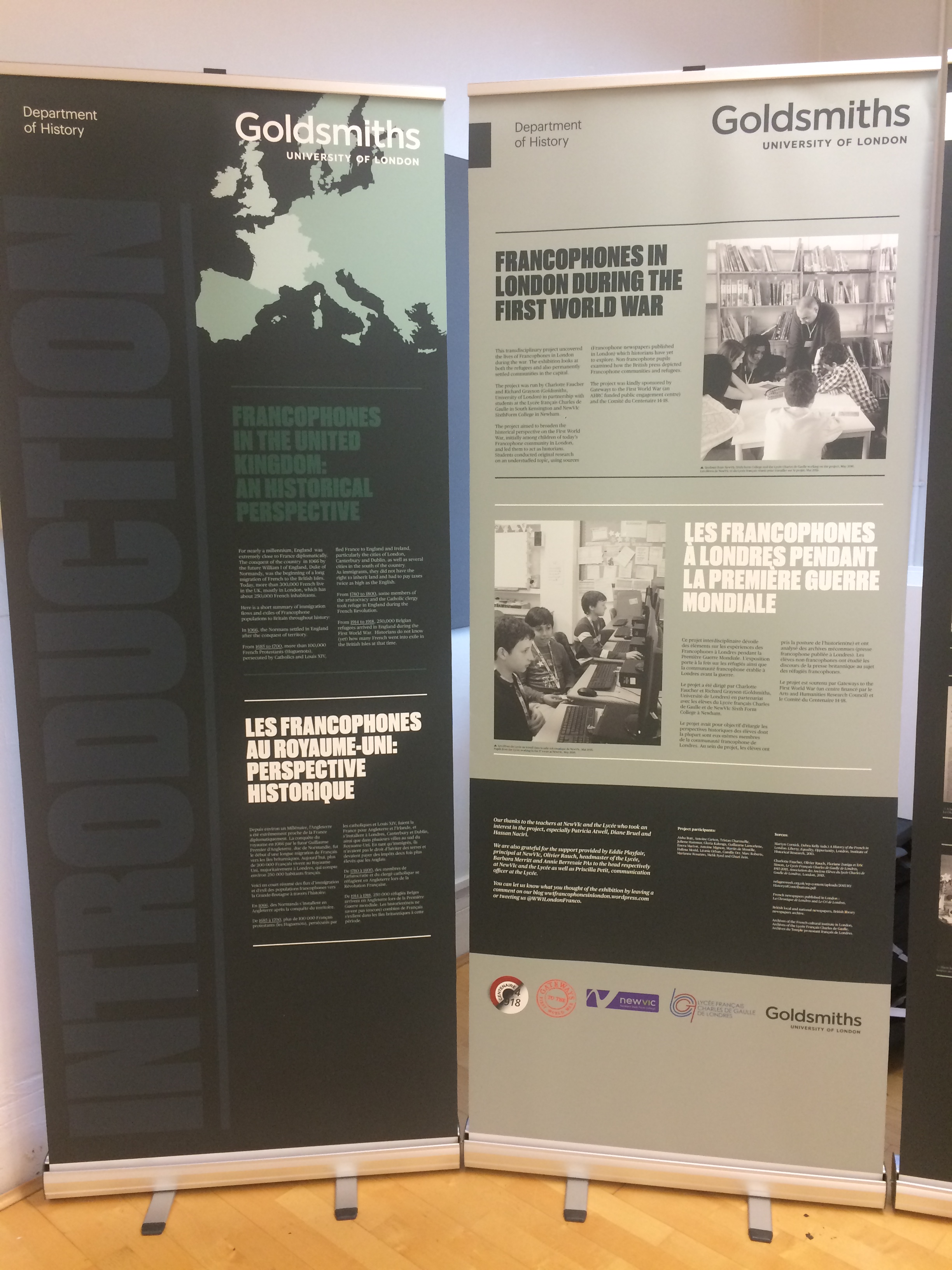
img_5416Nous nous sommes réunis au Lycée Français Charles de Gaulle le 19 Octobre pour rappeler les évènements qui ont bouleversé le monde il y un siècle. Avant d’évoquer le Londres de 1916, je me permets d’évoquer celui de 1966. C’est à mi-chemin – il y a un demi-siècle – l’année ou un petit garçon de cinq ans commence sa scolarité en classe de douzième dans une des maisons victoriennes de Queensberry place. Je passerai 12 ans dans cet établissement extraordinaire et je lui suis très reconnaissant. C’est toujours avec une certaine émotion que nous retrouvons les lieux importants de notre enfance et je me rappelle la cour de Harrington road, la distribution des prix au Royal Albert Hall, les grands couloirs du vieux lycée, les laboratoires du grand lycée et éventuellement, en section Britannique, une autre maison victorienne au No.6 Cromwell place. Ces valeurs, ces méthodes, cet apprentissage et cette formation tous bien différents de ceux qu’on connu la majorité de nos contemporains Londoniens.

Environ un autre demi-siècle avant, Londres en 1914 est la plus grande ville industrielle du monde et de loin la plus importante de l’Europe ; une ville d’immigration où les immigrés sont à la fois accueillis chaleureusement et sujets à la xénophobie et au racisme. C’est une société inégale ou plus d’un million vivent sous le seuil de pauvreté tandis que certains de leurs proches voisins sont parmi les plus riches du monde. C’est une ville ou règne l’exploitation, le travail précaire, des conditions de logement épouvantables et des loyers impossibles. C’est une ville d’agitation populaire à grande échelle; de grèves dans les chantiers, dans les transports et dans les usines, ou certaines municipalités refusent d’administrer l’assistance sociale tellement elle est insuffisante. C’est une ville qui connait une lutte militante pour le suffrage des femmes avec des manifestations, du vandalisme et des agressions. Londres était en désarroi avant même le déclenchement de la guerre en Europe.

Et puis, le 24 Juillet, l’Autriche déclare la guerre contre la Serbie. Le 27, le système financier mondial cesse de fonctionner, le 31, le ‘Stock Exchange’ (Bourse de Londres) ferme ses portes jusqu’à nouvel ordre. À travers la ville, des milliers de citoyens se rassemblent contre la guerre. Mais une fois qu’elle est déclarée par l’Allemagne contre la France et que la Belgique est envahie le 4 Août,  la fièvre belliqueuse saisit la foule et tout le monde semble soutenir l’intervention britannique.

En France, le député Socialiste Jean Jaurès avait prévenu, le 25 Juillet, dans son discours de Vaise, qu’un conflit localisé entre la Serbie et l’Autriche-Hongrie pourrait faire boule de neige à travers l’Europe:

«Citoyens, je veux vous dire ce soir que jamais nous n’avons été, que jamais depuis quarante ans l’Europe n’a été dans une situation plus menaçante et plus tragique que celle où nous sommes a l’heure où j’ai la responsabilité de vous adresser la parole. Ah ! Citoyens, je ne veux pas forcer les couleurs sombres du tableau, je ne veux pas dire que la rupture diplomatique…entre l’Autriche et la Serbie signifie nécessairement qu’une guerre…va éclater…mais je dis que nous avons contre nous, contre la paix, contre la vie des hommes a l’heure actuelle, des chances terribles.»

Jaurès prédit que :

«…si l’Autriche envahit le territoire slave…il y a a craindre que la Russie entrera dans le conflit, et si la Russie intervient pour defendre la Serbie…l’Autriche invoquera le traité d’alliance qui l’unit à l’Allemagne… »

Il y a aussi un traité secret qui lie la Russie à la France…et…

« c’est l’Europe en feu, c’est le monde en feu. »

Le 31 Juillet, Jaurès est assassiné à Paris et devient une des premières victimes du conflit. Consterné par la ruée vers la guerre l’écrivain Romain Rolland écrit Au-dessus de la mêlée en Septembre 1914:

“O jeunesse héroïque du monde, avec quelle joie prodigue elle verse son sang dans la terre affamée !”

En 1915, Rolland écrit dans son hommage à Jaurès:

«Il se livre sous nos yeux des batailles ou meurent des milliers d’hommes, sans que leur sacrifice ait parfois d’influence sur l’issue du combat. Et la mort d’un seul homme peut être, en d’autres cas, une grande bataille perdue pour toute l’humanité. Le meurtre de Jaurès fut un de ces désastres.»

Bientôt, à Londres, de nouvelles foules allaient se rassembler en silence pour témoigner du flot incessant des ambulances qui ramenaient des milliers de victimes du front aux hôpitaux de la ville. Les nouvelles technologies militaires allaient terrifier les Londoniens, bombardés de l’air par les ‘Zeppelins’ dirigeables. L’hystérie anti-allemande est courante et l’immense ‘palais des loisirs’ d’Alexandra Palace est transformé en sordide camp d’internement pour les citoyens de Londres d’origine allemande.

Il y a 100 ans, la bataille de la Somme était en cours – cette campagne qui a coûté 1 million de vies à elle seule. Un million! Il nous est difficile de concevoir un massacre à une telle échelle. La guerre s’est mondialisée avec un bilan éventuel de 17 millions de morts et 20 millions de blessés. Quand nos grands-parents nous ont parlé de ‘grande guerre’, c’est une formule qui semble bien insuffisante pour décrire cette destruction et ce traumatisme de toute une génération. Quand une paix est finalement négociée, elle n’a fait que créer de nouveaux ressentiments et de nouveaux conflits qui vont engloutir le monde une deuxième fois à peine vingt ans plus tard.

Tout cela n’est pas de l’histoire lointaine d’un intérêt abstrait. Nous avons connu cette génération. Ces événements ont façonné notre vie. Ils ont eux-mêmes été façonnés par des forces sociales que nous reconnaissons dans notre vie quotidienne. L’histoire ne se répète pas exactement dans tous ses détails, mais nous savons bien que l’inégalité extrême, l’injustice, la xénophobie, le nationalisme, le militarisme, la pauvreté, l’exploitation, les guerres et les crises de réfugiés existent encore – et comment ! On trouve aujourd’hui dans le discours public sur les réfugiés du conflit Syrien le même vocabulaire de méfiance et de racisme à peine caché. Il y a cent ans, ces mêmes préjugés ont été exprimés au sujet des réfugiés Belges et Français de Londres.

Je félicite et remercie donc le docteur Charlotte Faucher de l’université Queen Mary et le professeur Richard Grayson de l’université de Goldsmiths et les étudiants du Lycée Français Charles de Gaulle et ceux de Newham Sixth Form College (NewVIc) qui ont participé à ce projet pour leur excellent travail collaboratif. Ils ont fait un apprentissage de recherche avec des archives et des sources primaires issu de la communauté francophone Londonienne de l’époque afin de découvrir la vie des réfugiés français et belges qui se sont installé à Londres pendant cette période. Ce travail de mémoire est essentiel pour nous aider à comprendre le vécu de nos grands-parents et arrière-grands-parents et de comprendre les rapports avec nos problèmes contemporains.

Nous avons assisté à un premier ‘vernissage’ de cette exposition à Goldsmiths le 22 Septembre, depuis le 19 Octobre elle est au lycée Français Charles de Gaulle à South Kensington et en Janvier 2017 nous l’accueillerons dans notre nouveau bâtiment au lycée de NewVIc.

Lire aussi :

En Français

‘Au-Dessus de la Mêlée’ Romain Rolland (1914)

Egalité et solidarité dans une société diverse (Avril 2016)

10 billets en Francais

In English

WW1 French and Belgian refugees were branded ‘shirkers’ (Goldsmiths blog)

Above the battle (Au-Dessus de la Mêlée) by Romain Rolland (1916) English version

Zeppelin Nights, London in the First World War by Jerry White (2014)

Jean Jaurès: ‘What is courage?’ (August 2016)

Instinct, heart and reason – Daniel Pennac on the refugee crisis (August 2016)

Giving peace a voice (August 2016)

Seeking refuge in poetry (September 2015)

Posted in en Francais, History | Tagged , , , , , , , , , , | 1 Comment

University Gold.

With some help from the Jackson 5:

jackson-5The proposal to classify English universities as Gold, Silver or Bronze is a stroke of genius. The perfect expression of the English obsession with ranking. So obvious, one wonders why we’re not already doing it. Let’s not wait until 2018; we should get rid of all those confusing numbers and measures right now. It’s time to get down to the clear, understandable descriptors we’re all familiar with from competitive sport. It’s as simple as do re mi.

Look at any university and you know straight away whether it’s top, middle or bottom. The Gold universities are full of Gold students with Gold grades in Gold-standard qualifications in Gold subjects being taught by Gold academics on Gold courses. There’s really no need to pore over statistics on retention, employment rates and student satisfaction when it can all be summed up in a single word. People can make things so complicated. It’s as easy as A, B, C, one, two, three, baby, you and me.

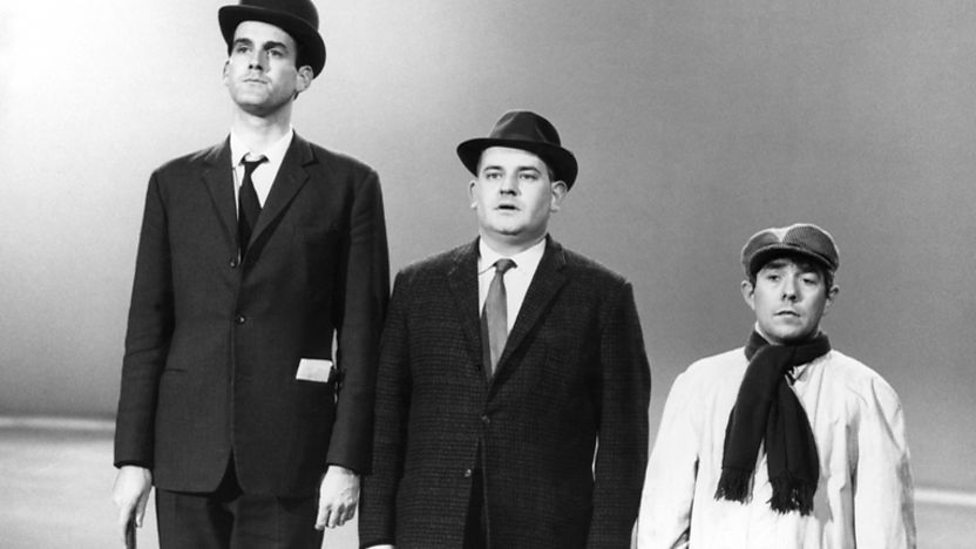
classIn education as in life, there’s a top, a middle and a bottom. Just like in that sketch with John Cleese, Ronnie Barker and Ronnie Corbett. There are top universities just as there are top people and we can’t all be Gold can we? We’d have nothing to aim for without a nice simple ranking where we all know our place. It’s so lovely when some of the top Silvers occasionaly move up to Gold and particularly heart-warming when a Bronze hauls themselves up to Silver. And if some of the little Bronzes sometimes get a bit chippy and say it’s all unfair, they’re just jealous because, like Ronnie Corbett, they know they’re not good enough. Nyah nyah nyah nyah nyah nyah.

But why stop with universities? Gold shines through at all stages in education. Our new selective secondary schools should be the Gold Grammars, with high performing academies and free schools becoming Silver institutions and everyone else languishing in a Bronze Age. The new grading will help us all make sense of the confusing choice and diversity of schools. A buh-buh buh buh-buh.

See also:

University for all (September 2016)

Your dogma, my principles (September 2016)

Is social mobility enough? (April 2015)

Re-imagining the university (February 2015)

‘Hindering’ subjects and ‘bad’ universities (October 2014)

Meeting the widening participation challenge (July 2014)

Unashamedly egalitarian (February 2014)

Posted in Education, Education policy | Tagged , , , , , , | Leave a comment

London’s francophone refugees

We are roughly at the mid point of our commemoration of the First World War. Let’s look back just over a hundred years.

London before the outbreak of war in 1914 was the greatest industrial city in the world and by far the largest in Europe, a city of migration where new arrivals were welcomed in large numbers but were also subject to racism and xenophobia, a city of inequality and widening class divisions with great poverty; over a million living below the poverty line while their near neighbours included some of the richest people in the world. It was a city of exploitation; sweated and insecure labour, working and living in appalling conditions and overpriced slum housing. It was a city of widespread industrial unrest; with walkouts on building sites, lockouts and strikes on the trams and in the factories, with local councils refusing to administer grossly inadequate poor relief. It was also the focus of a militant struggle for women’s suffrage with assaults and demonstrations as well as the vandalism of art galleries used as tactics. London was in ferment before there was even a whiff of war in Europe.

Then, on 24th July, Austria declared war on Serbia. By the 27th, war preparations across Europe had shut down the world financial system and on the 31st the London Stock Exchange closed down indefinitely. Across the city, thousands attended anti-war rallies, but by the time Germany declared war on France and then invaded Belgium on 4th August, jingoistic war-fever took hold and the crowds were supporting British intervention.

In France, the politician Jean Jaurès had warned on 25th July, in a speech at Vaise, that a Balkan conflict between Serbia and Austro-Hungary could conceivably snowball across Europe:

“Citizens, I need to tell you this evening that never in the last 40 years has Europe been in a more menacing or more tragic position. Citizens, I do not want to paint too bleak a picture, I do not want to say that the diplomatic breakdown between Austria and Serbia will necessarily lead to war between them and I do not say that if it does, war will necessarily spread across Europe, but I do say that right now the odds are against us, against peace, against human life…”

Jaurès predicted that if the various alliances were triggered; Austria with Germany, Serbia with Russia and Russia with France, it could mean: “Europe on fire, the world on fire.” On 31st July, Jaurès was assassinated in Paris becoming one of the first ‘casualties’ of the conflict. The very escalation he had predicted had started and war was inevitable.

Appalled by the enthusiastic rush to war, the writer Romain Rolland, wrote Au-dessus de la mêlée (Above the Battle) in September 1914:

“O jeunesse héroïque du monde. Avec quelle Joie prodigue elle verse son sang dans la terre affamée.” (“Oh, heroic youth of the world. With what great joy it spills its blood in the famished soil.”)

In 1915, Rolland wrote in his tribute to Jaurès:

“The death of a single man can be, in some cases, a battle lost for the whole of humanity. The murder of Jaurès was one such disaster.”

Soon, in London, crowds were gathering in silence to watch the endless stream of ambulances bringing thousands of casualties from the front into the city’s hospitals. Terrifying new military technologies were in use and London was being bombed from the air by Zeppelins. Dangerous anti-German hysteria was rife and Alexandra Palace was transformed into a squalid internment camp for London’s citizens of German origin.

100 years ago today, the battle of the Somme was still raging. A single campaign, it cost 1 million lives. One million – it’s hard to take in killing on such a terrible scale. The war went global with a final toll of 17 million dead and 20 million wounded, destroying or traumatising a whole generation. Even the peace, when it finally came, sowed the seeds of deep resentments and further conflict which was to engulf the world in 1939.

This is not ancient history about remote conflicts of purely academic interest. These events affected people many of us have known, they have shaped our lives and were themselves shaped by forces which are still with us. History doesn’t repeat itself precisely but we know that gross inequality, injustice, xenophobia, nationalism, militarism, poverty, exploitation, war and refugee movements are still features of our world. Our governments debate whether to accept refugees from the brutal conflict in Syria and this is often framed in the language of mistrust, suspicion and thinly veiled racism. A hundred years ago, as our city’s francophone population increased tenfold during the war years, those same prejudices were being expressed about refugees, including those from Belgium and France.

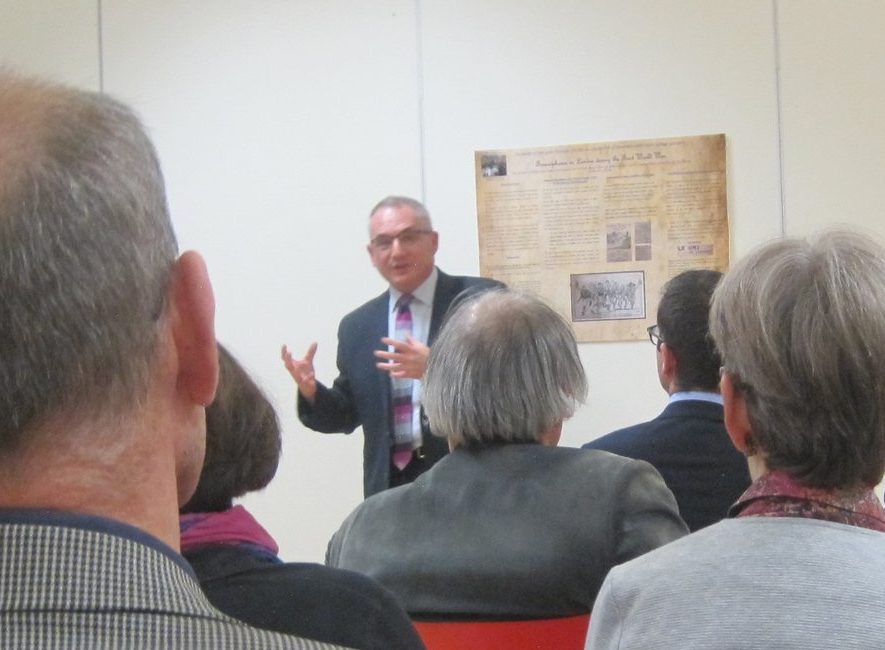
We must congratulate and thank Dr. Charlotte Faucher and Professor Richard Grayson at Goldsmiths and the students they worked with from both the Lycée Français Charles de Gaulle and Newham Sixth Form College for this excellent project. This research involved students using primary archival sources to uncover the lives of the French and Belgian refugees who made their home in London at this time. This type of research is vital to help us understand more about our grandparents and great-grandparents and to draw parallels with our own period.  The resulting exhibition will be on display here at Goldsmiths for a while, then at the Lycée in South Kensington and on to NewVIc in Plaistow in the New Year.

img_5416

Speech made at the launch of the ‘Francophones in London during the First World War’ exhibition at Goldsmiths on Thursday 22nd September 2016.


See also :

WW1 French and Belgian refugees were branded ‘shirkers’ (Goldsmiths blog)

Above the battle (Au-Dessus de la Mêlée) by Romain Rolland (1916) English version

Zeppelin Nights, London in the First World War by Jerry White (2014)

Jean Jaurès: ‘What is courage?’ (August 2016)

Instinct, heart and reason – Daniel Pennac on the refugee crisis (August 2016)

Giving peace a voice (August 2016)

Seeking refuge in poetry (September 2015)

Posted in History, Learning resources, NewVIc | Tagged , , , , , , , , | Leave a comment

Crick reloaded: citizenship education and British values.

“We aim at no less than a change in the political culture of this country both nationally and locally: for people to think of themselves as active citizens, willing, able and equipped to have an influence in public life and with the critical capacities to weigh evidence before speaking and acting; to build on and to extend radically to young people the best in existing traditions of community involvement and public service, and to make them individually confident in finding new forms of involvement and action among themselves.” Citizenship for 16-19- year-olds in Education and Training (2000)

It’s hard to dispute the importance of education for citizenship or to disagree with these aims. But which sixth form provider today could confidently claim to be comprehensively fulfilling them with all their students?

1. Crick Post-16

The great step forward in the development of post-16 citizenship education was the second ‘Crick’ report, Citizenship for 16-19- year-olds in Education and Training (quoted above) which was commissioned by the Government from a committee chaired by Bernard Crick in 1999 and published in 2000. This led to a blossoming of new materials and approaches supported at the national level by an excellent co-ordination and development unit run by the Learning and Skills Network (LSN), and curriculum guidance from the Qualifications and Curriculum Authority. Programmes in the post-16 phase were voluntary and flexible with a strong emphasis on responding to the local context. An AS and full A-level in Citizenship Studies were developed (now soon to be withdrawn) which could be used to accredit students’ achievements and there was talk of Citizenship becoming recognised as a wider key skill. Ministers were supportive and it felt like citizenship education was finding its place at the heart of post-16 education.

The Crick proposals offered a set of concepts, knowledge and skills:

Concepts:

  • Participation: becoming involved, for example, as an active member of a community group or organisation
  • Engagement: taking participation further, for example, by trying to influence the strategies or policies of the group
  • Advocacy: being able to put a case
  • Research: being able to find relevant and alternative sources of information
  • Evaluation: being able to judge the relative merits of different possibilities
  • Empathy: being able to consider an issue from the point of view of others
  • Conciliation: being able to resolve disagreements and conflicts
  • Leadership: being able to initiate and co-ordinate the agreed activities of others
  • Representation: being able to speak or act on behalf of others
  • Responsibility: thinking before one acts and accepting the consequences.

Knowledge:

  • how decisions are made at local, national, European, Commonwealth and international levels and how these decisions may or may not be influenced by citizens
  • how public and private services are delivered and what opportunities exist to access and influence them
  • how the different communities of national, religious, ethnic or cultural identity which make up the United Kingdom relate to each other
  • how equal opportunities and anti-discrimination legislation and codes of practice apply
  • how policies on taxation and economic management affect individuals and groups
  • the rights and responsibilities which individuals have in employment
  • how each particular vocation is affected by public laws, policies and events
  • the roles of individuals as family members
  • the rights and responsibilities of consumers
  • the different approaches to policy of the main political parties and pressure groups
  • how people can contribute to the life of voluntary groups and of their local communities
  • environmental issues and sustainable development.

Skills:

  • demonstrating an understanding of the rights and responsibilities associated with a particular role
  • applying a framework of moral values relevant to a particular situation
  • demonstrating an understanding of, and respect for, cultural, gender, religious, ethnic and community diversities both nationally and globally
  • combating prejudice and discrimination
  • critically appraising information sources (advertising, media, pressure group, political parties)
  • managing financial affairs
  • assessing risk and uncertainty when making a decision or choice
  • initiating, responding to, and managing change
  • selecting the appropriate mechanisms or institutions for dealing with particular issues
  • identifying the social, resource and environmental consequences of particular courses of action.

All this was linked to the different key roles of the citizen:

  • Community member
  • Consumer
  • Family member
  • Lifelong learner
  • Taxpayer
  • Voter
  • Worker

While this is all good stuff, embedding and mapping it to the post-16 curriculum was a big ask. A matrix which did justice to all these aims could potentially involve over 8,000 elements (10 x 12 x 10 x 7). Apart from being unwieldy, this approach also tends to categorise people’s identities and roles too rigidly and the framework could certainly do with streamlining and simplifying.

2. ‘Britishness’, belonging and integration

A few years after the Crick report, the then Chancellor of the Exchequer, Gordon Brown, launched a debate about the concept of ‘Britishness’ and whether a shared British identity and British values should be more vigorously promoted as a uniting force in society. This led to a somewhat inconclusive debate about what constitutes ‘Britishness’ but also established that whatever it is should be based on common values. Speaking in January 2006, Gordon Brown said:

“it is to our benefit to be more explicit about what we stand for and what are our objectives and that we will meet and master all challenges best by finding shared purpose as a country in our enduring British ideals that I would summarise as—in addition to our qualities of creativity, inventiveness, enterprise and our internationalism, our central beliefs are a commitment to—liberty for all, responsibility by all and fairness to all.”

A little later, John Sentanu, the archbishop of York added:

“Our cultural identity and difference must be balanced with a clear understanding of a shared humanity and membership of one world…We need other human beings to help us be human. We are made for interdependence, for complementarity. Our commitment as communities to promote understanding and justice will create harmony longed for by all.”

In 2007, the Education Select Committee concluded that citizenship education has at its heart:

“a commitment to enabling young people to participate fully in a democracy, and ultimately, securing a cohesive and inclusive society. In particular, it has a role to play in developing the skills for effective community relations, in developing shared identities, and safe ways in which to express difference.”

The Department for Education said in written evidence to the select committee that:

“citizenship education is key to building a modern, cohesive British society. Never has it been more important for us to teach our young people about our shared values of fairness, civic responsibility, respect for democracy and respect for ethnic and cultural diversity [it] remains a dynamic subject which responds to issues concerning society and how these come about.”

3. Where we are now.

So where are we today? We no longer have any specific post-16 guidance on citizenship education and there is no post-16 National Curriculum. The post-16 landscape has changed a great deal in 16 years with key skills downgraded while the English and Maths requirement (to GCSE) has become an essential element of students’ programmes of study.

So has citizenship be simplified out of existence? Not quite. Schools and colleges do now have a duty to support, promote and exemplify British values which are defined as: “democracy, the rule of law, individual liberty and mutual respect for and tolerance for those with different faiths and beliefs” and inspectors take a close interest in how well we prepare young people for life in modern Britain.

The British Values approach is still relatively new and people are coming to understand that the ‘Britishness’ of these values is not exclusive, oppressive or nationalistic. This is a British government aiming to speak for all its citizens in the way the EU or the UN might aim to speak for EU or global citizens. Instead of agonising over the impossible question of ‘what it means to be British’, the government has defined a simple overarching framework of values which each institution can explain and exemplify in its preferred way. We can argue about emphasis and omissions (eg: where is equality? where are human rights?), we can discuss some of Britain’s historic failures to uphold these values and we can warn against interpretations which might stifle debate or promote conformity. But there is nothing objectionable in explaining, advocating, defending and debating these values vigorously and living them in our day to day work.

4. Citizenship education under a new name?

Citizenship is complex and contested with different perspectives on what is most important. At its best, good citizenship education involves applying both knowledge and skill in social settings and through active participation; engaging with ideas, people and challenges. It is still worth recalling the aims and recommendations of ‘Crick post-16’ and building on them. It is certainly possible to continue developing and deepening this work within a British Values framework.

See also:

Post-16 citizenship in tough times (May 2014)

Better inspection for all? (November 2014)

Citizenship for 16-19- year-olds in Education and Training (2000)

citizenship

Posted in Education | Tagged , , , , , , , | Leave a comment