Challenging Neurosexism

Created with GIMP on a MacIn her brilliant Royal Institution lecture last week, Professor Gina Rippon from Aston University comprehensively trashed ‘neurotrash’ and the harmful gender stereotypes which it perpetuates. The term ‘neurotrash’ refers to the inappropriate application of neuroscientific findings to everyday life.

Gina Rippon works with neuroimaging techniques which represent brain activity and argues that they are very useful but can also create new problems of both method and interpretation. The problem is that minute effect sizes can be used to draw very broad conclusions about the differences between groups, including males and females. This can reinforce determinist ‘biology is destiny’ beliefs and can be used to support policies which accept and even promote social inequalities and discrimination such as sexism and racism.

Scientific sexism has a long lineage which reflects contemporary social attitudes to gender differences. Throughout recent history, scientific evidence has been used to ‘prove’ commonly held views about women being inferior, more fragile or more suited to certain roles than others. Attitudes may have shifted and the science become more sophisticated but research findings are still used to ‘prove’ what we all intuitively ‘know’ about sex differences. And often this serves to reinforce the ‘natural order of things’ which includes, you guessed it, persistent inequalities.

Gina Rippon outlined three of the ways neuroscience has increased our understanding of human brains:

1. Brain imaging: These techniques are increasingly powerful and they reveal valuable information about brain structures although they don’t do justice to the complexity of their function and there is a lot of scope for oversimplification of the structure/function relationship eg: ‘this bit of the brain is where this emotion or response is found’. These are still fairly static snapshots of a complex and dynamic system and can’t yet be associated with behaviours.

2. The plasticity of brains: The evidence is that our brains are remarkably plastic and remain so throughout our lives, so all talk of ‘hardwiring’ is a misunderstanding of brain development. This plasticity means that experience plays a very significant role is shaping the brain. The evidence is that people’s behaviours and responses are highly dependent on the expectations and reactions of others and ‘everyone’s brain is connected to the world’. Biology and society are completely entangled and it may be impossible to design studies which disentangle them.

3. Redefining sex: The very categories of the sexes are simplistic. Beyond the defining biological differences, very few other characteristics fall neatly into fixed universal male / female categories. Most research findings register a spectrum of difference rather than a clear dimorphism and neuroscience requires a more nuanced approach.

Some of the excessive claims of neuroscience require an enormous unjustified leap from the brain level to the social level with no explanation or mechanism proposed. This is similar to the ‘its in our DNA’ leaps from the level of the gene to complex human social behaviours we get in claims that there are genes for violence, criminality, intelligence, sexual orientation etc.

We are also driven by the search for difference and patterns. The essentialist view of the biological sexes as fundamentally different in almost every way (‘Men are from Mars…’) leads us to assume that male and female brains will also be fundamentally different. This assumption has such a strong hold on our imagination that it shapes the questions which are asked in research studies and can distort our response to the evidence, even when the findings show the sex of subjects is irrelevant.

In education we are regularly urged to make better use of neuroscience because it offers some profound new insights which could improve classroom practice. Based on Gina Rippon’s evidence, this would seem premature.

There are lively debates about the under-representation of girls in STEM subjects, their ‘greater empathy’ or ‘intuition’, the value of single sex schools, different aptitude for coursework, teacher bias, social and parental expectations etc. We collect a great deal of data about students, much of it about their performance in exams and tests and we often slice this by sex and draw big conclusions from small effect sizes which are not absolute. We need to be cautious about attributing such differences to essential sex-based characteristics when the more likely explanations are social; expectations, assumptions, test or material design, social conditioning and broader social attitudes. If we want to understand sex, race or class inequalities in education we should probably start at the social level rather than rushing straight ‘down the levels’ to brains or genes for answers. There’s little evidence that these inequalities are either ‘hardwired’ or ‘in our DNA’.

None of this is to downplay the importance of neuroscience as a field. Raymond Tallis, who champions contemporary neuroscience as one of our “greatest intellectual achievements” is dismayed by the claims made on its behalf in areas outside those in which it has any explanatory power, he calls this “neuro-hype that is threatening to discredit its real achievements.” He goes on to say:

“The fabric of the human world, the public space that is the arena of our lives, is woven out of explicit shared attention that has been infinitely elaborated in a way that has little to do with what goes on in the darkness of the individual skull, though you require a brain in working order to be part of it. If you come across a new discipline with the prefix ‘neuro’ and it is not to do with the nervous system itself, switch on your bullshit detector. If it has society in its sights, reach for your gun. Bring on the neurosceptics.” (Raymond Tallis in New Humanist, November 2009)

So, beware of neuro-sexism – it’s still just sexism.

For those who want to read more about ‘scientific sexism’, Gina Rippon recommended the following books:

The mind has no sex by Londa Schiebinger (1991)

Biological politics by Janet Sayers (1982)

Mad, bad and sad by Lisa Appignanesi (2009)

She also mentioned the 17th century French priest and philosopher Francois Poulain de la Barre (1647-1725) who wrote an early defence of sex equality ‘On the equality of the sexes’ published in 1673. He coined the phrase ‘the mind has no sex’ (‘l’esprit n’a pas de sexe’). An interesting reminder that ideas about equality are not as modern as we sometimes think. The American equality advocate Judith Murray wrote an essay of the same title in 1790, predating Mary Wollstonecraft’s ‘A vindication of the rights of women’ (1792)

I would also recommend two other excellent books:

Delusions of gender by Cordelia Fine (2010)

Brain Storm by Rebecca Jordan-Young (2010)

See also:

Reducing culture to memes (August 2015)

Posted in Education, Science | Tagged , , , , , , , , , , , , | Leave a comment

Reducing London’s disadvantage gap.

Mind-the-GapThere is much talk of the educational performance gap between disadvantaged students, eligible for free school meals (FSM), and their peers. One measure of success for sixth form students is progression to university of students reaching the end of their advanced programmes (KS5). So what does the data about different types of post-16 providers tell us about how well disadvantaged students do relative to their peers?

A simple way to measure this ‘disadvantage gap’ is to compare the HE progression rates of both groups and subtract the non-FSM rate from the FSM rate; the difference is the ‘gap’. Nationally, for school sixth forms, this gap is -3% for progression to university and -11% for progression to the ‘top’ third of most selective universities. So it seems the gap gets worse the more selective the university. There may be several reasons for this including differences in choice of subject or differential grade profiles and these differences would merit further research.

For London, progression rates are well above the national average across the board but there are marked differences between different types of sixth form. The most recent year for which there is data is 2013. In that year the city’s school sixth forms (not including sixth form centres and consortia) had a disadvantage gap for progression to university of -3% , exactly the same as the national gap. These data cover 2,855 FSM students across 307 schools, an average of 9 per school.

However, in the city’s 12 sixth form colleges the position is quite different and disadvantaged FSM students actually progress at a slightly higher rate than their non-FSM peers with a +3% gap; putting FSM students at a distinct advantage relative to those in school sixth forms. These data cover 1,208 FSM students, an average of 100 per college.

The position is even more marked for progression to the ‘top’ third of most selective universities.

For this group of universities, the disadvantage gap for school sixth forms in London was -19% based on 582 students, less than 2 per school on average. For the capital’s sixth form colleges the gap was -6%, a disadvantage relative to their non-FSM peers, but still a much better performance than in school sixth forms. These data are based on 275 college students, an average of 23 per college.

So this analysis shows that:

  • There is no overall disadvantage ‘gap’ for students progressing to university from London sixth form colleges – quite the opposite.
  • On average, disadvantaged students progress to university at a higher rate from London sixth form colleges than from London school sixth forms.
  • The average London school sixth form has 9 FSM students progressing to university, the average London sixth form college has 100.
  • There is a disadvantage ‘gap’ for progression to the ‘top’ third most selective universities and it is much more marked in London school sixth forms than in London sixth form colleges.

The data for actual progression rates are provided below although the key factor is the ‘gap’ between FSM and non-FSM assuming that all other factors are equal. The progression rates themselves are not strictly comparable as the school sixth form and sixth form college cohorts will have different profiles. Nevertheless, it is notable that the crude FSM student progression rates are all higher for sixth form colleges.

London School sixth forms Sixth form colleges
FSM progression to HE 60% 63%
Non-FSM progression to HE 63% 60%
Disadvantage gap -3% +3%
FSM progression (top 3rd) 12% 14%
Non-FSM progression (top 3rd) 31% 20%
Disadvantage gap (top 3rd) -19% -6%

The data is drawn from the Department for Education’s Key Stage 5 destinations data herehttps://www.gov.uk/government/statistics/provisional-destinations-key-stage-4-and-5-pupils-2013-to-2014

No hypotheses are offered for these differences at the moment. It’s also the case that this analysis only includes those young people who ‘made it’ onto advanced programmes where FSM students may well be under-represented.

However, one thing is clear: London’s  12 sixth form colleges are making a very strong contribution to social mobility in the capital.

See also:

London’s engines of mobility (October 2015)

From free school meals to university (April 2015)

Posted in Education | Tagged , , , , , , , , , | 2 Comments

Education: what’s it all for?

The House of Commons Education Select Committee has launched an inquiry into the purpose of education and is asking the following 3 questions:

  • What is the purpose of education for children of all ages in England?
  • What measures should be used to evaluate the quality of education against this purpose?
  • How well is the current education system performing against these measures?

The committee is asking for written submissions by 25th January. The chair of the committee, Neil Carmichael MP, said: “In this inquiry we want to ask the question what is education for? What is the purpose of our education system? Is it, for example to prepare our young people for the world of work? Is it to ready our children for adulthood and provide them with the skills to lead fulfilling lives? Is it to provide them all with broad academic knowledge based on a shared culture and values?…”

He goes on to say: “It’s important that we get an agreed sense of what education is…Approaching this basic question…will pave the way for the Committee to examine whether our curriculum, qualifications, assessment and accountability systems are really fit for purpose.”

One can only welcome this attempt to go back to basics and ask the most fundamental questions of one of our major publicly funded activities. Some will point out that ‘we’ve done this before’ quoting substantial efforts such as the excellent Nuffield Review of 14-19 Education published in 2009. Cynics will say: ‘what a waste of time, surely by now we know what the purpose of education is’.

It’s certainly true that the question has been asked before, and countless times! It’s a good question and it’s one we should keep asking as long as we care about our future. It’s also right that we should try to reach some degree of consensus about education’s purpose before we decide how to evaluate and improve what we do in its name.

However, this doesn’t mean that we can reach universal agreement on the detail or that the answer is particularly simple. The very fact that the inquiry opens with ‘either/or’ propositions reminds us that education is a place where different visions of society and human development confront each other. It’s highly contested territory, but it’s good to have the discussion and to keep having it.

And so, to the 3 questions:

The purpose of education:

It’s not that easy to sum up in a soundbite. One could suggest ‘making kids cleverer or more skilled’. I would offer ‘human flourishing’ which can cover the development of fulfilled individuals as well as a good society. To be asked to choose between preparation for work, preparation for life, active citizenship or cultural literacy is clearly nonsensical. All are indispensable and interdependent and these are false choices. Any definition of purpose has to do justice to where we are and where we’ve come from, the world as it is and the world as it could be. Education has to help us join the world while also opening up the possibility of challenging and changing it for the better.

One quibble; it’s a pity that the scope has been limited to ‘children’ as this excludes consideration of adult education which has been in crisis for some time in England. This inquiry could nevertheless consider the lifelong benefits of education up to 18 as part of developing a lifelong culture of learning.

Evaluating education:

The key point here is that the committee wants the question of purpose to be prior to that of evaluation. This means that we need to decide what outcomes we value before we decide how to measure them. In other words we cannot simply define purpose post-hoc in terms of success in pre-existing tests or assessments. For England, this is a novel idea – effectively putting the horse before the cart and potentially calling into question every aspect of our current performance and inspection measures and all the qualifications and tests they are based on. It will be interesting to see if the committee follows through on the idea that our performance measures should actually reflect what we want from education for all young people.

How well the system performs against these measures:

Who knew we had a system?

Another radical idea here, but it flows logically from the first two questions. If we want to have national educational aims for all young people then it would be sensible to create the means to ensure they can be achieved. We need to give ourselves some chance of success and this requires national coherence and consistency across the board; in short a system. Our current anti-system of unequal competing providers in a somewhat chaotic market really doesn’t fit the bill.

If the committee can achieve some agreement about purpose and outcomes, will it then be prepared to make recommendations about the need for greater coherence and planning? Can we actually envisage the creation of a universal, inclusive, English education system which aims to meet the needs of all young people? Now that would be something worth debating!

Conclusion:

It seems that taking seriously the simple and rather anodyne question ‘what is the purpose of education?’ could lead us into a major rethink of many of our current assumptions. The answer could call into question the binary thinking about young people’s capacity to learn which has young people being either ‘good with their brains’ or ‘good with their hands’. It could challenge the received wisdom that education is essentially a private commodity to be rationed and fought for and not a social good based on co-operation. It could also blow the case for selection and segregation out of the water.

The more widely and deeply these questions are debated, the more powerful the answers will be. This needs to go well beyond the Westminster bubble of policy makers, think-tanks and experts and involve as many people as possible in a Great Debate about what we want from education. Such a discussion goes to the heart of our view of ourselves and the kind of society we want. What emerges might be more subversive and creative than we expect.

See also:

Is collaboration the solution or the problem? (Dec 2015)

Starting to think about a National Education Service (Sep 2015)

Market madness: condition critical (June 2015)

purpose-of-education

Posted in Education, Education policy | Tagged , , , , , , , , , | Leave a comment

Let’s celebrate vocational success!

I never cease to be surprised at how little most politicians and commentators know about vocational qualifications and their value. There is no shortage of people who will tell us that we need to ‘do something’ about vocational education in this country because it isn’t good enough, and then go on to talk about apprenticeships or training and in many cases to blame unemployment on young people’s alleged ‘lack of skills’.

The fact that large numbers of 16-19 year olds are following demanding full time vocational programmes which lead them to successful university progression or employment doesn’t seem to register. If these qualifications are so poor, how is it that challenging university degree courses are so keen to recruit students who have succeeded on them?

I have been blogging about this for some time now, including ‘Guess what? Vocational students go to university too’ in 2014. I’ve never argued that vocational programmes are perfect and can’t be improved – I think they need a broader general core and I welcome the English and Maths requirement and the Tech-Bacc as steps in the right direction. My main aim has been to show the value of our existing vocational qualifications and to celebrate student achievement and progression.

I have used NewVIc’s progression data as an example because we have a broad cross section of students on both A-level and vocational programmes and very high rates of university progression for both. And, of course, because we’re very proud of all our students’ achievements.

As we celebrate the achievements of our class of 2015, it is important to highlight the progression of both groups of students. So here is the data for our vocational cohort. A similar analysis for 2014 can be found in my post: ‘Vocational education: rejecting the narrative of failure’ and the university destinations of all our leavers are covered in: ‘University progression for the NewVIc class of 2015’ and A-level and combined data will follow shortly.

In 2015, 773 NewVIc students progressed to university – our highest number for many years, this represents a 91% progression rate for all applicants overall – well above the national average.

If we compare the A-level and vocational cohorts, we find that:

  • Over half our university progressors were from vocational courses: 431 out of 773.
  • The proportion of the vocational cohort applying to university is roughly the same as that for the A-level cohort: 89% and 88% respectively.
  • The progression rate of vocational applicants is actually higher than that for A-level students; 93% compared to 90%.
  • Therefore the overall proportion of the vocational cohort progressing to university is higher than that for the A-level cohort: 83% compared to 79%.

Looking at student destinations by vocational course studied at NewVIc:

1. Business, Business & IT and Accounting & Financial Services: 132 students progressing to university.

The highest number (68) progressed to Business, Management, Banking and Finance degrees with a further 35 studying Accountacy, 7 studying Law and 5 studying degrees in Quantity Surveying / Property / Real Estate as well as a range of other degree courses (Business Information Systems, Marketing, Education etc.). By far the most popular universities for this group were: Westminster (38 students) and Greenwich (27 students)

2. Information Technology: 49 students progressing to university

The highest number of these students (21) progressed to Computer Science degree courses or Computer Systems and Networking degree courses (6). A further 6 students are now studying Games Design/Technology degrees and 5 are studying Computing for Business. 3 are studying Criminology and Computer Forensics and 1 is studying Law. The most popular universities for this group were Westminster (10 students), Greenwich (9 students), City (7 students) and Queen Mary University of London (5 students).

3. Sports, Travel and Tourism: 43 students progressing to university

16 Sports students progressed to degree courses in Sports, Physical Education or Coaching as well as Football Studies, Criminology (Policing) and Education studies. The most popular university choices were Middlesex (6 students) and University of East London (5 students).

27 Travel & Tourism students progressed to university, mainly to degree courses in Tourism / Airline and Airport Management / Hospitality / Leisure Management with a few choosing to study IT, Computer Science (2 students) Economics or Modern Languages (1 student each). The most popular universities for this group were West London (10 students), London South Bank (4 students), East London and London Metropolitan (3 students each).

4. Science and Engineering: 98 students progressing to university

45 applied Science students progressed to degree courses in a wide range of different areas including 32 to Biomedical Science and related Human Biology degrees including Radiography, Public Health, Dietetics, Nutrition, Dental technology, Osteopathy, Pharmacology and Paramedic science as well as 8 to Nursing degrees and a mix of unrelated degrees like Economics, Accounting, Criminology, Chinese and Education Studies. The most popular university destinations were Westminster, Middlesex and East London.

25 students progressed from Mechanical Engineering, 18 from Electrical and Electronic Engineering and 10 from Construction. Mechanical engineers are progressing to degrees in Mechanical, Automotive, Aerospace, Petroleum and Civil Engineering. The Electrical Engineers mostly to Electrical or Electronic Engineering degree courses and the Construction students to Civil Engineering, Construction or Project management and Architectural Technology degree courses. The most popular university destinations were Brunel, Kingston, Westminster and City universities.

5. Child Care and Health & Social Care: 48 students progressing to university

19 Child Care (CACHE) students progressed to university, mainly to degree courses in Education Studies, Early Childhood Studies or Education, Culture & Society with a few choosing Sociology, Nursing or Criminology. The most chosen universities were East London, Goldsmiths and South Bank.

29 Health and Social Care students progressed to university onto a wide range of degree courses including: Education or Childhood Studies (12) and Nursing (5) but also Criminology (5), Social Work (3) and Sociology, Bioscience and Public Health. The most chosen universities were East London and Middlesex.

6. Art & Design, Media and Performing Arts: 59 students progressing to university

28 Art and Design students progressed to university, they chose to study degrees in Graphic, Media or Product Design (10), Architecture / built environment (8), Fashion Textiles (8). The most popular university destinations were Ravensbourne, University of the Arts London and East London.

18 Media Production students progressed to university, choosing degree courses in Film and TV studies or production (12), Animation, Media and Society. The most chosen universities were Middlesex, Ravensbourne, University of the Arts London and Northampton.

13 Music and Performing Arts students progressed to university, choosing degree courses in Music Performance or Technology (6), Performing Arts or Drama (4).  These students were evenly spread across a wide range of different universities.

It’s clear that students who studied full-time advanced vocational qualifications at sixth form level form a good proportion of tomorrow’s key professionals across the full range of employment sectors. This is something we should celebrate, not denigrate.

Media students celebrating their success

Presentation Media

Posted in Education, NewVIc | Tagged , , , , , , , , , | Leave a comment

New Year wishes for sixth form education in 2016

A year ago I posted 5 New Year wishes for post-16 education. I thought they were modest, realistic and realisable while also offering tangible benefits.

My 5 wishes were:

  1. Recognise that innovation does not necessarily require the creation of new providers.
  2. Consult widely on what constitutes an educated 19 year old and therefore what should be included in a common post-16 curriculum.
  3. Encourage and incentivise post-16 providers to work together in the interests of all young people in their area.
  4. Take a comprehensive view of the quality and impact of the whole of post-16 provision in each locality rather than just looking through the institutional lens.
  5. Follow through on the idea of a level playing field by giving colleges the same VAT exemption which schools enjoy and funding 18 year olds at the same rate as 16 and 17 year olds on the same programmes.

There has been some progress in each of these areas and we start 2016 in a rather different place. The prospects for wishes 1, 3 and 4 are now wrapped up in the post-16 area review process sweeping across England’s colleges. Wish 5 will start to play out in 2016 once we know the details of the proposition to allow Sixth Form Colleges to convert to academy status. What happens about wish 2 may depend on how people respond to the debate being initiated by the Education Select Committee on the purpose of education.

What about 2016?

New-Year-Eve-20162016 will certainly be full of opportunities and challenges. We will see new leadership in both our membership organisations (AoC and SFCA). The financial squeeze continues, qualification and assessment reform is affecting almost every course we offer and there is anxiety and uncertainty about what the area reviews will propose and what academy conversion would mean for sixth form colleges. Above all, we need to avoid any further fragmentation of our phase of education and ensure that all 16-18 providers can find common ground on the important issues and make the case for the high quality 16-18 education that all young people deserve.

So here are my post-16 wishes for 2016, now down to 4:

  1. Build on the Education Select Committee’s inquiry by promoting a wide ranging debate about the educational aims of the 16-18 phase within lifelong learning.
  2. Ensure the funding, qualification and accountability systems are driven by the kind of education we want to offer rather than the other way around.
  3. Use the area review process to put in place the elements of a comprehensive 16-19 education system in each area.
  4. Consider keeping the area steering groups as voluntary partnerships which could choose to relate to elected regional authorities or commissioners. These networks could also draw in school and academy sixth forms and start to consider how to plan provision and share good practice across their areas.

This is not simply a call to action by others. The realisation of these wishes also depends on our own willingness to shape our own future and take constructive and creative action ourselves.

See also:

Imagining a better future is the first step (August 2015)

What’s at stake in the new post-16 Area-based reviews? (July 2015)

No austerity of the imagination (July 2015)

Posted in Education, Education policy | Tagged , , , , , , , , , , , , , | Leave a comment

Blogging as learning: review of 2015.

What went well…

2016-new-year-ss-1920I’ve enjoyed my second full year of blogging and have continued to write about whatever interests me, resulting in a fairly eclectic collection of posts on a range of topics with education at the top of the list. I am mainly writing to please myself and have no particular audience in mind but it’s always lovely when someone tells me they enjoyed reading something I wrote and comments on the site are always very welcome. Blogging is part of a process of thinking things through, learning, sharing and sharpening ideas. To be useful this also has to connect with further reading and discussion and it’s sometimes difficult to make time for all of this.

Writing and speaking

I’ve also enjoyed being commissioned to write pieces for publication elsewhere and I’m very grateful to those who gave me clear briefs and then trusted me to get on with it and also kindly allowed me to reproduce versions of these pieces in my blog:

Stephen Exley of the TES for: Imagining a better future is the first step (August) and Leadership for Partnership (November)

Howard Stevenson of the journal Forum for: Market madness, condition critical (June)

Fred Jarvis and Peter Wilby of New Visions for: The Case for Sixth Form Colleges (March)

Anastasia De Waal of Civitas for: Unlimited potential part 1 and part 2 (March) from The Ins and Outs of Selective Education.

The GlobalizNow website for: Laicite, egalite, diversite (March) – in French

I’ve also spoken at a number of events and what I’ve said sometimes gets turned into posts:

At the Institute of Education: No austerity of the imagination (July)

At the SEA: For a pragmatic idealism (June)

At a conference of the French AFAE: L’autonomie pourquoi? (April) – in French

At NewVIc: The multilingual citizen in a multicultural society (March)

Some strands from 2015

To be any use, this resource of 200+ posts need to be well catalogued. I’ve tried to make sure that the categories and tags on the site are helpful to readers trying to find what might interest them and I often add a ‘see also’ section at the bottom to provide a steer. Here are 15 strands, each of which can provide a way in to a number of posts to appeal to different readers:

  1. Post-16 education: I continue to argue for systemic collaboration, better ways of doing things and an adequate level of investment in our phase of education. I don’t see this as special pleading and try to set the case in a wider context.
  2. A liberal education: I believe we should offer all students a broad, inclusive and challenging curriculum which values knowledge, skill and student research and it seems to me that the proposed National Bacc is a positive step in this direction. Other curriculum posts here.
  3. The politics of education: Having been enthusiastic about the idea of a ‘one nation’ education policy, I critiqued Labour’s education manifesto in the run-up to the 2015 general election. I am now very positive about the idea of a National Education Service and have suggested how to flesh it out and make it popular.
  4. Marketization in education: following the Market Madness series of 7 posts critiquing the encroachment of market thinking in education, I’ve started a new series called the Economy of Ideas with a post on The marketplace of ideas (July) and one on Reducing culture to memes (August).
  5. Challenging assumptions: I’ve tried to do this in an informed way: Do qualifications create wealth? (January) Russell group university progression: dispelling the myths (February), Russell group numbers soar in Newham (August), Is social mobility enough? (April) and Social mobility measure ignores 62% of students (April).
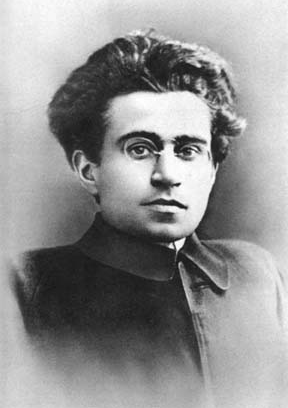
  6. Big ideas: from Frank Coffield, John Dewey, James Donald, Francois Dubet, Keri Facer, Antonio Gramsci, Harriet Harper, Ruth Levitas, Philippe Merieu, Mary Midgeley, Martha Nussbaum, Susan Robertson, Roberto Unger, Michael Young and Fareed Zakaria (you can search for these on the site).
  7. Philosophy: Amongst other things, I’ve been interested in metaphors of education, emergence, reductionism and the dialectic.
  8. Politics: My general commitment is to policies which promote equality, democracy, solidarity, peace and sustainability and I occasionally comment on political developments, particularly in the Labour Party.
  9. Learning resources: The material I produced to support AS Science in Society mostly dates from 2014 and I’m now starting to resource a post-16 ‘London curriculum’, student reading (eg: Reading dystopias from July) and student research materials.
  10. Newham Sixth Form College (NewVIc): I can’t resist some promotion of the work we do and the success and progression of NewVIc students. Some of our wonderful alumni continue to contribute to the ‘My NewVIc story’ series and I’ve started a series of parent guides to post-16 progression.
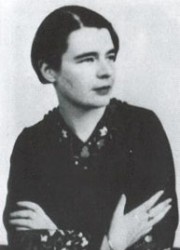
  11. Culture: Reviews of the work of: Tamsin Oglesby, W.G.Sebald, Abderrahmane Sissakou and Marguerite Yourcenar and poetry by W.H.Auden, Emily Dickinson, Nazim Hikmet, Sadako Kurihara, Michael Rosen, Warsan Shire, Joanna Walsh, Youssef Abu Yihea and Benjamin Zephaniah.
  12. London: The specific challenges and joys of London, including its educational needs and achievements remains a regular theme.
  13. France and posts in French: I’ve drawn on the ideas of French educators, Philippe Meirieu in particular (often via the excellent Café Pedagogique), to show how our colleagues in a very different system are addressing some of the challenges we also face. I continue to write the occasional post in French which is quite a challenge. I guess there are a few French readers who are amused by my not-quite-correct turns of phrase!
  14. Corsica: I’ve continued to add to what now seems to be a series looking at the island through the eyes of visitors
  15. More personal pieces: where I draw on my own experience and feelings; self-indulgent perhaps but not too frequent, eg: Diagnosis (September) and A poem for father’s day (June)

I’ve certainly learnt a lot and I hope you find something here that provokes or delights you. Going back a year, my review of 2014 can be read here.

As all good teachers know WWW (What went well) is generally followed by EBI (Even better if…) and I will post shortly about my hopes for 2016.

Posted in Education | Tagged , , , | Leave a comment

Grammaire de Gramsci et Dialectique de Dewey.

‘Dewey eyed optimism : the possibility of a democratic education’ – James Donald (1992)

(Original post in English available here)

GramscideweyIl y a plus de 20 ans que j’ai découvert cet essai dans l’édition de Mars / Avril 1992 de la revue New Left Review. Il examine le rapport entre les savoirs, les compétences, l’éducation générale et la formation professionnelle. Il m’a aidé à reconnaitre qu’une éducation égalitaire et démocratique pouvait aussi valoriser la tradition et les connaissances.

Il a servi à confirmer mon opinion que l’éducation doit à la fois adopter le canon et le contester et que l’enseignement est toujours dialectique, étant donné qu’il affronte constamment le connu à l’inconnu. Il m’a aussi conduit vers les idées de John Dewey et d’Antonio Gramsci.

James Donald considere le point de vue de Dewey et d’autres sur le rôle de l’enseignement public dans la création et l’entretien d’une société démocratique. Plutôt que de bâtir un système éducatif à base de notions fixes de la nature humaine, de l’identité ou de la communauté, Dewey propose une approche plutôt expérimentale ; de réflexion et de critique continue à propos de toute l’activité humaine et qui prévoit la possibilité du changement.

J’ai trouvé ce «constructivisme démocratique» très motivant.  Comment ne pas être excité de voir notre travail d’enseignant comme travail de construction d’un monde meilleur, ou de voir l’école comme lieu où peuvent se créer des relations sociales démocratiques et égalitaires. Et ces objectifs me motivent encore, tout en me rappelant quotidiennement que nous habitons tous le monde tel qu’il est et que les conditions pour ce monde meilleur ne sont pas toujours présents.

Bien plus tard, dans les années 1980, le sociologue Richard Johnson de l’Université de Birmingham articulera la notion de l’école comme institution culturelle. Dans le cadre d’une société diverse, Johnson nous propose d’imaginer des formes d’éducation qui n’imposeraient pas d’identités fixes ou homogènes, mais qui seraient capables de participer à la construction de la société par le moyen du dialogue.

Je trouve aussi que pour reconnaitre et explorer les différences il faut partager certaines valeurs et compétences communes pour que nous puissions prendre le risque de quitter notre zone de confort pour aller vers l’autre. Un enracinement culturel, religieux ou idéologique peut nous donner confiance mais pour être éduqué il faut aussi s’ouvrir à la différence, le dialogue et même le conflit. Sinon, cet enracinement il peut être limitant et débilitant plutôt que libérateur et affirmant. Si l’école est un lieu essentiel pour construire les valeurs communes elle sert aussi à explorer les différences.

Et quel rôle pour les connaissances dans tout cela? James Donald demande si l’école peut produire le «savoir vraiment utile» dont nous avons tant besoin. Il se tourne vers Antonio Gramsci qui, dans les années 1930, a souligné le rôle de l’école dans la création de normes culturelles, de valeurs et de hiérarchies. Donald propose une alliance entre ce besoin de tradition et de savoir avec le projet Deweyen de construction sociale. Selon lui, l’éducation nécessite une articulation sceptique de la tradition,  un processus obligatoirement récursif et expérimental.

Pour emprunter les termes du Trivium, il me semble que Donald propose d’enseigner à la fois (i) la grammaire; connaissances essentielles et fondamentales, le canon, la structure, les règles et (ii) la dialectique; l’interrogatif, l’argument, la contestation, le démantèlement et la reconstitution de ces connaissances. Peut-être avons-nous besoin d’un « traditionalisme démocratique » et d’un « radicalisme dialectique »: la grammaire de Gramsci alliée à la dialectique de Dewey.

Donald critique l’enseignement professionnel contemporain (an Angleterre) fondé comme il l’est sur le faux espoir de la réussite économique et qui ne fait que de-professionnaliser et affaiblir l’éducation. Plutôt que de préparer certains jeunes pour l’emploi, il propose une éducation démocratique, moderne et intellectuelle pour tous, un programme qui doit aussi aborder le sujet de l’économie et de l’emploi. L’hypothèse que la création de filières professionnelles spécialistes dans le secondaire puisse résoudre nos problèmes économiques est fausse. Nous ferions mieux d’offrir aux jeunes une éducation libérale, culturelle et pratique pour tous. Ce serait peut-être bien une meilleure préparation pour le marché du travail.

Donald dénonce aussi la tendance «créativité et auto-expression» parmi les éducateurs progressistes. Il considère que l’idée d’une éducation visant la pleine expression du potentiel créatif de l’étudiant est un enseignement « thérapeutique, vaguement hédoniste, vaguement puritain». Il estime que ce rôle « quasi-politique » est contreproductif aux objectifs progressistes.

Donald fait bien de nous prévenir contre le déplacement de l’enseignant comme une source de connaissances académiques et d’autorité culturelle. Il est toujours utile aussi de se rappeler que nous voulons une éducation qui développe tous nos élèves plutôt que de reproduire les inégalités ou les revendications politiques. Que ce soit dans l’éducation pour la citoyenneté ou pour l’emploi, nous devons éviter l’endoctrinement tout en reconnaissant que chaque système d’éducation ait une certaine base idéologique.

James Donald ne trouve démodé ni Dewey ni Gramsci. Au contraire, il les considère ensemble comme «la seule possible dynamique d’une éducation démocratique». Toute aussi pertinente aujourd’hui, son analyse nous offre la possibilité d’une synthèse des positions progressistes et traditionnelles qui pourrait véritablement faire avancer le débat.

A lire aussi (en Français) :

Leçons sans paroles : comment la musique nous apprend à vivre (Juillet 2015)

L’autonomie : pourquoi ? (Avril 2015)

Laïcité, égalité, diversité (Mars 2015)

Citoyens multilingues, société multiculturelle (Mars 2015)

L’inspection en Angleterre (Décembre 2014)

Le numérique en questions : une perspective anglaise (Octobre 2014)

Socrate et le numérique (Juillet 2014)

Posted in en Francais | Tagged , , , , | 3 Comments

Sebald in Corsica: ‘Campo Santo’.

campo santoCampo Santo is one of four short pieces with Corsican settings in W.G. Sebald’s collection given the same title. These were fragments for a book about Corsica which remained unfinished at his untimely death in a road accident in 2001.

Campo Santo takes us from the author’s arrival in the village of Piana, starting with a swim in the bay of Ficajola below, a visit to the graveyard (Campo Santo), a riff on the Corsican way of death and the ultimate meaning of life. All in a remarkable 18 page single paragraph without a break in the flow of thought.

He looks around the graveyard and starts to notice the individual graves:

“…here and there among the thin flower stems, the blades and ears of grass in the graveyard of Piana, a departed soul looked out from one of those oval sepia portraits set in thin gilded frames which until the sixties used to be placed on graves in Mediterranean countries: a blond hussar in his high collared uniform tunic; a girl who died on her nineteenth birthday, her face almost extinguished by the sun and the rain; a short-necked man with his tie in a large knot, who had been a colonial civil servant in Oran; a little soldier, forage-cap titled sideways on his head, who came back badly wounded from the futile defence of the jungle fortress of Dien Bien Phu…”

Noticing an absence of very ancient graves, he later learns that graveyards only became common in Corsica from the mid-nineteenth century and that it took a while for their use to be generally accepted as people preferred to bury their dead on their own land, sometimes creating little memorials for them.

Sebald then muses on the traditional Corsican rituals following a death; the body laid out in the house for everyone to visit while the voceratrici and other village women wail lamentations during an extended wake. He considers some of the traditional Corsican beliefs about the dead; that they are present among us, standing about a foot shorter than when alive, moving around together, forming a community of the dead and paying unwelcome visits:

“…the dead were thought of as extremely touchy, envious, vengeful, quarrelsome and cunning. Given the least excuse, they would infallibly take their displeasure out on you.”

Beyond these ‘squadrons of the dead’ there are also the loners:

“individual restless ghosts intent on revenge, lying in wait by the roadside for travellers, suddenly emerging from behind a rock or manifesting themselves on the road itself, usually during the sinister hours of the day…”

And then there are the mazzeri or ‘dream hunters’ who were once a very real part of many Corsican communities. These were social outsiders by day whose spirits were said to move about rapidly at night compelled to bring death to animals within a dream world. These killings would then foretell a human death soon after. Sebald sees in this pre-Christian shadow-realm a possible manifestation of the Freudian idea that, to our unconscious, all deaths are the result of murder.

Sebald ends his meditation on the relationship between living and dead with the thought that with the huge increase in the number of the living, the significance of the dead is diminishing:

“In the urban societies of the late twentieth century…where everyone is instantly replaceable and is really superfluous from birth, we have to keep throwing ballast overboard, forgetting everything that we might otherwise remember: youth, childhood, our origins, our forebears and ancestors.”

He offers us the somewhat bleak prospect that eventually:

“…the whole past will flow into a formless, indistinct, silent mass…leaving a present without memory…”

Reading Campo Santo made me reflect on my visits to our own Corsican cemetery in Vero. It’s a short walk from the village, out of sight around the corner of the mountainside with a breathtakingly beautiful view across a wild interior valley. This ‘village of the dead’ is not a place of fear but a complement to the village of the living. It keeps its counsel and its distance but the graves and memorials serve to remind us of the life of an earlier village. Walking amongst the family groups, stopping at the graves of my beloved grandparents and those of other close relatives, I am remembering a whole generation and also connecting to the previous one; briefly encountered in childhood and learned more about second hand. Our visits are almost always in the dizzy heat of summer and in the solemn quietness of the pine forest the dead simply seem to be saying: ‘once we were the world, now it’s your turn’.

Campo Santo is wonderful, but I want to rebel against Sebald’s final view of a future without memory. There is much that will be forgotten about us after we have gone but we have existed and will not be rubbed out. Each individual who has lived is part of the great fabric of humanity and each thread in that fabric has its importance. The ebb and flow of human civilization, wars, revolutions, political movements, the flow of people and ideas – all these are built on the lives of individuals, all of whom matter – however many billions they number.

In the short term, I can see that there are plenty of reasons for pessimism, but when contemplating the longer term we should resist anything other than a narrative of human progress to which we all contribute. The residents of our own Campo Santo would expect nothing less.

See also:

Village wisdom: Corsican proverbs and sayings (August 2014)

Edward Lear in Corsica (August 2015)

John Minton in Corsica (July 2015)

Conrad in Corsica (August 2014)

Seneca in Corsica (August 2014)

Paoli in London (March 2015)

Poem: Corsica (July 2015)

Posted in Culture, Reviews | Tagged , , , , , | Leave a comment

The London Mayor’s Education Conference.

London City Hall with the London Tower Bridge just after midnight. Only a few people hovers around the area. The stars are peaking out from the skies. Photo by: Jacob Surland, www.caughtinpixels.com

Photo by: Jacob Surland, http://www.caughtinpixels.com

The Mayor of London and the Greater London Authority (GLA) have no statutory responsibilities for education, however they can use their convening power to bring people together, to advocate and call for action and to persuade. In many ways, the absence of command-and-control is liberating; it frees them up to use their influence to bring about improvement.

Whether through the Schools Excellence Fund, the London Music Pledge, the London Curriculum, Big Dance, Team London Young Ambassadors, Healthy Schools London or the London Schools Gold Club, London’s strategic authority has shown that it can play a strategic role in promoting curriculum development and partnership as well as showcasing and sharing excellence.

The Mayor’s Education Conference, held this year on 27th November, is a good example of this convening power. The event held annually at City Hall since 2013 attracts an impressive number of London’s educators, giving them an opportunity to network and share ideas. The potential to develop regional partnerships and collaboration further is tremendous.

I was particularly pleased that the work of one of London’s 12 Sixth Form Colleges was featured when Jane Overbury, principal of Christ the King Sixth Form College spoke about their LSEF project won creating the conditions for a culture of innovation, specifically looking at what strategies for helping students achieve the very highest grades might be transferable and scale-able between private and state-funded sixth forms. The answer is rooted in classroom practice with teachers who reinforce high expectations, are prepared to take risks and see themselves as classroom researchers. Christ the King is a great example of a Sixth Form College which has played a positive and leading role in post-16 developments via its network of different campuses in South East London.

We also heard, amongst others, from Education Secretary Nicky Morgan and London Mayor Boris Johnson:

The mayor spoke about his convening role, to help, facilitate and bring together London’s educators. London now has more ‘good’ and ‘outstanding’ schools than any other region and 25 of the highest achieving local authority areas are London boroughs. He reminded us that London is marked by inequality but that educational achievement is improving fastest in the poorest neighbourhoods and he argued that London is a ‘great dynamo’ of educational improvement.

Mr Johnson also drew on his enthusiasm for the teaching of classical studies, Latin and Greek, to make some startling comparisons between European economies. Italy, France and Germany all have higher productivity than the UK, they also have far more students studying Latin and/or ancient Greek at school. His leap from correlation to causation may have seemed somewhat tongue-in-cheek and many in the audience won’t have taken it entirely seriously. However, he was making an important point that a broad liberal education may well be the best preparation for life we can offer young people as they face uncertain economic and employment prospects.

Boris Johnson finished with a rousing call for a single education and skills commissioner for London to replace the current random carve-up between parts of 3 different school commissioner regions which makes any city-wide regional strategy for education more difficult to envisage. This makes absolute sense and we can only hope that he uses his influence to achieve this legacy for his successor – whoever they may be. I would add that the remit such a commissioner should be all education, not just ‘skills’.

Nicky Morgan praised the legacy of the London Challenge and, addressing the concern which had flowed from the Chancellor’s Spending Review announcement of a redistribution of school funding, promised that London’s schools will continue to be funded based on need. She also promised to continue to challenge London to do better while recognising that things aren’t easy but didn’t respond to the mayor’s plea for a London education commissioner.

I also attended the session on Reshaping London’s 16-19 Offer which inevitably focused on the impending Area Reviews of London colleges. Frank McLoughlin, principal of City & Islington College, reminded us that systemic change is not easy when we haven’t really got a post-16 system. There is no agreement about what 16-18 year olds should study and patchy awareness of what vocational education actually is.

One statistic which wasn’t highlighted in the conference is the fact that the progression rate of disadvantaged students (eligible for Free School Meals) to university is higher in London than in any other English region. All 10 top London providers in this respect are colleges (5 sixth form colleges and 5 general FE colleges) so we are clearly at the heart of the ‘dynamo’ which the mayor spoke of. Colleges may be only part of the complex patchwork of provision but we have a great deal to offer London education in so many ways.

Next year, every London College will be engaging in the Area Review process and joining one of the sub-regional steering groups to work on proposals for doing things better. With the support of London government, our work on those steering groups could build a better shared understanding of the educational needs of our city and lead to improved collaboration between providers. Once the reviews have reported, we could build on these partnerships to help create the London-wide 16-18 system which we so lack, something which can only benefit young Londoners and the capital as a whole.

The Mayor’s convening power, so much in evidence at this conference, has shown its potential and there is plenty more it could achieve.

See also:

Reviewing post-16 education in London (November 2015)

London’s engines of mobility (October 2015)

London: a global learning city (June 2015)

Posted in Education, Education policy | Tagged , , , , , , , , , | Leave a comment

Labour split or Labour unity?

This weekend, the case for a Labour split was given prominent coverage in the Observer newspaper. Party members were also able to read a rather more unifying message in an interview with the Labour leader in Labour Today, the party’s magazine.

Strip away the Westminster intrigue and the fact that the Splitters clearly don’t rate their party’s new leader, what do the political differences amount to? At a time when so much party policy is still to be developed, is there really a rational case for a damaging split?

Based on their own words, is it possible to make out what it is about these two camps which means they allegedly cannot coexist in the same party?

“We were intended as a radical force in British politics, telling a story about Britain that is optimistic, taps into people’s aspirations, stresses our tradition as a pioneering nation and shows how our creativity can help shape the prosperity and success of Britain in the future. We champion a society in which community and solidarity play a more important role.”(Splitter)

“We owe people a credible and inspiring party. This means that our party and our politics must change.” (Unifier)

“Successful political projects must do three things: 1. Have a driving purpose underpinned by values and principles, 2. Address the urgent needs of the country, 3. Respond to the desires of the public.” (Splitter)

“We have to re-engage with the people and involve them in our project to build a better society. Our party must be at the heart of every community in every part of Britain. We need to be more open, inclusive and participative.” (Unifier)

“Under our previous leader there was a need for fresh thinking on health, education and crime but little happened. Today, there is a need more than ever before for a modern, progressive values-driven party. At its heart would be a renewed sense of moral purpose – a commitment to social mobility – breaking down all barriers to people getting on in life.” (Splitter)

“Our defeat has lessons for us. We are in the process of rebuilding our party – our membership has doubled since the General Election and there is a real enthusiasm for politics and the party that did not exist before. We need to learn from each other.” (Unifier)

It is surely hard to disagree with any of these statements and they offer much to unite around and build on. The main difference is that taking the Splitters’ advice would almost certainly lead to defeat whereas the Unifiers’ approach offers the possibility of victory.

So maybe it’s time to take the advice to “get involved, have your say, this is your party as much as anyone else’s and you must play your role in shaping it.” (Unifier)

Corbyn

See also:

Developing Labour’s vision for education (September 2015)

Starting to think about a National Education Service (September 2015)

Posted in Politics | Tagged , , , , | Leave a comment

Educating after the November 13th attacks.

Philippe Meirieu on keeping the big questions open

MeirieuThe French educationalist Philippe Meirieu reflects in Café Pedagogique on how the French education system should respond to the 13th November Paris massacre:

“Our society’s response to terrorism must keep faith with our democracy’s founding principles, otherwise its adversaries will have won. We also need to take care not to strengthen the very things we claim to be fighting against, this would risk bringing about, if not a ‘global war’, then a ‘globalisation of war’ which could take a form far more terrible than we imagine.

“With these concerns in mind, we need to put in place the means to resist all forms of terror; at a national, European and global level. To patiently and methodically build real solidarity between democrats and between democracies; a solidarity which can bring justice and peace. The challenges are immense; social, economic, diplomatic, geopolitical, technological – for societies as well as for citizens.

“The attacks of November 13th also require a sustained educational response. From November 14th, many teachers started to think about how to tackle these issues with students. By Monday 16th the school system seems to have risen to the challenge. That’s good, but it’s not enough. We need to continue to work on these issues in the longer term.

“Apart from needing the necessary reassurances from the adult world that it is there to protect them, our students also need to be able to ask some big questions which we must address without any sense that ‘this might not be the right time’. The first relate to the problem of evil, the second to the meaning of life and the third to the relationship between social injustice and personal freedom. I think we need to make room for these questions and keep them open.

The problem of evil

“For many young people, evil remains an absolute mystery. They share with Socrates and Plato the conviction that ‘no one deliberately wishes to do evil’. We can make mistakes, be driven to break the rules in a moment of madness, be drawn into stupid actions, get carried away in anger or get things wrong – but always in the knowledge that we could get them right in future. We can bully or intimidate others ‘for a laugh’ without realising the impact on them. In summary, there are many ways to ‘do wrong’ – usually by mistake, by choosing to put ourselves and our needs above the common good and the interests of others.

“Young people understand all this and in philosophical discussions they can establish a hierarchy of good when they consider the human condition, the idea of the common good and the need for us all to look beyond our immediate personal wants. Such discussions are possible and can be fruitful when run by skilled adults.

“However, there remains a flaw, whether it’s in Habermas’ project to promote universal rational discourse or that pointed out by Plato near the beginning of the ‘Republic’: How can one make an unreasonable person listen to reason? Or to put it another way, when someone is rushing at you with a knife, is there any chance of persuading them not to kill you by reminding them of Kant’s categorical imperative?

“This is a real mystery for all of us. How can a person in full possession of their senses wish to do harm for the sake of doing harm? For many of our students, confronted with the 13th November Paris massacres, perpetrated by suicide bombers who seemed to want only to sow death and devastation this is the first time they have faced, in real life, the question: how can a human being possibly wish to commit such acts?

“Those teachers who have been able to discuss this with their students report that their unanimous reaction is: It’s not possible; a human being cannot do that! It’s true that this mystery leads us to the very edge of humanity and the boundary which separates it from inhumanity. It is important that this inhumanity be understood by young people as being beyond all limits. This may not be an absolute vaccine but the fact that a line has been identified may one day prevent others from crossing it.

The meaning of life

“Nevertheless, here or there, students will suggest that these terrorists, while being cowardly murderers, are also martyrs to a cause which they felt was worth sacrificing their own lives for. This is where a second question arises: what is this cause which is so powerful and attractive that it can justify such acts? Could they not have found constructive ways to devote themselves to helping others or improving their communities?

“We understand that young people who might be lost, deracinated, experiencing failure and having little hope can be targets for recruitment by violent groups. Such groups can offer something to identify with. In such a group one can experience a kind of fellowship based on hatred of the ‘other’ and to model oneself on particular heroes from within the group. It’s possible to become someone significant, someone who will be spoken of – even after death, someone identified with a cause and who will be respected. These recruits pay a high price for this identity – often with their lives.

“So the question becomes: what have we offered these young people which might have allowed them to build positive identities and stay safe? What ideals have we proposed which might satisfy their wish to commit to something without tipping over into murderous folly? In this world where poverty and injustice continue to grow, why weren’t they choosing to volunteer in their communities or dig wells in developing countries? Why weren’t they able to commit furiously to their studies or seek training for a job?

“These may be naïve questions, but young people are asking them and there are no simple answers in a world which seems short of shared grand ideals. So the question which needs to be asked and kept open is: what can I hope for if I really make an effort? Is the promise of a better life within my reach? Have I explored the full range of possibilities life offers to bring happiness to myself and others – rather than rushing headlong towards self-destruction?

Social conditions and freedom

“Another difficult question: could these terrorists have acted otherwise? Are they not themselves victims of their circumstances? Our students understand that people do not face life, school or the labour market as equals. People’s social circumstances are hard to escape and can mark them for life. The answer comes quickly: not everyone who faces difficult family, social or educational circumstances becomes a criminal. How come some people do OK and others tip over the edge? This is impossible to answer fully. One can imagine that for some, peer support or adult mentoring and guidance may have played a part, for others the ability to draw on some inner strength of character would have come into play – who knows? We can look for sociological correlations but they will never explain the singular journey of each individual and what decides their fate at any particular moment.

“It is because there is such a gap in our understanding that we need to keep this question open too. This allows our students to remain committed to eradicating the social inequalities and scandalous injustices which have embedded themselves in our society. Such conditions will only make things worse. But the question must also stay open so that we can each assert the freedom to be the author of our own life, regardless of the obstacles we face. So that each of us is capable of choosing the path of generosity, hard work, solidarity and freedom.

“After the second world war, Theodor Adorno asked how one could teach after Auschwitz, and the question has never been fully answered. But we can and we must teach after 13th November 2015; not to indoctrinate but to educate. To answer our students’ legitimate questions and to give them some fundamental bearings on our history, our conquests, the republic, democracy and secularism. But also to help them not to respond too quickly to those philosophical questions which will help them throughout life; questions about good and evil, the meaning of life and their own commitment to making the world a better place.

“To stop these questions being asked, to shut them down too quickly, or to regard them as unnecessary would do us all a great disservice and deny us all our humanity.”

Adapted from the French post on the Café Pedagogique site (30th November)

See also:

Democratic emotions in the face of barbarism – following the Garissa massacre (April 2015)

What is learning? Philippe Meirieu (July 2014)

France: “teachers need to resist” – Francois Dubet (November 2015)


Posted in Education | Tagged , , , , , , | Leave a comment

Hadrian, the enlightened pre-enlightenment leader?

level02_hadrianMarguerite Yourcenar’s wonderful novel Memoirs of Hadrian takes the form of a personal memoir written for the future Roman emperor Marcus Aurelius by the emperor Hadrian (76-138 CE) as he faces death.

The book is a brilliant portrayal of a leader who seems to be shaped by enlightenment ideas although his rule predates what we generally describe as the western enlightenment by over 1,500 years. Yourcenar’s research was meticulous and she read every contemporary source she could get hold of. Nevertheless, we are clearly seeing the modernity of Hadrian’s thinking through a 20th century lens.

The section which best captures his vision and methods as a ruler is Tellus Stabilita (the stable Earth). The chapter opens as the successful military strategist Hadrian finally succeeds the emperor Trajan following a deathbed adoption. His first task is to achieve peace in Mesopotamia on the eastern edge of the empire and put an end to Trajan’s expansionism which threatens to ruin Rome.

During Trajan’s disastrous military campaign in Parthia, trade with the East has seized up and Hadrian takes great pleasure in seeing it start up again. He can see that trade is a form of ‘soft power’, promoting cultural exchange which benefits both Rome and its trading partners:

“A few months after the great crisis I had the joy of seeing the line of caravans re-form on the banks of the Orontes; the oases were again the resort of merchants exchanging news in the glow of their evening fires, each morning repacking along with their goods for transportation to lands unknown a certain number of thoughts, words and customs genuinely our own, which little by little would take possession of the globe more securely than can advancing legions. The circulation of gold and the passage of ideas (as subtle as that of vital air in the arteries) were beginning again within the world’s great body; earth’s pulse began to beat once more.”

Hadrian realises that Rome needs to adapt to survive by promoting a set of universal values; Humanitas, Libertas, Felicitas (Humanity, Liberty and happiness) as well as a transferable model of governance rather than by imposing rigid uniformity on all its provinces.

“Virtues which had sufficed for the small city of the Seven Hills would have to grow less rigid and more varied if they were to meet the needs of all the earth.”

“I promised myself to save this Rome of mine from the petrification of a Thebes, a Babylon or a Tyre. She would no longer be bound by her body of stone, but would compose for herself from the words state, citizenry and republic a surer immortality.”

He cannot imagine slavery ever being abolished but says prophetically:

“I can well imagine forms of servitude worse than our own, because more insidious, whether they transform men into stupid, complacent machines who believe themselves free just when they are most subjugated, or whether to the exclusion of leisure and pleasures essential to man they develop a passion for work as violent as the passion for war among barbarous races.”

He hasn’t got the words to advocate greater equality but takes measures to redistribute wealth:

“One part of our ills comes from the fact that too many men are shamefully rich and too many desperately poor…everything is still to be done for the intelligent reorganization of world economy.”

He bemoans the waste of rich landowners neglecting to cultivate their fields and requires any land which has not been used for 5 years to be transferred to the farmer who plans to cultivate it. He also has little time for ostentiatious philanthropy and prefers to invest in public services and community development:

“Most of our rich men make enormous gifts to the State, to public institutions and the emperor, many do this for their own interest…nearly all gain thereby in the end. I should have preferred to see their generosity take other forms than that of ostentation in alms, and to teach them to augment their possessions wisely in the interest of the community as they had done hitherto for the enrichment of their children…no one has the right to treat the earth so unproductively as the miser does his pot of gold.”

He promotes what would today be called worker co-operatives:

“I was counting most of all on the organization of the producers themselves, the vineyard owners in Gaul and the fishermen in the Black Sea (whose miserable pittance is devoured by importers of caviar and salt fish, middlemen battening on the produce of those dangerous labours). One of my best days was the one on which I persuaded a group of seamen from the Archipelago to join in a single corporation in order to deal directly with retailers in the towns.”

Yourcenar presents Hadrian as the experienced soldier who knows war and therefore prefers peace. As a result of his many visits to the empire’s military outposts he conceives a vision of the army as a kind of ‘peace corps’, well integrated in its communities. This develops into a vision of the ‘unity in diversity’ of his multicultural empire:

“There I found, in the rough, that diversity in unity which I sought for the empire as a whole…my aim was to make use of these military centres as levers of civilization, as wedges strong enough to enter in little by little just where the more delicate instruments of civil life would have been blunted.”

Yourcenar also shows us a Hadrian who see himself as a functionary rather than a Caesar. He is building a modern state which requires skilled and trustworthy functionaries; a civil service:

“One portion of my life and my travels has been passed in choosing the administrative heads of a new bureaucracy, in training them, in matching them as judiciously as I could the talents to the posts…In time of crisis these bureaus, if well organised, will go on with what must be done.”

Nevertheless, he recognises the danger of these armies of bureaucrats:

“…it can be stated in a word; the fatal increase of routine. The mechanism, wound up for centuries to come, will run awry if we do not watch out; the master must constantly regulate its movements, foreseeing and repairing the effects of wear.”

Hadrian is passionate about building cities and creating new communities and public assets and sees these as passing on a legacy as well building on tradition:

“To build is to collaborate with earth, to put a human mark upon a landscape, modifying it forever thereby..The founding of libraries was like constructing more public granaries, amassing reserves against a spiritual winter which…I see ahead.

“To reconstruct is to collaborate with time gone by, penetrating or modifying its spirit and carrying it towards a longer future.”

He feels responsible for sustaining and increasing the beauty of the world:

“I wanted the cities to be splendid, spacious and airy…I desired that the might and majesty of the Roman Peace should extend to all, insensibly present like the music of the revolving skies…in a world well ordered, the philosophers should have their place, and the dancers also.”

Recalling the words of the Spartan ideal: Strength, Justice, the Muses, Hadrian expands on them:

“Strength was the basis, discipline without which there is no beauty, and firmness without which there is no justice. Justice was the balance of the parts; that whole so harmoniously composed which no excess should be permitted to endanger. Strength and justice together were but one instrument, well-tuned, in the hands of the Muses. All forms of dire poverty and brutality were things to forbid as insults to the fair body of mankind, every injustice a false note to avoid in the harmony of the spheres.”

Tellus Stabilita is the core of this engrossing story of a very human emperor learning to rule wisely while also learning about himself. This chapter can be read as a handbook for leadership to match Macchiavelli’s The Prince, written over 400 years before. If not exactly a philosopher king, Hadrian is both philosophical and pragmatic. For Macchiavelli, he was one of the ‘five good emperors’ and Yourcenar shows his concerns pre-figuring those of today.

Hadrian’s vocabulary of values may not include all three of ‘liberty, equality, fraternity’, let alone ‘democracy’, but he is expressing their predecessors and laying the groundwork for their future articulation.

I recommend this chapter and, of course, the whole book.

See also:

Seneca in Corsica (August 2014)

Yourcenar

Penguin yourcenar

Posted in Culture, Fiction, History, Reviews | Tagged , , , , , , , , | 1 Comment

Is collaboration the solution or the problem?

collaboration‘Collaboration between schools is now seen as an important way to improve educational performance yet little is known definitively about what impact this has for improving pupil attainment’.

An interesting point which may well be worth looking into and luckily the Centre for the Study of Market Reform of Education (CSMRE) has done just that and we can read their report: ‘Collaborative overreach: why collaboration probably isn’t the key to the next phase of school reform’.  The report asks some good questions, but unfortunately comes up with one of those bizarre inversions of common sense which sometimes emerge from over-reliance on dogma. It seems to show that collaboration isn’t all it’s cracked up to be.

In summary, their conclusion is that we probably shouldn’t waste our time collaborating between schools because it’s not possible to demonstrate a quantifiable impact on the bottom line of exam results. This led to the TES headline ‘”No evidence” school collaboration boosts attainment’ (23rd October 2015).

So that’s it then; research has proved that collaboration is a waste of time. Should we stop collaborating? To those of us who like to draw on the evidence of our own experience as well as that found in research reports, this proposition does seem a touch flaky. Is it really possible that all that all our well-intentioned professional co-operation is just a time-wasting diversion from the day job?

Must we now quantify the benefits of sharing good practice? Do we have to demonstrate that learning from others, asking for or giving help make a measurable difference? Do we really need to make an economic case for professional dialogue and collegiality? Well, apparently we do.

Tim Oates in his foreword to the report, rightly warns us against ‘uncritical reification of a single policy objective’ and ‘collaboration blind to the educational merit of the practices exchanged or created’ and we can all agree that collaboration isn’t much use if what is being shared isn’t much good.

It’s also true that collaborating has opportunity costs. Running a teach-meet workshop or offering help and advice to teachers in another school all take up time which could be spent getting on with the your own job. No doubt every consultant who spends time asking a colleague in another hospital for a second opinion or attending a meeting on best clinical practice despairs at the time wasted; how many more patients they could have seen instead!

As we delve a bit deeper it becomes clear that the argument is about the level at which we collaborate. It’s not so much that we don’t know whether collaboration is a good idea, it’s just that collaborating with your competitors undermines the market. After all, would Tesco choose to share good practice with Asda? It turns out this debate is actually about the danger that system-wide collaboration might undermine inter-institutional competition. It seems that the Centre for the Study of Market Reform of Education is actually more of a ‘Centre for Advocating the Marketisation of Education’ and that they are worried that those nice teachers might be a little too keen on helping the enemy and not be committed enough to the trench warfare of competition.

The report starts from an assumption that the benefits of collaboration are taken too much for granted out of a rather wooly attachment to ‘a particular conception of the public service ethos’. But its own starting point is an attachment to an even more shaky conception, one which requires more competitive, marketised provision and where there is no public service ethos and no idea of public good beyond the attainment of your students and the success of your school or possibly the chain it belongs to. All that matters is learner and teacher performance and the best way to drive this up is competition between providers. Shades of an ‘uncritical reification of a single policy objective’ perhaps? This amounts to the enclosure of good practice which may be a forerunner to its commodification, as in: “we have developed some great new teaching methods and now we’re going to sell them to you”.

So, by all means let’s make sure that any collaboration we engage in is mutually beneficial and that the good practice we share really is good. And if there really is insufficient evidence that students benefit from teachers collaborating, let’s test the hypothesis properly. But let’s also be clear that our outlook on this issue will shaped by our ideological starting point.

If your idea of the ‘next phase of school reform’ to improve education and bring benefits to all students requires even more market competition between schools or chains, you will probably prefer that competition to be taken seriously and to extend to as many aspects of teachers’ work as possible. In other words: “keep your good ideas to yourself because they give you and your school an advantage.”

If you want to see a universal public and democratically accountable system, you will probably take the view that demonstrably beneficial collaboration should have no boundaries, as in: “share what you know and what works well because the more people benefit the better it is for everyone”. This is the free market of ideas at work while the ‘reformers’ need to watch out they don’t end up defending restrictive practices and professional closed-shops.

There are clearly shades of grey between these poles but research which is so obviously predicated on one ideology is unlikely to convince those committed to the other.

See also:

Leadership for partnership (November 2015)

Market madness: condition critical (June 2015)

Posted in Education, Education policy | Tagged , , , , , , , , | Leave a comment

My NewVIc Story: Amritpal Gill.

amritpal.gill%40hsf.com_HGSLearning is fun

For me, studying is fun and the college supported me every step of the way in my two years at NewVIc. I didn’t learn by reading textbooks but mainly by speaking and listening. I learned most by trying to ask at least one thoughtful question in each of my classes and speaking to my teachers and fellow students. Beyond this, the Honours programme at NewVIc introduced me to BBC Radio 4 and I have been an avid listener ever since.

In summary, what I did in my two years at college was to enjoy my studies. I had no particular end goal but I was driven by a wish to learn more about those things I was interested in. The best way to learn is by association, connecting something new to something you already know or making something ordinary into something fun. As far as I am concerned, the key to being a good student is to stay interested. That, and actually attending lessons!

University lectures

Paying attention in class, listening to the radio and attending university open lectures kept things varied for me. Many of these lectures were free but I couldn’t have attended them without funding from NewVIc to help me with my travel. Never turn down a good deal; getting a student oyster card made it affordable to attend a plethora of lectures in different places.  At these lectures I met a lot of interesting people but also got the chance to learn about things which went beyond the specifications of my courses. That made things even more exciting.

Being part of NewVIc’s Wad-ham programme with Wadham College Oxford, the King’s College London K+ Programme and the UCL Archaeology Summer Challenge helped a lot. The college signposted the path for me but I then had to walk it. This was my choice and I did it in my own time. Needless to say each programme was good fun and the other people who attended were fascinating to talk to. The great thing about NewVIc was the way it gave me a nudge very early on to find out about all these opportunities.

Actually applying to university

At first I really wanted to go to university. Once I started attending university open lectures in my own time, I realized that I was already attending! So it was odd in my second year to be trying to choose one university when I was already visiting so many different ones. I started to ask around, talking to my teachers at NewVIc about where they had studied aeons ago, I also asked the people from the lectures and everyone was very helpful! Time flew, and choosing just one didn’t feel quite right. In the end I decided to take some time off for a gap year, to give me time to think more about university or whatever awaits me.

Working

So slightly by accident I am now working for a law firm, Herbert Smith Freehills. I still attend university open lectures when I can and it is really great working for the firm. I never studied IT but I have really got into it in my new job. This is part of an apprenticeship program so I am still learning.

Conclusion

I think the best advice I can give is to remember that time is very precious. It’s fine to spend time on social media but you also need to take time to develop yourself and meet new people face to face. Use your time well and don’t assume that ‘studying’ is just about following a syllabus – that’s only half the story. The rest is about you.

Amritpal Gill – NewVIc class of 2015

More posts in the ‘My NewVIc story’ series here


Posted in Guest blogs, NewVIc | Tagged , , , , | Leave a comment

University progression for the NewVIc class of 2015

newvic-resultsday-2015Every year, when we analyse our students’ university destinations, we conclude that the current year is our best year ever. And every year it’s true. Our class of 2015 is another great cohort, full of ambitious and determined young people, spreading their wings and starting to consider how they can make a difference by acquiring a range of professional skills and qualifications. They have outperformed previous cohorts in many ways.

Key facts about the NewVIc class of 2015:

773 students progressed to higher education. Our highest number ever.

91% progression rate across all applicants; A-level and vocational. Our highest rate ever and well above the national average.

90 students progressed to Russell Group universities. Our highest number ever and up 22% over last year.

19% of A-level applicants progressed to Russell Group universities, up from 17% last year.

Where did they all go?

This year, we start by analysing the destinations of our cohort and any discernible trends. The usual breakdown by degree subject for A-level and vocational students will follow shortly.

Our ‘top 7’ university destinations account for over half the students progressing and this group has remained stable for the last 3 years: Westminster, East London (UEL), Middlesex, Greenwich, Queen Mary University of London, City University and London South Bank.

Going several years further back, the top 7 has always looked very similar but didn’t include City and generally included either London Metropolitan (currently 11th) or Kingston (currently 8th)

In terms of long term trends, the picture is one of great stability but with City University up and UEL down to 10% from a high of 20% in 2009, although it is still in the top 2. Outside the top 7, other universities showing strong increases include: Goldsmiths (+10), Hertfordshire (+9), University College London (UCL) and BPP (+8 each), Ravensbourne (+6), University of the Arts London (UAL) (+5). Many of these have accepted their highest ever number of NewVIc applicants this year.

18% of NewVIc students progressed to universities outside the London area which required them to live away from home. This is up from 13% last year with the increases spread across several universities: Leicester (+5), Portsmouth, Aston and Bedfordshire (+4 each) and Warwick, Essex, Swansea, Nottingham Trent and Canterbury Christchurch (+3 each).

The Russell Group list remains dominated by Queen Mary University of London which is hardly surprising as it is the nearest Russell Group institution to our college. It accounts for just over half of all NewVIc’s Russell Group places. Other key institutions are King’s College London (KCL) and University College London (UCL) with a good spread of students progressing to 14 other Russell Group universities.  It’s also worth noting that, as usual, a good number of our vocational students also progressed to Russell Group universities, demonstrating that good vocational qualifications are valued by selective universities when they understand them well.

Top 25 universities for the NewVIc class of 2015:

University students %
Westminster 109 14.1
East London 78 10.1
Middlesex 56 7.2
Greenwich 52 6.7
Queen Mary University of London 46 6.0
City 43 5.6
South Bank 41 5.3
Kingston 25 3.2
Brunel 21 2.7
Goldsmiths 17 2.2
West London 17 2.2
London Metropolitan 16 2.1
Bedfordshire 15 1.9
Hertfordshire 15 1.9
BPP 12 1.6
King’s College London 12 1.6
Ravensbourne 10 1.3
University College London 10 1.3
Essex 9 1.2
SOAS 8 1.0
University of the Arts 8 1.0
Cumbria (London campus) 7 0.9
Northampton 7 0.9
Portsmouth 7 0.9
Roehampton 7 0.9


Russell group progression for the NewVIc class of 2015:

University students
Queen Mary University of London 46
King’s College London (KCL) 12
University College London (UCL) 10
University of Warwick 3
London School of Economics (LSE) 2
University of Cardiff 2
University of Nottingham 2
University of Leeds 2
University of Manchester 2
University of Sheffield 2
Imperial College London 1
University of Bristol 1
University of Newcastle 1
University of Birmingham 1
University of Exeter 1
University of Liverpool 1
University of Southampton 1


See also:

Investing in East London’s future (2014 university progression) (Dec 2014)

Where do all our A level students go? (Jan 2015)

Vocational education: rejecting the narrative of failure (Jan 2015)

NewVIc breaks all its university progression records (Sep 2015)


Posted in Education, NewVIc | Tagged , , , , , , , | 1 Comment