Market autonomy or democratic autonomy?

With French presidential and parliamentary elections due in April , May and June next year, politicians on all sides agree that education should be a high priority and they are trying out a range of policies for education reform. These include ending the comprehensive secondary school (‘college unique’), a greater emphasis on skills training, a radical decentralisation of the system, changes to teachers’ terms and conditions as well as a return to traditional methods, or possibly a highly individualised approach based on e-learning.

PHILIPPE-MEIRIEU__Malena-Arrighi(680x380)In a recent post on the Café Pedagogique site, the eminent French educationalist Philippe Meirieu examines the link between education reform and the future of the French social project. In particular he contrasts different approaches to school autonomy by identifying two radically different types which he calls market autonomy and democratic autonomy.

By democratic autonomy, Meirieu means giving schools the necessary freedoms to ensure that their professional teams can achieve clear national aims and objectives established democratically and within a coherent national system. By market autonomy he means the creation of a system which pits publicly funded schools in direct competition against each other, something rather like the system of private schools under a state contract which is already possible. According to Meirieu, many of the elements of this market autonomy are already present.

Meirieu argues that the rise of individualism has led to a crumbling of people’s confidence in public education. People are no longer prepared to entrust their children to schools in the way that one might entrust them to an airline – trusting the pilot to do the job well without any advice from passengers about how to fly a plane. We are less ready to accept the judgements of others about what is good for us and we are more distrustful of those who would make such judgements, whatever their expertise, in the name of the common good. In fact, the whole concept of the common good is no longer clear.

In this account, while our personal interests are perfectly legitimate we seem to lack the political institutions to construct a common good which is compelling enough to have a greater legitimacy than these short term interests. This leads us to be conflicted between our immediate personal interests and our desire to contribute to a greater common interest. We might agree with the idea of diverse, comprehensive, socially mixed schools and parity of esteem for vocational education…but maybe not for our own children.

And so, French citizens are increasingly becoming education consumers and the move towards market autonomy is well under way as evidenced by the increasing use of league tables, patterns of option pathways available, new flexibilities in catchment areas, new forms of student support which play on parents’ anxieties and also the very existence of private schools, whether they contract with the state or not.

Meirieu acknowledges that some of the growth in alternative and private schools is a response to the perceived failure of public schools to live up to their promise of individualised support, academic excellence and preparation for citizenship.

It is in this context that French politicians may be considering market reforms in education. Meirieu suggests that it would not be difficult for a new government to radically fragment the system into a multitude of smaller units committed to serving ‘parent-consumers’ who would become more reliant on their ability to play the system as well as possibly on their ability to pay for it. There are those who are ready to make the case for a massive deregulation of state education and the introduction of vouchers which can be ‘topped-up’ by the better off. Any government making this choice would be able to abandon any social vision or national purpose for education and hand things over to the institutional Darwinism of the market, trusting that those schools doing the best job will survive and thrive.

This would, of course, mean the end of France’s Republican education project, as defined by Jean Jaures (1859-1914) and others. It would mean abandoning any ambition of creating an education system which could help construct the common good for all our children. French education would be delivered into a global education market and be fought over by interest groups and corporations.

In the face of this threat, what does Meirieu recommend?

He certainly has no time for the ‘limping’ status quo. Drawing on French revolutionary traditions he suggests that what is needed is a combination of a ‘Jacobinism’ of aims with a ‘Girondism’ of means. By this he means that the aims of the system should be set nationally and democratically and apply to all; a strong, coherent and popular project which could enthuse teachers, parents and students. This would require a strong policy commitment to comprehensiveness and social mixity, parental involvement, effective differentiation, pathways of equal status, the promotion of teamwork, research and project work among staff and students and a strong place for arts and cultural learning.

However, the institutions themselves should benefit from considerable autonomy in implementing these national aims in ways which are appropriate to their local context and which build on the skills and creativity of their staff. This is the flexible, pragmatic ‘Girondism’ suggested by Meirieu. The role of the state should not be to ‘reign’ over the system or to treat its citizens as subjects but to guarantee those common values which unite citizens and create the conditions for them to live those values. Far from being docile servants of the school system, teachers and others education workers should be seen as skilled actors in a process which can both unite and liberate future citizens.

Meirieu regards this as a complete reversal of ends and means in contemporary French education and one which is urgently needed. In his view, the state is both abdicating its responsibility for defining ends and chipping away at the means available to help achieve them. All those involved in education need to have the opportunity to work on the relationship between ends and means in order to actually have a chance of actually achieving a smaller number of agreed social and educational objectives.

These debates are relevant to the English context where a system of radical ‘market autonomy’ is much further developed; to the extent where we are now starting to ask how we might rebuild a more coherent, less atomised, system. As always, each country can learn much from the experience of the other.

See also:

Educating after the November 13th attacks (December 2015)

Educational inequality in France (May 2015)

L’autonomie pourquoi? (In French) (April 215)

Democratic emotions in the face of barbarism – Philippe Meirieu (April 2015)

Roberto Unger on school as the ‘voice of the future’ (April 2015)

The bitter fruits of autonomy (November 2014)

What is learning? Philippe Meirieu (July 2014)


Posted in Education, Education policy | Tagged , , , , , , , , , | 1 Comment

Educational inequality in Europe

Social atlas of europeWhat are the patterns of educational inequality in Europe? To help answer this question, The Social Atlas of Europe (Policy Press, 2014) by Danny Dorling, Dimitris Ballas and Benjamin Hennig provides a fascinating visual overview of inequalities across our continent using maps and cartograms which represent countries and regions by population size rather than land mass.

The authors’ aim is to inform debates about the future of Europe and to promote greater cohesion and sustainability rather than a return to old divisions, national stereotypes and local conflicts. In their own words:

“We hope the work presented in this social atlas will do more to enhance feelings of social cohesion and solidarity among the peoples of Europe. We have tried to achieve this by highlighting important disparities and inequalities and, at the same time, reminding Europeans how much we have in common and the potential for what can be achieved if we move away from a ‘nation-state’ mentality and work, rather, towards a socio-economically and environmentally sustainable common European future.”

These maps reveal some wide disparities across Europe, not least in education. So, for example, we learn that, based on 2013 data:

19 million people over 15 in Europe have had no formal schooling: there is a hundredfold difference in the proportion of people in this category by country. Turkey and Portugal have among the highest proportion at over 10% with Denmark and Norway at the other end of the spectrum with 0.14% and 0.2%.

106 million people in Europe are educated to primary level at most: this is 21% of people over 15 with the highest proportion 16 times the lowest. Turkey (41%) and Portugal (44%) have high proportions, but so does Denmark at 40.8%. Norway has the lowest proportion in this category at 2.8%.

300 million people in Europe are educated to secondary level at most: 58% of people over 15. Hungary and Albania have the highest proportions at 80% with Iceland and Portugal the lowest at 34%, Denmark scores the fourth lowest at 40%.

87 million people across Europe have university degrees: representing 17% of people over 15. Ireland has the highest proportion at 30.5%, Italy and Albania among the lowest at 9.3% – a threefold difference with significant variation from the average.

These data give us a sense of the complex demographics of educational participation across Europe and to fully understand the economic impact of these disparities we need to know more about the different qualification requirements of the various local labour markets. However, as labour mobility across Europe has increased, it is clear that those with lower levels of qualification will be increasingly disadvantaged.

It’s also true that accredited learning and length of time in education are not always the best measures of educational achievement. But with so many professions requiring graduate applicants, people without degrees will find themselves struggling to get onto the first step on the employment ladder.

We also know that too many young adults in Europe have low levels of numeracy and literacy as measured in the OECD’s survey of adult skills (2012) which showed the UK as the worst performing European country in both measures with twice as high a proportion of its young people having low literacy or numeracy skills than other European countries such as Finland and Denmark.

The most shocking fact is that 125 million people over 15 across Europe have no experience of secondary level education. This is a larger cohort than those who have university degrees, suggesting a massive under-investment in education leading to an under-use of human potential across our continent. Simply reversing that 125 / 87 ratio would require at least an 8 year education investment programme involving a cohort the size of Poland (38 million) including a concerted effort to promote adult and lifelong learning and an expansion of secondary and tertiary education where it is least developed.

If we don’t start to tackle this waste of human talent, we will continue to suffer from the negative effects of unequal economic development and a widening gap between rich and poor across our continent.

See also:

Project Hope: for a democratic Europe (April 2016)

Education: the universal human right (May 2015)

Choose education not catastrophe (November 2013)

Posted in Education | Tagged , , , , , , , , | Leave a comment

Life in the qualification market

‘The truth is in the whole’ and if we want to understand the impact of recent post-16 qualification reform on sixth formers’ experience of education we need to start with an overview of the whole educational landscape before analysing specific changes.

Post-16 education in England is driven above all by the requirements of external accreditation. Perhaps more than any other sector, sixth form provision is shaped by the qualification system. In the absence of any coherent national curriculum framework for 16-19 year olds, we are simply asked to offer students a ‘programme of study’ which is mainly about a minimum volume of approved qualifications and the need to aim for at least a GCSE grade C in Maths and English, if not already achieved.

Essentially, our task is to offer a menu of qualifications, get students on to the ‘right’ programme and ensure that they achieve what they need to progress to the next stage of education or directly to employment. Any lofty ideals we might have about a rounded education, learning for pleasure etc. need to take second place. The way we talk about our work and measure our success and the way we explain the system to our students and their parents is moulded decisively by the qualifications we offer. In many ways we are tools in their hands rather than the other way round.

Our qualification system reflects the increasing marketization of education. Qualifications are seen as commodities which carry a market value with a clear hierarchy of subjects, qualification types and grades. Rather than a genuine ‘parity of esteem’ system, A-levels in facilitating subjects carry the greatest value with vocational diplomas at the other end of the scale with many gradations of status and value in between. As routes are opened up or closed down, students can also sense their future opportunities opening up or closing down, and as in all market systems most of the rewards tend to go to those who are already the most successful from the start.

So how has the ‘rigour revolution’ in post-16 qualifications been experienced in recent years?

Reviews of A level subject content have been well intentioned but they have not addressed the corrosive subject hierarchy which places Physics and Maths above Sociology and Psychology. Performance tables reinforce this through the use of measures such as ‘AAB in two facilitating subjects’.

Changes to A level assessment such as the abolition of January exams, AS/A2 decoupling and the move to ‘linearity’ have certainly freed up teaching time and checked the ‘retake culture’ but they have made it harder for young people to delay specialisation or change track. The introduction of the A* has done nothing to limit the additional assessment burden required by the most selective universities.

Advanced vocational qualification reforms such as the introduction of more external assessment are welcome but they have been combined with a downgrading of these qualifications vis a vis A levels and a lack of recognition in performance tables of the value of mixed A-level and vocational programmes.

The accountability system incentivises sixth forms to be more selective by giving the greatest credit to the achievements of the most successful. At the same time it fails to recognise success in ‘stepping stone’ qualifications from Entry level to level 2.

The funding system for 16-19 education has certainly been made fairer, with many inequities ironed out but the overall level of funding makes it unviable to offer a really broad curriculum to all and the harsh 17.5% ‘aspiration tax’ on funding for all 18 year olds discourages providers from taking on those very learners who need extra time to achieve what they are capable of. The cuts to funding for tutorial and enrichment were the death knell for many connective and sense-making elements of the sixth form experience.

Rather than being seen as part of a strategy to improve sixth form education for all, these changes are being experienced as part of a process of stratification of students, of institutions and of qualifications into different types (elite, general, vocational, occupational…). This reinforces a stratified view of education itself which can only limit young people’s opportunities. Is such a narrow view of human potential really what we need in a modern society which claims to value greater mobility and equality?

Turning back to the whole, in this case the whole student, we need to take a holistic view of what we mean by the educated 19 year old. We could then describe and fund the kind of 16-19 education needed to achieve this and we could review the way we recognise and accredit the breadth and depth of young people’s achievements at this stage.

qualificationsBut we can’t wait for policy-makers to start this process. We need to try to make more sense of the 16-19 system we have using the tools at our disposal through initiatives such as the National Baccalaureate which can give value to the wider, fuller education which our 16-19 year olds deserve.

Based on a presentation for the Secondary Umbrella Group meeting on 13th May 2016.

See also:

Education: what’s it all for? (January 2016)

Market madness: condition critical (June 2015)

Unlimited potential – part 1 (March 2015)

Unlimited potential – part 2 (March 2015)

Education 2020: market or system? (February 2015)

Market madness #5 Qualifications as currency (December 2014)

‘Hindering’ subjects and ‘bad’ universities (October 2014)


Posted in Education | Tagged , , , , , , , , , , , , | Leave a comment

Primo Levi on work and education

Primo Levi the wrenchIn his wonderful La chiave a stella (The Wrench) published in 1978, Primo Levi shares with us an exchange of stories told by Faussone, the itinerant Piedmontese rigger, and a narrator who, like Levi himself, is an industrial chemist at the point of becoming a full-time writer. The various tales all invite us to consider the meaning of human labour without any lecturing or moralising. The combination of knowledge, skill and experience required to do good work and the satisfaction of a job well done are celebrated but not eulogised.

The stories in ‘The Wrench’ provide a range of perspectives on the very human desire to solve problems and bring some order to a chaotic world; whether by rigging a derrick which will withstand the forces it will be subjected to, or ‘rigging’ the molecular structure of a paint which will perform to the required specifications, or even ‘rigging’ a story which can move its readers.

In the chapter ‘Beating Copper’, Faussone recalls his father, a coppersmith, who never did anything but beat copper and who understood the properties of his material intimately. This leads the narrator into a disquisition on the properties of copper when it is hammered, bent, stretched and compressed, making it hard, tough and hostile; rather like human beings who may have been treated the same way. This comparison of humans and materials leads Levi to reflect on the use of similes, which “may be poetic but don’t prove much.”

Should the educator take as their model the smith, who roughly pounds the iron and gives it shape and nobility, or the vintner who achieves the same result with wine, separating themselves from it and shutting it up in the darkness of a cellar? … Is quenching a better didactic system than the tempering that follows it? Beware of analogies: for millennia they corrupted medicine, and it may be their fault that today’s pedagogical systems are so numerous, and that after three thousand years of debate we still don’t know which is best.

Educators today are still involved in debates of the didactic ‘pounding’ versus child-centred ‘fermentation’ type. Do we yet know whether the sudden shock of high-stakes ‘quenching’ is better than a more gradual ‘tempering’ process as a technique for strengthening learners?

In another passage in the same chapter, Levi also shares his own philosophy of work:

Loving one’s work, unfortunately the privilege of a few, represents the best, most concrete approximation of happiness on earth. But this is a truth not many know…In exalting labour in official ceremonies, an insidious rhetoric is displayed based on the idea that eulogies or medals cost less than a pay rise and are also more worthy. There also exists the rhetoric on the opposite side, however, not cynical but profoundly stupid, which tends to denigrate labour; to depict it as base, as if labour, our own or others’, was something we could do without…

It is sadly true that many jobs are not lovable, but it does no good to approach work charged with preconceived hatred. Those who do this sentence themselves for life to hating not only work, but also themselves and the world. We can and must fight to see that the fruit of labour remains in the hands of those who work and that work does not turn into punishment. Love or hatred of work is an inner legacy which depends greatly on the story of the individual and less than we think on the productive structures within which the work is done.

Levi is certainly writing in praise of purposeful human labour but he avoids overstating his case by attributing to it some special dignity. We live to work, and both enforced idleness and meaningless drudgery are to be avoided. We need to aim for a system where everyone’s ‘individual story’ can lead them to find work as satisfying and rewarding as do Faussone the rigger and his interlocutor the chemist-writer.

See also:

Education without metaphors? (November 2014)

‘Useful work v. useless toil’ by William Morris (December 2014)

Science in poetry (April 2014)


Posted in Culture, Education, Philosophy, Reviews | Tagged , , , , , , , , | Leave a comment

London Citizens’ Mayoral Assembly: 28th April 2016.

London mayoral assemblyIs it inevitable that politicians are held in low regard and that political debate is reduced to personalities or fleeting soundbites? Is there an alternative to disengagement and cynicism?

A politics of respect and engagement is possible – and the London Citizens Mayoral Accountability Assembly held this week was a great example of this. With only a few days to go to the London Mayoral and Assembly elections, 6,000 Londoners came together at the Copper Box venue in Stratford’s Olympic Park this week for one of the high points of the campaign.

As well as the two leading candidates, Zac Goldsmith (Conservative) and Sadiq Khan (Labour), the many presenters and witnesses stood on a central podium the size of a boxing ring with thousands of assembly members on all sides adding to the sense of 360 degree visibility and accountability and involving us all in a type of public ‘town square’ politics.

Part educational activity, part political debate, part carnival, part community performance, the assembly was above all a celebration of democracy and participation. The work of London Citizens and the movement it is part of is founded on a belief in listening to people’s ideas and building change from the bottom. It starts from a commitment to taking politics seriously and a respect for the democratic process and for the people who stand for election and ask for our votes. It asks citizens to be more than consumer-voters and to think of themselves as capable of exercising power and contributing to change. It is also about creating a meaningful bond between us and those we elect.

One participant summed up the event brilliantly in just 3 words: positive, powerful, participatory.  There was strong positive affirmation of London Citizens’ core campaigns, of our diversity and our shared values. The ‘no booing or heckling’ rule ensured that participants expressed their support in positive ways. The sheer commitment and energy from the various speakers and participants gave us all a sense of the shared power we represented collectively. The diversity of the participants and the organisations they represented; evident from their stories, banners, costumes and uniforms, showed the breadth and depth of participation represented by this assembly.

This kind of assembly is a key event in community organising as practiced by London Citizens. It is about doing politics out in the open rather than behind closed doors. The organisations of civil society; schools, colleges, universities, community and faith groups from across the city work together to agree their priority demands and then develop a campaign to make the strongest possible case for these to elected politicians or candidates. The core of the event is the negotiation between the assembly and the candidates around the key demands. Rather than simply listening to the candidates present their programmes in a hustings, the idea is to engage them in dialogue and ask them to pledge their support for the assembly’s priorities in front of the assembled citizens who will hold them to account.

London Citizens is a big tent but this doesn’t mean that it generates innocuous ‘lowest common denominator’ campaigns which don’t challenge the status quo. Its demands focus on some of our city’s greatest challenges and they are progressive and innovative:

  • A Good Development Standard including 50% affordable housing in all new developments.
  • 1,000 new homes to come from Community Land Trusts.
  • A London Living Rent, applying to over 10,000 homes by 2020.
  • A Rogue Landlord Taskforce for London.
  • A London Living Wage.
  • Partnerships between education and employers to provide ‘good jobs’ for young people.
  • Resettling 100,000 Syrian refugees in London by 2020.

The proposals have been developed by many thousands of people over many months. Instead of slogans or soundbites, they represent the culmination of painstaking evidence gathering, personal testimonies and collective debate and discussion. Thursday’s assembly was just the tip of a substantial social movement which has put housing at the top of the agenda for London.

Unlike most party political rallies or meetings, this assembly included many young people who are not yet able to vote, giving them a real sense of their potential power as citizens. By participating in community organising and in this assembly these young people are not just learning about citizenship or democracy, they are actively practising them.

Of course, such assemblies are not the only mechanism for making policy or holding politicians to account. They are just one of many expressions of civil society and people’s collective desire to shape their world. London Citizens wouldn’t claim to offer a complete programme for every aspect of London government, that’s not the purpose of community organising. Developing a coherent and winning programme, selecting candidates and getting them elected is the task of political parties, but they don’t do this in isolation from civil society. The membership of a vibrant and responsive political party will be debating the same ideas which are being raised in groups belonging to London Citizens and they will share many individual members.

The commitments which both Sadiq and Zac made to continue working with London Citizens, if elected, are clearly not their only bond to Londoners. Whoever becomes our new mayor will need to be accountable to all Londoners and will need to demonstrate this in many different ways. But the pledges made at this assembly represent important threads in the fabric of accountability and participation and are all the stronger for having been made in such a public way to representatives of so many community organisations.

After Thursday’s election, we should build on this by involving more schools, colleges and community groups in keeping alive the debate about the future of London, including through involvement in London Citizens and its constituent groups. London’s citizens should be active in their community and faith groups, trade unions and political parties and take politics seriously – developing their ideas through practical involvement with others.

David Robinson has suggested an ‘Ideas for London’ body. This agency would be dedicated to ‘unearthing and developing great new ideas from London’s citizens and from cities across the globe’ and could act as a stimulus and an incubator for the new ideas we will need to improve our city.

If, as someone said at the assembly, “there is a divide between the city we have and the city we want”, then we all need to step up and play our part in bridging that divide. The first step, of course, is to use our vote on Thursday 5th May.

See also:

Young people discuss the future of London (March 2016)

A better future for London (May 2015)

Barack Obama community organiser (May 2014)

Posted in Politics | Tagged , , , , , , , , , , , | Leave a comment

Remembering John Playfair

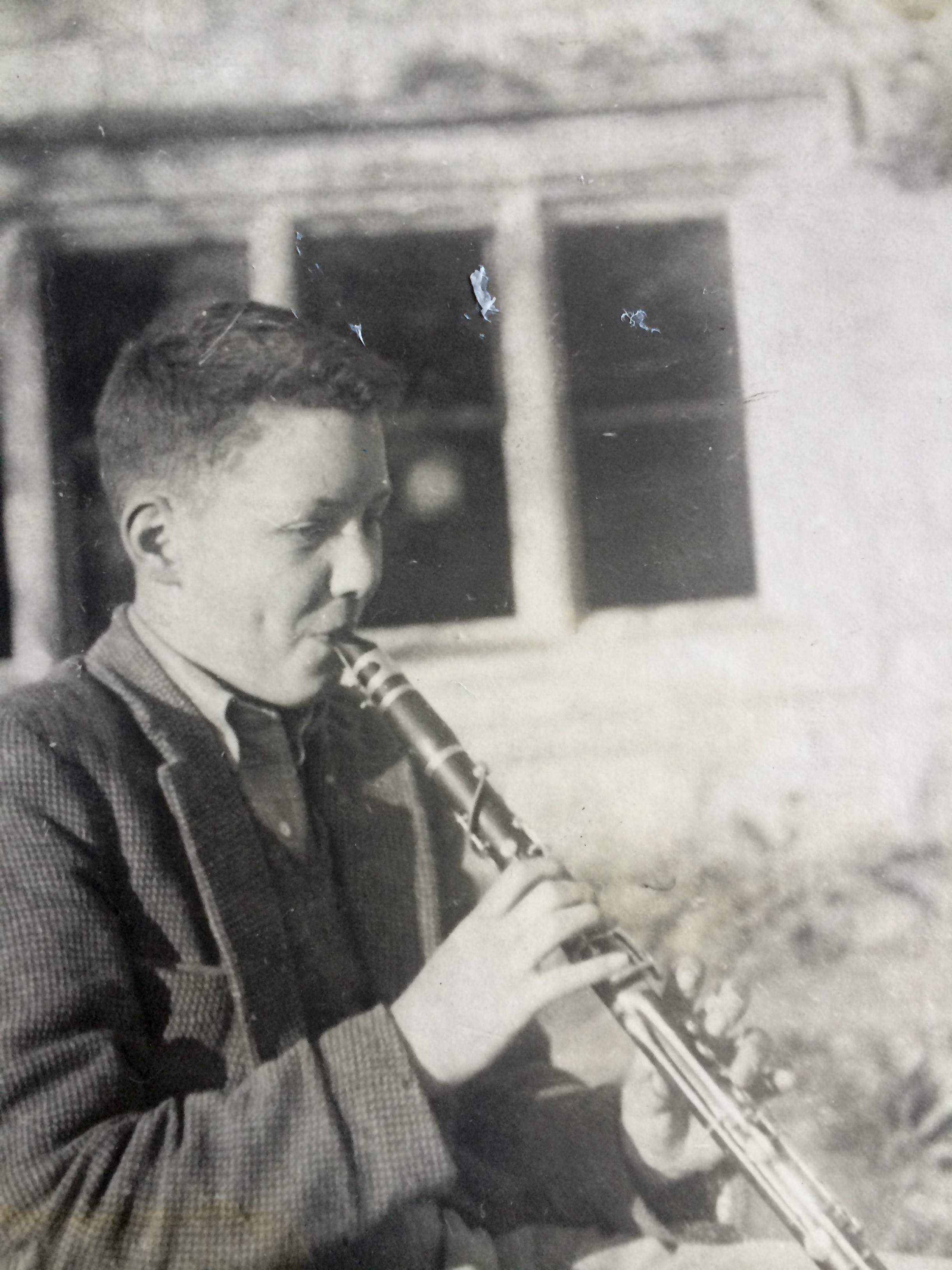
On Saturday 23rd April 2016, over a hundred of John Playfair’s friends joined his family for a concert of clarinet music ranging from Mozart to Cole Porter held at St.Michael’s and All Angels church in Turnham Green, London.

Here, in John’s own words, is a brief account of his lifelong love affair with the clarinet:

How I would want to be remembered…

John PlayfairMy school piano teacher – he was the third or fourth to have battled with my inability to control two independent hands – suggested despairingly that I should go along to the band room and try some other instrument. I rather fancied the saxophone, but there was only one of these, already taken, and the bandmaster, a shrewd old Scotsman, needed clarinettists, so that was that. How he did it I don’t remember, but he had me playing in the band practice that same week – third clarinet, mostly open G’s, but unquestionably music.

Four years later I was playing the Weber Concertino at the end-of-term concert. I never had another proper lesson, which is probably why I never quite got to professional level, but I have held my own for fifty years in a series of amateur orchestras and wind groups. Apart from brief flirtations with the bassoon, horn and – yes, finally – saxophone, the clarinet, or a clarinet (I’ve owned at least fifty) has been a lifelong companion.

It’s the perfect instrument for anyone with broad musical tastes, equally at home in the orchestra, with a string quartet, with other winds, in the military band, a New Orleans parade, a Balkan or Bohemian wedding dance. Only the Baroque (because it wasn’t invented yet) and Bebop eras are more or less out of bounds.

Though simple to look at – a straight wooden tube with holes, a reed and a bell – the clarinet’s acoustics are quite peculiar, and as a scientist I soon got interested in improvements in tuning and tone-quality. A fatal step! In no time the house was full of battered cases containing instruments in various stages of testing-to-destruction. It was twenty or thirty years before I discovered the rules, abandoned my schemes for extra holes and keys, and concentrated on touching-up and re-selling old instruments. I hate to see them go and would love to have kept them all – which is where this differs from the Don Juan complex (though you can read a lot into a clarinet, with its straight pointed end and its gently expanding bell-curve; periodically I have a dream in which I come across an antique shop in some previously unknown part of London, with a stock of clarinets in shapes I’ve never before seen).

When I retired from University College, instead of the standard symposium in which ex-students and colleagues struggle to present their work in such a way as to make it look as if the retiree had some benign influence on it, we had a concert which finished up with the Mozart clarinet quintet; myself and a brilliant quartet led by my daughter, which is certainly how I would want to be remembered.

John Playfair (1931-2013)

John Hugh Lyon Playfair was educated at Cheltenham College and Pembroke College Cambridge. After qualifying as a doctor in the 1950’s, he worked at the Marsden and Brompton hospitals and branched out into research on cancer and tropical medicine. He married his wife Line Mariani in 1959. Most of his working life was spent as reader, then professor of Immunology at the Middlesex Hospital (later University College Hospital) where he taught, wrote and researched the immunology of tropical diseases.

He spent three years in the early 1960’s at the University of California, Berkeley in San Francisco and travelled extensively as part of his work for the World Health Organisation and was in great demand as a lecturer and examiner.

He was an accomplished painter, draughtsman and writer, his 3 early novels were well received and he later wrote several crime novels.

His other great passion was music. He spent a lifetime playing and studying the clarinet; collecting and restoring antique French clarinets, designing and prototyping improvements to the instrument such as new keys and bore sizes. He wrote for the magazine of the Clarinet and Saxophone society and his review of a visit to the former Thibouville clarinet factory in Normandy begins: “For our first breakfast on the sunny forecourt our host brought us croissants, brioches and six metal clarinets…”

He loved playing every member of the clarinet family and arranged chamber music for the various wind ensembles. Many of his rare clarinets have been donated to Edinburgh University’s Sir Nicholas Shackleton Collection with the expert help of his friend Alex Allen.

John’s sense of humour and wide range of interests made him a great friend and companion and his life was spent pursuing his many passions. He was much loved and is sadly missed by his wife Line, brother Guy, daughter Miranda, son Edward, four grandchildren and his many friends.

Posted in Culture | Tagged , , | Leave a comment

Overlooked and left behind?

The latest report from the House of Lords Select Committee on Social Mobility runs to over 100 pages and makes some worthy points. However, it seems to support the idea that education in itself can improve mobility and fairness in the labour market while at the same time saying little about what kind of 14-19 curriculum it feels young people should be entitled to.

The full title of the report is: Overlooked and left behind: improving the transition from school to work for the majority of young people and the take-home message seems to be that although the vital transition from school to work works well for many young people, the majority are ‘trapped’ in poor quality and under-valued routes which can be the start of ‘a lifetime of poverty’.

The core assumption of this report is a re-heated version of the ‘forgotten 50%’ thesis which argued that students who are not following A-level programmes are hopelessly confused by the complex and incoherent options available to them and end up neglected and failing to progress to higher education or training.

This is simply not the case.

The myth of the ‘overlooked majority’

Social mobilitySome politicians may be ‘confused’ by vocational courses but most 16 year olds are perfectly capable of understanding the concept of a specialist full time vocational course which equips them with the knowledge and skill to be able to progress in a particular sector, including to degree courses at university. Given high quality information and advice, they choose to follow these courses in significant numbers.

Data on university admissions from UCAS show that there has been a strong increase in the number of students with advanced vocational qualifications progressing to undergraduate degrees. This figure almost doubled from 2008 to 2015 while the numbers with A-levels only has remained fairly steady. This is hardly a story of educational failure or neglect for the two thirds of 16 and 17 year olds on advanced programmes.

Those young people on vocational courses at advanced level are not overlooked by those colleges which advise and guide them, teach them and help them progress, they are not overlooked by the Education Funding Agency which funds their programmes of study in the same way as A-levels and they are not overlooked by the universities which accept them onto degree courses or the employers who offer them jobs. One place they are overlooked is in Figure 3 of this report (page 16) which completely omits to mention advanced vocational courses followed by 19% of the cohort.

If we turn the spotlight onto the 17.5% of this age group on level 2 and level 1 courses, it’s worth noting that, although these qualifications have relatively little stand-alone value in the labour market, they are essential stepping stones towards advanced level qualifications. We have much evidence that this works, perhaps not for everyone, but there’s not that much evidence of neglect here either. If we also discount those young people who are in work based learning and have by definition made a transition to work, it turns out that the ‘overlooked majority’ probably amounts to little more than 11%.

There are many problems and inequities in the youth labour market where too few skilled jobs or apprenticeships are available, where employers tend to favour those applicants with the highest level qualifications, whether or not they are appropriate, and where too few employers are prepared to invest in training and progression. However, education is not responsible for the fragility of the labour market.

There are also many problems with England’s binary qualification system of post-16 academic and vocational pathways, but the ‘overlooked majority’ / ‘forgotten 50%’ narrative misses the target by a mile and does nothing to help us understand the issues.

The recommendations

The report makes 8 main recommendations, most of which are about being more joined-up and better informed about how well the system is working –  effectively ‘parenthood and apple-pie’ proposals. It also rightly highlights the ‘stark funding differences’ between pre- and post-16 funding which ‘underpin a system of inequality’. In particular, it points out that ‘two years is not enough time for some young people to acquire the necessary [advanced] qualifications’ and criticises the ‘aspiration tax’ which leaves those full time 18 year olds who most need education as the lowest funded age group. If anyone qualifies as ‘overlooked’ it is this group.

The key recommendation:

1. More coherence in government policy, with a framework for school to work transitions from 14 to 19 and beyond.

Media coverage of the report concentrated on the proposal to end the national curriculum at 14 and this is the ‘big idea’; an overarching 14-19 ‘transition’ stage consisting of a common core curriculum containing ‘Life Skills’ plus specialist options as part of a ‘coherent and navigable transition system for 14-24 year olds’ supported by better advice and guidance.

Paragraph 39 of the summary of recommendations says: ‘this stage should include a core curriculum with tailor-made academic and/or vocational courses.’ Ann Hodgson is quoted saying how odd it is that “we have no educational aims and purposes for the 16-19 phase” and that she and Ken Spours have found that “a mix of general and vocational education had a highly motivating effect.”

So far so good. However, paragraph 22 of the same summary describes the proposed pathways as being either academic or vocational (a ‘tailor-made route to work’). That or suggests some kind of academic / vocational divide at 14 which is not compatible with a common curriculum entitlement for all students which includes general and vocational options, maintains breadth and avoids excessively early specialisation.

It is far from clear where the report stands on the question of pathways from 14 and it isn’t nit-picking to ask whether it is saying or or and/or? It wants to ‘move away from age 16 being the cut-off point at which many people embark on the wrong path’ without saying how to avoid recreating this problem at 14.

The other recommendations:

2. Improved careers education in schools to empower young people to make good choices for themselves.

We need action to guarantee a high standard of careers education and guidance for all young people. Instead we are offered a dreaded ‘gold-standard’. The report also suggests that we should rely more on data on employment returns on qualifications and local labour market information without any evidence that this actually helps young people get jobs.

3. A single Cabinet-level minister to lead on this transition framework

Presumably this ‘transition framework’ is the same thing as the 14-19 ‘transition stage’, not a very inspiring title for this important 5-year phase of education. Perhaps it should be seen as having value in its own right rather than simply being defined in terms of where it leads.

4. More data to support research on transitions from school to work.

‘More data’ is never a bad thing, but we must beware of using labour market and earnings data to shape the curriculum and divert us from the educational purpose of this phase.

5. The responsible cabinet minister to report to parliament annually on progress.

After all, nothing says ‘we are not overlooking you’ more persuasively than an annual Commons statement…

6. Government to co-ordinate the efforts of existing structures and bodies; colleges, schools, local authorities, LEPs and employers.

This could have been an opportunity to argue for elected regional authorities to lead on 14-19 education, possibly picking up from the post-16 area reviews once they have made their recommendations. Instead this could be a recipe for multi-agency talking shops with little accountability or incentive to do much.

7. Keep the success of transitions into work for those ‘in the middle’ and give the Social Mobility and Child Poverty Commission a role in monitoring these transitions.

8. Commission a cost-benefit analysis of increasing funding for careers education in school in the context of social mobility.

This seems to suggest that it’s only worth investing in good careers guidance if we can demonstrate that it yields tangible financial benefits. Good luck with that…meanwhile provision remains highly variable and many students are losing out.

In conclusion

The report identifies some of the big challenges and provides some useful analysis. But overall it is something of a disappointment because despite its length and numerous sources it fails to flesh out its one big idea; the 14-19 ‘transition’ stage. This is a pity as our post-16 curriculum and qualification system is in urgent need of coherence and the resources to support it.

Perhaps over in the other house, the Commons Education Select Committee will have something more substantial to say about this when it reports on its inquiry into the purpose and quality of education in England. Let’s hope so because it’s high time to move on from the narrative of neglect to one of entitlement, parity and equality.

See also:

Is vocational education in England really inadequate? (January 2016)

Let’s celebrate vocational success! (January 2016)

5 vocational myths to avoid (March 2015)

Vocational education: rejecting the narrative of failure (January 2015)

Guess what? Vocational students go to university too (March 2014)

Posted in Education, Education policy | Tagged , , , , , , , , , , , | 3 Comments

The challenge of small sixth forms.

Small-Sixth-Form-dw-front-200x300The Department for Education has recently published new advice for academies intending to make significant changes. Amongst other things, the document requires them to make a full business case if they wish to add sixth form provision.

This is a welcome move as it outlines for the first time what criteria the department will use before approving new school sixth forms. The advice has nothing to say about the many existing sixth forms which don’t meet these criteria but it does show that the department has a view about the threshold for a viable sixth form.

The advice is that proposals should normally only be put forward for existing academies rated as ‘good’ or ‘outstanding’ and be assessed using the following guidelines:

Size: an expectation of around 200 students or more – in the institution or through partnership.

Breadth: an expectation that a students should be able to choose from around 15 A levels across a range of subjects – in the institution or through partnership.

Demand: including any shortage of places and an assessment of the quality of advanced provision in the area and the impact of any new provision on other providers.

Financial viability and value for money: including financial resilience if numbers fall and the impact of cross-subsidy on 11-16 provision.

Consultation: all key stakeholders, including other post-16 providers, should be consulted in a fair and open way.

Ultimately, decisions will be made by the Regional Schools Commissioner on behalf of the Secretary of State. They will have to interpret this advice and to consider the impact of any change on the wider system in the region they are responsible for.

This new advice is a recognition that decisions about new sixth form capacity should be informed by a range of factors: actual demand, quality, cost-effectiveness and impact on other providers as well as on the institution itself. It also represents an acknowledgement that no sixth form is an island and that an unfettered market approach has not served sixth formers well.

Shutting the stable door?

As Stephen Exley pointed out in his 15th April TES piece on this, the government has approved no less than 169 new sixth forms since 2010. This was done with little reference to any of the criteria now being suggested and has often led to turbulence and instability. It’s not surprising then, that for many of us the publication of this advice will feel rather like shutting the stable door after so many new school sixth form horses have bolted. Still, the advice is ‘better late than never’ and it may help save some of those horses and herd others back to safety.

What about existing small sixth forms?

What about all those existing small sixth forms which are clearly unable to offer a comprehensive 16-18 curriculum to students and which are probably a drain on their school’s pre-16 funding? 46% of all the 2,400 or so publicly funded sixth form providers in England have fewer than 200 students, based on the 2015 performance table data. In fact, around 11% of the country’s sixth formers are educated in those smaller sixth forms and they have an average size of just 118 students, compared to an average of 748 for institutions in the ‘bigger half’. It seems unlikely that many of those smaller sixth forms will be offering 15 A level subjects – these are the places where students are least likely to be able to access the type of broad offer which all sixth formers should be entitled to.

What could be done?

The problem of small sixth forms is the result of a lack of any coherent post-16 planning over many years, but harking back to past neglect or seeking to allocate blame is not going to solve anything. One way forward would be a judicious use of ‘nudge’ policies which incentivise sixth forms, large and small, to work together in their area in order to ensure that every young person can access the full range of options we want to offer.

The ongoing area based reviews of post-16 education are a unique opportunity to move things forward. They should evaluate the quality, breadth and viability of the school sixth forms in their patch just as forensically as they do for the colleges. They might then be able to make recommendations about establishing area-based partnerships which could plan area-based offers which providers could be asked to sign up to. If partnerships can be created which play to everyone’s strengths and are in everyone’s interest, they could bring real educational benefits to young people, even at a time of limited resources.

See also:

Put school sixth forms on the chopping block, too by Stephen Exley, TES (15th April 2016).

16-19 education: from independence to dependence (April 2016)

Leadership for partnership (November 2015)

Reviewing post-16 education in London (November 2015)

About The Small Sixth Form by Evelyn Smith [from Books to Treasure]

After an eventful journey to their new home, Robin joins the Sixth at St. Quentin’s. With too many girls and not enough desks in the regular form room, Robin and six other girls are exiled to the division room, and before long tensions between the Small Sixth and the Big Sixth escalate to outright war.

Posted in Education, Education policy | Tagged , , , , , , , , , , , | Leave a comment

Project Hope: for a democratic Europe.

Europe‘Project Fear’ is well under way. Both sides in the EU referendum are keen to convince us that everything will be worse if we stay / leave and to scare us into the polling stations on June 23rd. No concern is out of bounds in this bidding war: trade, jobs, economic stability, crime, security, immigration, taxation, even the NHS. Whatever the outcome, it’s sounding like a counsel of despair all-round.

But can there be a ‘Project Hope’ instead? Is there room in this campaign for our desire to make things better rather than simply stop them getting worse? Could this be an opportunity to vote for a constructive European project rather than against everything we dislike? Is it possible that we could be motivated to vote by positive ambitions for our continent?

Is it conceivable to develop a shared vision of Europe as a generous, welcoming place where we value people equally and which puts its skill and ingenuity to wider human use rather than pursuing short term gain? A democratic, egalitarian people’s Europe which sets a benchmark and models a better future for the planet?

Voting to remain doesn’t have to mean endorsing a mean-spirited approach to the rights of migrants. Equally, voting to leave doesn’t have to mean rejecting international partnership and solidarity to address the challenges which face us.

We are often told that the EU robs us of precious national sovereignty and that EU membership means being ruled by an ‘undemocratic’ Brussels bureaucracy. But in our highly globalized, interdependent world can we still speak of national sovereignty and national political authority above all others? As if the powerful global forces which shape our lives; environmental, geopolitical, financial and corporate, are likely to take more notice of one small nation state than a major continental block. Our European institutions may sometimes appear remote, but such supra-national structures are the only hope of taming those forces.

If we want to survive and thrive as a species we will need to address the inequalities, injustices, conflicts and environmental degradation which are so evident wherever we look. We need to use all the human ingenuity we can muster to find solutions to the world’s urgent environmental, economic and social problems.

This surely requires more democracy at all levels, not less.

Given that many of the issues we face are global or continental, we should be developing the democratic structures to allow us to act collectively at those levels. In our continent, we have a head-start with a unique multi-national directly elected assembly, the European Parliament, where our voice can and should be heard. Its legitimacy in supra-national European matters could be strengthened and it could have a greater role in setting the direction of the EU and holding the unelected commission to account.

When we vote for our Euro-MPs in Europe-wide elections we should be shaping policy and deciding on the priorities for Europe-wide government. This isn’t to undermine our nation states but to recognize the complexity of the challenges we face – few of which are contained, or containable, within a single state. The principle of subsidiarity ensures that the actions of European institutions should be limited to Europe-wide concerns and local competencies kept as close to local communities as possible.

This referendum is a historic opportunity and we will be making a momentous choice. Such a decision is not to be taken lightly and however we vote, we would do well to do so in hope rather than in fear.

[I shall be voting to remain in the European Union because I think it is the best way to ensure we can contribute to the creation of a more democratic, more social Europe.]

Posted in Politics | Tagged , , , , , , | 2 Comments

Egalité et solidarité dans une société diverse.

Je propose d’aborder 5 thèmes étroitement liés :

  1. La réalité des diversités dans toutes leurs formes.
  2. L’importance de l’éducation publique dans un projet de société.
  3. La solidarité comme expression d’égalité et de respect.
  4. La démocratie comme outil essentiel pour la construction d’un monde meilleur.
  5. Une Europe démocratique, égalitaire et solidaire.

Diversité

Nous sommes nombreux à venir d’autre part, à être immigré ou issu d’immigrés, à pratiquer plusieurs langues. Nous appartenons tous à plusieurs catégories à la fois. Nationalité, langue et culture ne sont que le début. À chaque niveau nous percevons des différences. Les êtres humains ont une multiplicité d’identités et toute société humaine est un kaléidoscope en mouvement constant. Nous jouons tous de multiples rôles et nous avons de multiples identités qui s’influencent et s’interagissent constamment.

La diversité est donc un fait indéniable. Un fait non seulement à accepter mais à célébrer puisque ce sont nos différences qui nous rappellent aussi notre similitude fondamentale. Pour bien se découvrir soi-même Il faut toujours être prêt à aller vers l’autre, à franchir les frontières qui nous séparent. Célébrer la diversité c’est célébrer l’humanité dans sa totalité et aussi la créativité constante des interactions humaines.

Le sociologue américain Richard Sennett nous propose que :

« Nous devons développer des institutions qui permettent aux différences d’entrer en dialogue, des institutions qui accueillent la diversité. »

C’est un projet essentiel.

Il nous faut préserver une identité ouverte et mutable. Il faut se méfier de la politique intransigeante de l’identité fixe et de ceux qui sont convaincus que leur assemblage particulier de valeurs et de perspectives est supérieur aux autres et qui ont perdu la capacité de prendre un pas a côté pour voir le monde d’un autre point de vue.

Ce n’est pas un souci théorique. Le chef du quatrième parti Britannique s’est plaint de se trouver mal à l’aise quand il n’entend que des langues étrangères dans les transports publics. Plus récemment il a proposé que les enfants d’immigrés perdent leurs droits de scolarité pendant 5 ans. Cela témoigne d’une méfiance envers l’autre et d’un désir qu’il ne se montre pas, qu’il soit exclu de l’éducation et de la vie en commun. Pas besoin d’aller chercher très loin pour comprendre les sentiments qu’il espère encourager.

Education 

Dans cette société diverse, l’éducation publique est un point essentiel de rencontre. L’école, le lycée, l’université, les cours du soir – sont tous des lieus d’apprentissage, d’interaction, de dialogue. Nous avons créé ces institutions pour souder nos sociétés si diverses. A l’apprentissage personnel s’ajoute un apprentissage à la vie en commun et à la construction d’une société réussie.

En France, le principe de laïcité devrait permettre de réduire le risque extrémiste et permettre le « vivre-ensemble ». L’éducation en Angleterre ne partage pas la tradition laïque et républicaine de l’Education Nationale Française. Comment réagissons-nous aux mêmes défis et enjeux sociaux dans les établissements Anglais ?

Je ne peux que citer l’exemple de mon lycée, un Sixth Form College anglais avec 2,500 étudiants de Première et de Terminale dans un arrondissement socio-économique défavorisé de l’Est de Londres où le chômage et la pauvreté sont à des niveaux bien plus élevés que la moyenne.

Nous sommes une communauté diverse, riche en ressources humaines, pleine de jeunes très ambitieux qui obtiennent de bons résultats, progressent à l’université en grand nombre et dont des centaines font du bénévolat dans la vie associative de leur communauté.

Le contexte dans lequel vivent et sont éduqués nos étudiants n’est peut-être pas promettant au niveau économique mais ils sont soutenus par une communauté riche au niveau social, y compris dans leurs écoles, leurs collèges et leurs lycées. C’est là que nos étudiants  développent leurs relations sociales entre amis, voisins, camarades de classe et modèles adultes. C’est dans ce contexte qu’ils partagent leurs joies et leurs peines, leurs espoirs et leurs craintes et qu’ils font l’apprentissage de l’identité et de la différence. Ce réseau de relations et de confiance se construit petit à petit au fil du temps. A l’échelle sociale tout cela contribue à ce qu’on peut appeler le bien-vivre coopératif ou la «cohésion communautaire».

A mon avis, ce sont ces relations sociales qui nous protègent le plus contre les extrémismes de toutes sortes. Ce sont ces relations qu’il faut constamment recréer, maintenir et renforcer.

La philosophe Hannah Arendt décrit l’éducation en ces termes :

« C’est avec l’éducation que nous décidons si nous aimons assez nos enfants pour ne pas les rejeter de notre monde, ni les abandonner à eux-mêmes, ni leur enlever leur chance d’entreprendre quelque chose de neuf, quelque chose que nous n’avions pas prévu, mais les préparer d’avance à la tâche de renouveler un monde commun. »

Il me semble que si nous aimons nos enfants et que voulons les préparer à renouveler le monde commun, l’éducation que nous proposons doit se fonder dans l’association du connu et de l’inconnu. Pour apprendre il faut aller vers l’inconnu ; ce qu’on ignore. Nous nous servons de nos connaissances pour appréhender ce nous ne connaissons pas encore, pour construire des hypothèses et pour les évaluer contre la réalité qui nous confronte. Pour vraiment apprendre il faut aller chercher la différence, changer de position et voir les choses autrement, prendre une nouvelle perspective. Ce n’est pas toujours facile, mais ce sera toujours éducatif.

Solidarité 

Cette rencontre dans l’espace éducatif se vit aussi dans d’autres espaces publiques ; la ville, la rue, l’hopital les transports en commun. C’est un dialogue, une conversation, qui se fait entre égaux. Ces concitoyens reconnaissent leurs différences mais s’entretiennent avec le respect qu’on accorde à celui qui nous est égal. Nous vivons tous la solidarité au quotidien, en payant nos taxes, en nous occupant des voisins, des espaces publiques, du bénévolat ou de la vie associative. Petit à petit on peut réussir à remplacer la xénophobie par la xénophilie.

L’auteur Uruguayen Eduardo Galeano définit la solidarité en la contrastant a la charité:

« Je ne crois pas en la charité, je crois en la solidarité. La charité est verticale, c’est pourquoi elle est humiliante. Elle va du haut vers le bas. La solidarité, elle, est horizontale. Elle respecte les autres et elle apprend des autres. J’ai beaucoup à apprendre des autres.»

Nous avons tous beaucoup à apprendre des autres et quand nous rencontrons l’autre, plutôt que de s’obstiner sur les différences, nous cherchons souvent d’abord ce que nous avons en commun; une langue, une passion, un rapport historique, des intérêts communs. A la base nous sommes tout d’abord des êtres humains et nous pouvons partager notre humanité commune. Nous savons tous ce qu’est la vie avec ses tristesses et ses joies.

Je citerai ici le poète Indien Rabindranath Tagore qui décrit si bien cette ouverture vers l’autre dans son poème Gitanjali :

« Là où l’esprit est sans crainte et où la tête est haut portée ; Là où la connaissance est libre ; Là où le monde n’a pas été morcelé entre d’étroites parois mitoyennes ; Là où les mots émanent des profondeurs de la sincérité ; Là où l’effort infatigué tend les bras vers la perfection ; Là où le clair courant de la raison ne s’est pas mortellement égaré dans l’aride et morne désert de la coutume ; Là où l’esprit s’avance dans l’élargissement continu de la pensée et de l’action.» (traduction d’André Gide)

Mais cet élargissement de la pensée et de l’action n’est pas toujours facile. Pour faire évoluer une vie en commun et maintenir une société diverse et complexe, il nous faut une puissante boite à outils pour construire, adapter, négocier et protéger ce qui nous est important. Ces outils sont nos droits, nos valeurs, nos institutions et nos pratiques à tous les niveaux. Il faut s’en servir, sinon ils se perdent avec de graves conséquences.

Cette rencontre, ce dialogue ne se fait pas dans le vide. Il y a toujours un contexte. Pour créer le contexte égalitaire et respectueux, il nous faut certaines valeurs communes. Il nous faut partager quelque chose qui vaut être défendu. Il faut que la grande majorité soit d’accord que ce sont là des vérités qui sont évidentes en elles-mêmes.

Il ne manque pas de propositions. Un de mes pays d’origine, la Corse, a créé la première constitution de l’âge des lumières, la France républicaine nous a donné « Liberté, Egalité, Fraternité », les Nations Unies nous offrent la déclaration universelle des droits de l’homme. Le Royaume Uni propose depuis quelques années des valeurs fondamentales Britanniques – ‘Fundamental British Values’ : la démocratie, l’état de droit, la liberté individuelle, le respect et la tolérance.

Démocratie 

C’est Winston Churchill qui a dit :

« La démocratie est le pire des régimes – a l’exception de tous les autres déjà essayés. »

S’il est possible d’être solidaire et respectueux au niveau individuel, pour réaliser l’égalité et la solidarité au niveau collectif il nous faut des mécanismes qui dépassent l’individu. Un de nos outils les plus importants c’est la pratique de la démocratie. C’est une façon d’exprimer la solidarité entre égaux, de partager certaines décisions collectives en donnant à chacun une voix égale quel que soit sa position ou son rôle. Comme nous le rappèle Churchill, nous n’avons pas encore développé un système participatif parfaitement démocratique mais le nôtre nous permet à tous d’exercer un minimum d’influence politique et sociale – surtout si il existe des structures démocratiques qui permettent une décentralisation des pouvoirs à plusieurs niveaux ; la nation, la région, la commune, et que leurs pouvoirs sont en équilibre.

Europe 

Nous allons bientôt décider si le destin du Royaume Uni reste en tant que membre de l’Union Européenne ou si nous allons quitter cette union pour poursuivre un destin différent. Je termine donc avec une perspective sur ce referendum qui aura lieu le 23 Juin mais je veux surtout plaidoyer pour une Europe sociale, égalitaire et démocratique.

Rappelons que ce n’est pas le premier referendum sur l’Europe : Le Royaume Uni a voté à 67% en 1975 pour rester dans le Marché Commun, la France a voté le traite de Maastricht en 1992 a 51% mais a rejeté le Traite de Constitution en 2005 a 55%.

On peut accuser les deux cotés à faire la campagne de la peur -‘Project Fear’. Selon les uns, tout sera en danger si nous quittons l’Union, selon les autres, tout sera en danger si nous y restons. L’emploi, la stabilité économique, la sécurité, l’immigration…il n’y a que du négatif et il faut voter contre ces dangers. Le camp ‘Brexit’ et le camp ‘Stay’ semblent tous deux vouloir motiver l’électorat par le rejet plutôt que le projet. Et pourtant, il y a du positif des deux côtés, même si pour le moment il n’est pas en évidence.

Parmi les critiques du projet européen, on nous dit que l’Union Européenne nous enlève notre souveraineté précieuse pour transférer des pouvoirs aux bureaucrates de Bruxelles – comme si nous habitions un univers où les forces globales qui façonnent notre monde seraient prêts à respecter les décisions d’un seul parlement national.

Loin d’être anti-démocratique, l’Europe nous offre un parlement élu par tous les Européens dans lequel nous avons tous des représentants; respecté, multinational, multilingue et avec la possibilité de transcender les intérêts nationaux. On y ajoute le principe de subsidiarité, établi dans le traité de Maastricht, qui limite l’intervention européenne aux problèmes réellement Européens.

Yanis Varoufakis, ancien ministre Grec des finances a dit il y a quelques mois :

« l’Europe doit se démocratiser sous peine de se désintégrer. »

L’Union Européenne est loin d’être parfaite, mais elle nous offre la possibilité d’une Europe sociale, coopérative, solidaire et surtout démocratique qui puisse répondre à nos aspirations et c’est avec cet espoir que je voterais pour la continuation de l’adhésion Britannique.

Conclusion

En conclusion, je pense qu’il faut refuser d’être prisonniers d’une seule perspective, d’une seule voix ou d’un seul ensemble d’identités. Il faut rejeter les catégories étroites et les stéréotypes culturels qui sont si souvent suivis par l’ignorance, le mépris, la haine et la division.

Donc, n’ayons pas peur de la diversité, du multiculturalisme, de la démocratie, de l’internationalisme. C’est précisément là que nous trouverons notre apprentissage de la vie en commun et c’est là que nous trouverons la possibilité d’une vie meilleure dans une société meilleure.

Conférence donnée au Cercle Français de Chiswick le 8 Avril 2016.

Liberte

A lire aussi en Français :


Grammaire de Gramsci et dialectique de Dewey (Décembre 2015)

Leçons sans paroles : comment la musique nous apprend à vivre (Juillet 2015)

L’autonomie : pourquoi ? (Avril 2015)

Laïcité, égalité, diversité (Mars 2015)

Citoyens multilingues, société multiculturelle (Mars 2015)

L’inspection en Angleterre (Décembre 2014)

Le numérique en questions : une perspective anglaise (Octobre 2014)

Socrate et le numérique (Juillet 2014)


Posted in en Francais | Leave a comment

16-19 education: from independence to interdependence.

atl-logoI want to say a little about where we’ve been, where we find ourselves today and where we might be heading. When I say ‘we’ I am referring to 16-19 provision in colleges and most specifically sixth form colleges, although part of my argument is that we now need to think and plan as a 16-19 sector regardless of where provision is located. Although I am a sixth form college principal and closely involved in the work of our representative organisation, I am speaking here in a personal capacity and will express personal opinions.

Some history:

Our history as a distinctive national sector begins with incorporation in 1993 following the 1992 Further and Higher Education Act. Under a previous Conservative government, Further Education and Sixth Form Colleges were taken out of local authority control and given a wide range of autonomy and invited to compete with each other in a brave new education market. Student numbers, staffing levels and structures, pay and conditions, the curriculum offer and entry requirements were all opened up to a free-for-all with no requirement to plan comprehensively to meet all the educational needs of a local area.

A wide range of local funding rates quickly converged to a single national funding system which has become simpler over the years and the complexity of national regulation was also progressively reduced.

In the late 1980’s as a local councillor and chair of Education in a London borough, I was involved in seeing through a borough-wide secondary reorganisation which included creating two Sixth Form Colleges to replace a number of school sixth forms which offered only limited opportunities between them. That was the right decision for our borough and it was taken entirely by the democratically-elected local authority following a great deal of consultation and careful planning at local level. Six years before incorporation we had all the powers we needed to take full responsibility for this project and to see it through. I’m glad to say that 30 years later both those colleges are thriving.

The college where I am principal was created in 1992 as part of a wise and visionary re-organisation by another London borough following extensive consultation and some controversy. The aim was to increase post-16 staying-on rates, achievement and university progression in an area where these were very low. How frustrating for the council that, just at the point where its plans were coming to fruition, control of this exciting new institution was snatched away. Nevertheless, I can report that, like so many others, the new college exceeded all the ambitions of its founders; growing fast and making a phenomenal impact on the educational success of young people in the area; driving up achievement and university progression to remarkable new highs. 24 years later, we now have above average university progression rates and send more disadvantaged students to university than any other sixth form in England.

Incorporation cannot take all the credit for these successes. The demands and aspirations of local communities and the determination and hard work of their elected representatives also had a lot to do with it. These institutions’ achievements are at least as much about the political vision of the local authorities which created them as they are a result of the autonomy which came from incorporation. I will return to the theme of democracy and accountability later but we should not let people get away with claims that locally elected politicians can’t be trusted with decisions about education.

Incorporated colleges were the pioneers of the new autonomy until Labour’s Learning and Skills Act of 2000 created the first academy schools. Sixth form colleges have learnt the lessons of independence over many years, finding new ways to relate to our local competitors, communities and economies. We never went for top-heavy management structures or excessive diversification, chasing funding for its own sake. We have maintained good industrial relations, valuing national negotiations and national pay and conditions for our staff and we have kept faith with educational objectives which put the development of the whole person at the heart of our work even if we have had to reduce contact time over the years. Our longer learning curve means that we have been able to avoid many of the dangers and pitfalls of sudden autonomy which academy chains and trusts have had to face while becoming expert at self-management and comfortable with competition.

Unloved and underfunded:

Successful and pioneering we may be, but for most of our existence we have felt neglected and misunderstood or even ignored and marginalised. Our most common complaint in recent years has been that education policy takes little account of our existence, and when it does we find our work misrepresented.

So, strangely, an institutional model which delivers all the government’s objectives and has been outstandingly successful wherever it has been applied has been allowed to shrink. Successive governments have presided over a gradual decline in the number of sixth form colleges with hardly a murmur of concern. Many have closed or been merged while only a few have been created over the last 20 years. For many areas, some kind of Sixth Form College would be the best way to ensure cost-effective, high-quality post-16 provision for all young people. But whether by intent or neglect, government policies have mostly conspired to prevent this.

More recently, underfunding has been added to our list of grievances; with full time 18 year old learners in colleges and sixth forms the lowest funded of any in England, closely followed by their 16 and 17 year old classmates. We find ourselves at the bottom of a funding ‘Grand Canyon’ looking up at relatively better resourced 5-16 education on one side and higher education on the other. This is despite our crucial role in bridging the gap between these phases of education, helping to transform school leavers into undergraduates in challenging academic settings designed for this age group.

To give credit where it’s due, there has been much levelling of the playing field and many of the inequities between colleges and schools have been removed and we now have a common national funding system for all 16-18 year olds. The problem is that it doesn’t really measure up to funding the kind of education which young people should be entitled to.

Towards a new system?

So now we face area reviews and, for sixth form colleges at least, the linked opportunity to choose to convert to 16-19 academy status. Are these threats or opportunities?

For a principal, it’s an occupational requirement to see opportunities and to seize them. In fact there are many:

  1. Area reviews are a collective and collaborative process. Rather than being ‘done to’ we need to take control and grasp the agenda. We are at the table and each college needs to show how it can contribute to making post-16 education work better for their area.
  2. The fact that school sixth forms are not directly involved gives sixth form colleges the opportunity to engage them and raise important issues about the sufficiency and diversity of the post-16 offer across all sixth form providers in an area. Whether represented on the steering groups or nor, we are all part of the pattern of provision and as major providers sixth form colleges bring expertise and economies of scale – who better to bring school sixth forms into the discussion and lead the conversation?
  3. The possibility of creating new kinds of partnership with schools, such as local Multi Academy Trusts offers the opportunity to start building a more integrated local education system which aims to meet student needs more coherently and comprehensively, bringing together the best of curriculum expertise and student support from pre- and post-16 providers in new ways.
  4. This is an opportunity to help build a system from the bottom up. Area review steering groups could be embryonic post-16 planning forums, building on the relationships and trust established during the reviews for the longer term. There is undoubtedly a democratic deficit, but we could help develop new ways to ensure that local people’s voices are heard. For example, nothing prevents local academy trusts from choosing to organise elections for community members, recreating the space for popular local debate about education policies which has been lost. And nothing prevents the post-16 providers in a devolved city-region from choosing to make themselves accountable to the elected authority for that area.
  5. A school-led self-improving system would be greatly enhanced by the involvement of Sixth Form Colleges. We would bring so much to any partnership we join: 16-19 experience across every type of programme, strong advice and guidance and university and employer links, uniquely broad enrichment programmes, national negotiations on pay and conditions, cost-effective central services – to name but a few. We have a lot to offer in terms of setting system aims, creating robust system structures and contributing to system leadership.

We have nothing to gain by remaining aloof or claiming to be better than all other sixth form providers. It’s time we moved from the margins to the mainstream, from independence to interdependence. This will mean engaging fully with the wider school sector which is after all where the most similar provision is and where all our students come from. It also means making common cause with all those who are educating the post-16 age group; on curriculum, on funding and on student support.

We will be all the more effective and our students all the better served if we grasp these opportunities.

Based on my speech on Monday 4th April 2016 at the FE sector zone of the Association of Teachers and Lecturers (ATL) 2016 conference.

See also:

New Year wishes for sixth form education in 2016 (January 2016)

Reviewing post-16 education in London (November 2016)

England’s engines of mobility (October 2015)

What’s at stake in the new post-16 Area-Based Reviews? (July 2015)

Speaking up for 16-19 year olds (June 2015)

The case for sixth form colleges (March 2015)

Posted in Education, Education policy | Tagged , , , , , , , , , , , , , , | Leave a comment

Thinking students and student research.

Think againIn his excellent book Think Again (2012), John Taylor makes a strong case for putting philosophy at the centre of our teaching in order to develop students’ ability to think. As he says in his introduction: “Education should be all about teaching students to think for themselves” and the best way to do this, he argues, is to take a philosophical approach to all our teaching, getting students to think more deeply and independently.

The book offers practical support for teachers who want to promote philosophical discussions in the classroom including through different subjects. It also highlights the opportunities created by effective and well organised project work for students to develop their research, analytical and dialectical skills.

Project based learning

In the chapter on how to develop a project-based approach, Taylor suggests a range of ways in which student research projects can build on philosophical ideas and discussion by combining them with greater academic challenge and deeper reflection and, hopefully, the development of a soundly-based personal perspective.

Personal projects can emerge from informal settings but there are also ways of accrediting student research such as the Higher and Extended Project qualification or the Extended Essay as part of the International Baccalaureate Diploma. Structured philosophical discussion is a good way of building up students’ questioning and thinking and provides the stimulus for students to prepare for an independent research project on a topic of their choice.

Taylor argues that one of the benefits of a project-based approach is the opportunity for students to think more ‘deeply’; to try to uncover some of the fundamental ‘first principles’ and question received wisdom and assumptions in the area they are studying. In the context of a well-defined research project, the critical Socratic enquiry Taylor advocates as part of good classroom teaching can then lead on to some of these more profound ‘meta’ questions which require more time and further research to explore properly.

At a time of real pressure on resources, when we are expected to do more with less, can we fit such programmes into an already overcrowded curriculum? Taylor makes the point that we do need to dedicate time to actually teaching students the research, analysis and dialectical skills they need before we can expect them to move on to apply them more independently. “If we really value that outcome, we ought to be prepared to invest the resources.” If this approach is consistent throughout a young person’s education, the investment will be worthwhile and it will be enhancing rather than competing with ‘other’ educational priorities.

A project-based philosophy programme

Taylor offers a good model of what a planned programme might look like, combining both taught elements and guided student research. The aim of the taught programme is to develop students’ research methods and their skill in honing their own ideas and defending them in discussion. This is the opportunity to introduce a range of interesting case studies which can also serve as a way into specific potential project ideas for some students. His suggested case-studies include: nature and nurture, the ideal society, the limits of knowledge, justice, warfare etc. and can all be used to introduce and explore key ideas and philosophical methods.

In the personal research phase, responsibility is shifted towards the student; they can apply the skills they have acquired as they move into a more personal, albeit guided, critical relationship with the knowledge and ideas they are finding for themselves. Taylor goes on to offer advice on every aspect of project management, from defining a research question through structuring, researching, evaluating, discussing and drafting a student research project.

Being a philosophical teacher

Taylor argues that if we want our students to be philosophical learners, we need to be philosophical teachers “taking every opportunity to probe, question and challenge the things our students say, until they get the message and begin the process of examining their ideas for themselves.” It also means keeping ourselves immersed in a stream of fresh thinking – for example he recommends philosophical reading groups for teachers to help keep them intellectually refreshed.

Think Again is highly recommended for anyone who wants to develop their students’ ability to think and research more systematically. It is a thorough and accessible starting point for the journey towards becoming a ‘philosopher-teacher’ – and we certainly need more of those if we are to nurture the kind of ‘philosopher-students’ who can rise to the urgent challenges facing the next generation.

See also:

More sixth formers doing research projects (February 2016)

Valuing student research (March 2015)

Promoting a sixth form student research culture (September 2014)

Posted in Education, Philosophy, Reviews, Teaching and learning | Tagged , , , , , , , , , , | Leave a comment

Young people discuss the future of London

IMG_4806We were delighted to welcome 3 of the candidates for this May’s Greater London Assembly elections to our NewVIc Future London event, held at Stratford Circus Arts Centre on Wednesday 23rd March. The hustings were part of our Future London showcase including an exhibition of visual art, live performances and presentations by students at our partner arts centre, Stratford Circus.

Students from Newham Sixth Form College (NewVIc) helped to plan and organise this event together with Emmanuel Gotora from London Citizens, NewVIc Student Development Manager Kate Reed and teachers Rob Behan and Paul Paluch Edwards. This was linked to a wider student research project which aims to come up with solutions to some of the challenges faced by our city.

We had asked students across the college to suggest questions they would want to ask the candidates and, after longlisting the best ones at the NewVIc Student Council, we selected a final set of 7 questions to be asked by students. Housing issues figured prominently in the questions suggested by students and I don’t think I can remember a time when this issue has been such a high priority for young people.

The meeting was attended by 3 of the candidates standing for the City and East London constituency of the London Assembly which will return one constituency member in the election on 5th May. This constituency includes the London boroughs of Tower Hamlets, Newham and Barking as well as the City of London. All voters in London will also be able to vote for a party ‘top up’ list and, of course, a single directly elected mayor of London in the same election.

The candidates present were: Unmesh Desai (Labour), Chris Chapman (Conservative) and Elaine Bagshaw (Liberal Democrat). The Green candidate, Rachel Collinson had to send her apologies due to a last minute emergency.

The questions selected by students were:

  1. What got you into politics and how would you get more young people involved in politics? (Keir)
  2. What would be your personal top priority if you are elected to the GLA? (Shonika)
  3. What would you do to address the increase in homelessness and rough sleeping in London? (Maisha)
  4. The cost of housing in London has tripled in recent years, how would you ensure that there is more affordable housing to rent or buy for people in East London? (Syca)
  5. Would you guarantee the current students’ free bus passes and would you consider free tube travel for students? What about for 18 and 19 year olds? (Hannah)
  6. How would you ensure that there are more job opportunities for young pople in East London and that they are accessible to all? (Saif)
  7. If you are elected, how would you work with a mayor of a different party?

The candidates cited housing, infrastructure and air quality as key issues for them with policies proposed including landlord licensing and enforcement, cleaner energy and more investment in public transport and house building. They all seemed to agree that the definition of ‘affordable’ housing had to be reconsidered in relation to the average income of people in East London so as not to price people out of new developments.

All three undertook to keep students’ free bus passes but couldn’t commit to going further with free tube travel – it is currently discounted for young people. In responding to the question about skills and jobs, Unmesh highlighted the achievements of Newham’s Workplace scheme, Chris spoke about the transformative impact of apprenticeships and Elaine emphasised the new skills, such as coding, needed in a changing economy. While there was agreement about the challenges, the candidates did sometimes question the realism and commitment of other parties to tackling them.

As the moderator, I asked the candidates to aim for a two minute response to each question in order for us to cover all the ground and they were very disciplined and stayed on track and on topic. They also avoided personal attacks or partisan point-scoring. The students in the audience will have been able to make judgements about them without any of the negative campaigning which we know turns people off. Overall, the impression was of three serious candidates who, while disagreeing on a number of points, understand the issues facing our city and want the best for London.

I do hope this process has encouraged those students who will be old enough to vote on 5th May to do so and we are all now looking forward to the pre-election Mayoral Accountability event organised by London Citizens with London mayoral candidates Sadiq Khan (Labour) and Zac Goldsmith (Conservative) at the Copper Box in the Olympic Park on 28th April. The young people attending will once again be raising the issues which concern them.

Meanwhile, we will be turning our attention to the EU referendum on June 23rd and organising a college event to help students understand the issues at stake.

Photo (L to R): Unmesh Desai, Elaine Bagshaw, Chris Chapman, Eddie Playfair.

See also:

Young people and the election (April 2015)

A better future for London (May 2015)

Posted in NewVIc, Politics, Students | Tagged , , , , , , , | Leave a comment

Boswell in Corsica.

Boswell-as-Corsican-192x300The Scottish lawyer and writer James Boswell (1740-1795), famous for his Life of Samuel Johnson, was also a great supporter of Pasquale Paoli and Corsican independence. Boswell met enlightenment thinkers such as Voltaire and Rousseau and was encouraged by Rousseau to visit Corsica where political developments and its struggle for independence from Genoa briefly put the island at the centre of enlightenment political ideas.

In Corsica, Boswell was deeply impressed by the qualities of the Corsican leader, general Paoli, whom he spent a week with in the village of Sollacaro. On his return, he campaigned in the British press, lobbied prime-minister William Pitt the Elder to intervene and also personally sent money and cannon from Scotland to the Corsican army.

The key element of Boswell’s campaign was his An Account of Corsica, The Journal of a Tour to That Island; and Memoirs of Pascal Paoli (1768) which was both a historical, political, socio-economic and cultural overview of the island and a journal of his tour to visit Paoli in 1765. Boswell draws on his diaries to paint a picture of the primitive and democratic simplicity of the Corsican people and the heroism of their leader. The Account was published in Glasgow in 1768 and sold well, reaching a third edition within the year. It also ran to three Irish editions and was translated into German, Italian, Dutch and French.

After having travelled around Germany, Switzerland and Italy for a year, Boswell decided to go to Corsica in the autumn of 1765. The island was at the time the scene of sporadic skirmishes between occupying forces from Genoa and France on one side and a Corsican independence movement led by general Pasquale Paoli on the other. Boswell gained passage from Italy to Corsica on an English ship, and accompanied only by his manservant, travelled to the interior of the island and the stronghold of the rebel forces. Here he met and befriended the rebel general Paoli and took extensive notes of his visit, before returning to the European mainland. In 1768 Boswell published his account of the visit and of his meeting with Paoli, who had by then gone into exile in London and remained a lifelong friend.

Boswell was convinced that he would discover in Corsica:

“…a place where I should find what was to be seen nowhere else, a people actually fighting for liberty and forming themselves from a poor, inconsiderable, oppressed nation into a flourishing and independent state.”

He was not disappointed. The young adventurer reported that:

“I had got upon a rock in Corsica and jumped into the middle of life.”

Boswell wanted to shape public opinion and persuade the British government to support the Corsicans in their struggle for independence. His English readers knew little about the island but were eager to be thrilled by exotic travel journals. The first part of the Account aims to set the context for the account of his personal journey and meeting with Paoli.

The text reveals the young Boswell as a serious enlightenment polemicist, albeit one with a tendency to idealise both Paoli and the Corsican people.

Travelling through the village of Bastelica he found “a stately, spirited race of people…I liked to see their frankness and their ease.” He often refers to the Corsicans as ‘brave’ and describes them as “plain and generous people of solid, good sense.”

“Forget their meanness of appearance. Hear their sentiments. You will find honour and sense and abilities among these poor men.”

Some of this may have been intended to counter any preconceptions his readers might have about the Corsicans as wild, savage, brigands.

For Boswell, Corsican independence was something of an obsession and his friend Samuel Johnson was once driven to implore him to “empty your head of Corsica, which I think has filled it for rather too long.” Boswell was undoubtedly deeply committed to the cause of Corsican independence and Paoli as its embodiment, but there is also more than a hint of the hero-worship which he later transferred to Dr. Johnson.

Nevertheless, The Account is an important contribution to campaigning and travel writing and what Boswell and Paoli argued for in the late 18th century is still a matter of live political debate, both in Corsica and in metropolitan France. The struggles of this small embryonic democratic state were representative of a global emancipation movement whose project has arguably not yet been fully achieved over 200 years later.

23 years before the Life of Johnson the Account secured Boswell’s fame and he was often referred to as ‘Corsica’ Boswell.

Boswell account Paoli Boswell


The full text can be read here:

https://archive.org/stream/accountofcorsica00bosw#page/25/mode/1up

See also:

Paoli in London (March 2015)

More on Corsica:

Escher in Corsica (January 2016)

Sebald in Corsica (December 2015)

Edward Lear in Corsica (August 2015)

John Minton in Corsica (July 2015)

Conrad in Corsica (August 2014)

Seneca in Corsica (August 2014)

Village wisdom: Corsican proverbs and sayings (August 2014)

Poem: Corsica (July 2015)

Posted in History | Tagged , , , , , , | Leave a comment

The social origins of human thinking.

TomaselloWhat is thinking? Where does human thought come from? How did it evolve? These are important questions for us if we want to understand what makes humans different from other living things and to make the most of our abilities both as individuals and as members of society.

Michael Tomasello’s brilliant A Natural History of Human Thinking (2014) tackles these questions in a way which is clear and accessible for the non-specialist reader. Tomasello argues that co-operative social action is the key to our uniqueness. Once our ancestors learned to put their heads together with others to pursue shared goals, humankind was on an evolutionary path all its own.

The shared intentionality hypothesis:

Thinking can seem to be a solitary activity; something inside us contained within our brain. But it is done in a social and historical context with tools made by others after years of use and learning from others and for an imaginary audience. Human thinking can be described as “individual improvisation enmeshed in a sociocultural matrix”.

Some theorists emphasise the role of culture and its artifacts in making certain kinds of thinking possible. Lev Vygotsky for example observed that children grow up surrounded by the tools and symbols of their culture, including the linguistic symbols which organise their world. Their use of these tools is internalized during their development, leading to the sort of internal dialogue which is the prototype for human thinking.

Others have focused on the fundamental processes of social co-ordination which make culture and language possible; being able to ‘see’ the world from the perspective of other people, subordinating one’s own point of view. ‘Social infrastructure’ theorists (eg: Mead, Piaget, Wittgenstein) share a belief that language and culture are only the ‘icing on the cake’ of the way we understand the social world.

Tomasello draws on new findings about the cognitive abilities of great apes and human infants to support his claim that important aspects of human thinking emanate not from culture and language but from uniquely human kinds of social engagement.

This is a philosophy of action; thinking about the unique ways humans put their heads together with others in acts of shared intentionality with joint goals and joint attention, creating individual roles and perspectives which need co-ordinating. This action is connected to more abstract cultural practices and products such as the cultural institutions we have created over time.

Humans are different:

In short, humans think in a different way, which Tomasello describes as ‘objective-reflective-normative’. This means that only humans can:

  • conceptualize the same situation or entity from different social perspectives.
  • make socially recursive and self-reflective inferences about others’ intentions.
  • self-monitor and evaluate their own thinking with respect to the reasons of others.

Shared intentionality created this unique type of thinking; representation, inference, self-monitoring, as a way of dealing with the problems of social co-ordination and collaboration. Our great-ape ancestors lived individualistic and competitive lives and their thinking was geared to achieving individual goals. In contrast, early humans were forced by environmental circumstances into more co-operation in order to achieve group goals.

Tomasello suggests that the key evolutionary steps were probably:

  1. The creation of new types of small-scale collaboration requiring co-operative communication.
  2. The ability to construct a common cultural framework of conventions, norms and institutions as part of a larger community which required a more permanent shared social world.

Co-operative communication became conventionalised linguistic communication and people could now reason ‘objectively’ from the group’s ‘agent-neutral’ perspective.

None of this means we are ‘hard-wired’ to think in these ways. We learn to do so by exercising these skills in social interactions from early childhood onwards. As we grow up, we internalize our co-operative interactions with others into thinking for ourselves and this becomes a kind of co-operative was of knowing and thinking.

The role of education:

Our ability to co-operate with each other in order to agree and achieve shared goals is probably the most important skill we have. In the complex and interconnected society which we have created, this co-operation with shared intentionality takes more and more powerful and sophisticated forms with enormous potential to shape our world. We therefore have to master it and pass it on to the next generation.

We need the next generation to be adept in the skills of co-operation and democratic decision-making which can harness this human shared intentionality to enhance our lives and our understanding. We need to build and refine all the tools which can make co-operative social action work for good at the human scale as well as at the global scale.

What lessons might teachers draw from all this? We need to put thinking at the centre of our educational project and treat it not as a mysterious internal secret but as a kind of doing; no less active or social for sometimes being silent and solitary. We also need to recognise the value of learning in group settings as well as individually from an early age; of ‘learning by doing’ as well as ‘learning by reflecting’.

Thinking, communicating, empathising and cooperating with others are far from optional ‘soft skills’. They are the hardest and most crucial of human abilities and our survival depends on how well we nurture them.

See also:

Roberto Unger on school as ‘the voice of the future’ (April 2015)

Challenging neurosexism (January 2016)

Any misunderstandings, inaccuracies or simplifications are mine and I am happy to have them pointed out.


Posted in Education, Philosophy, Science, Teaching and learning | Tagged , , , , , , , , , , , , | Leave a comment