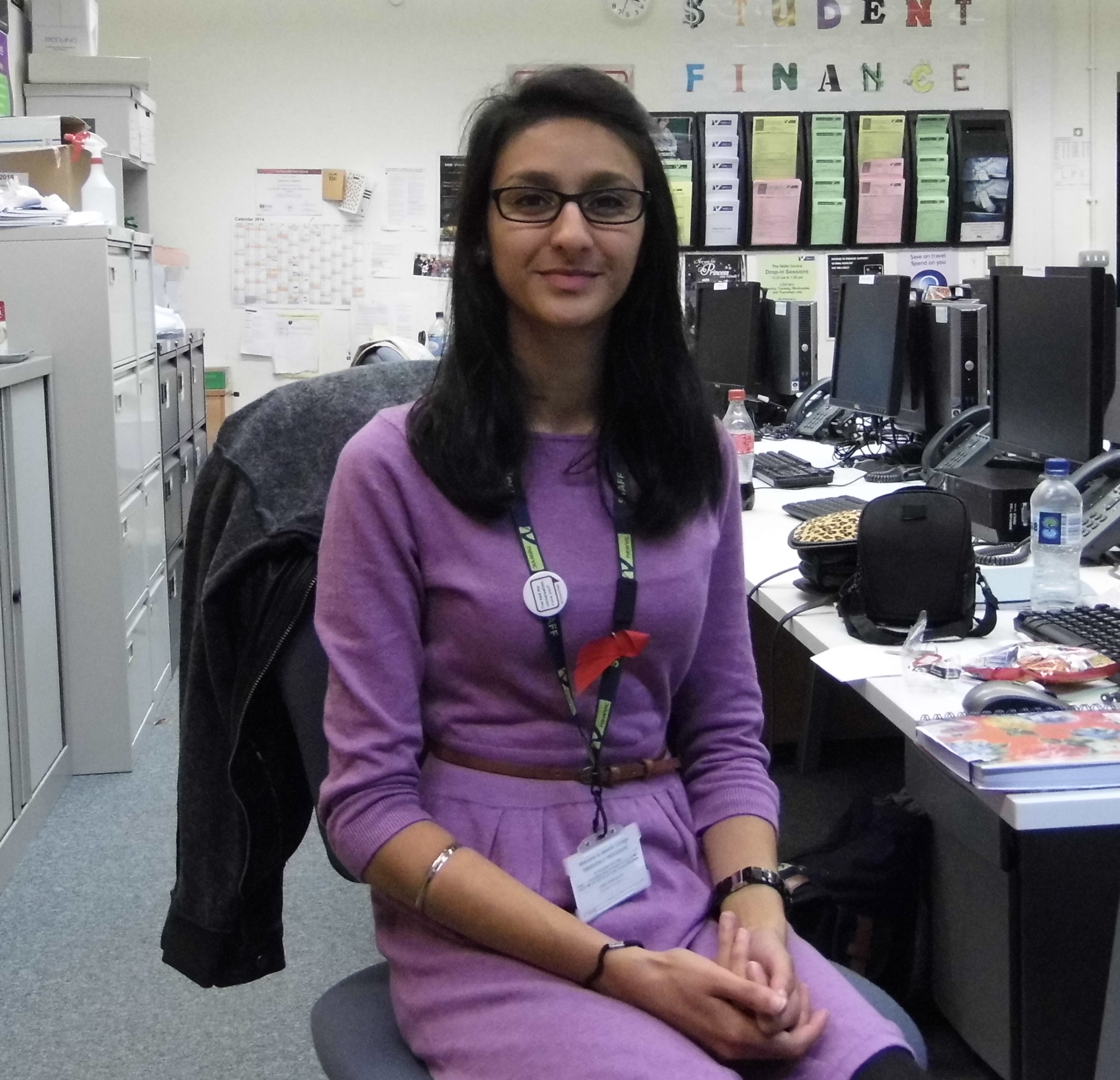
My NewVIc Story: Supreet Kaur

SupreetI am currently the Lead Academic Mentor at Newham Sixth Form College (NewVIc) where I am responsible for mentoring students from art, media and IT courses, helping them develop independent learning skills. I work with a fantastic team of 6 mentors to support students and it is fulfilling seeing students go from being relatively disorganised and overwhelmed by their work to becoming motivated learners who no longer need your help (but will occasionally pop in to share good news like achieving an A in a mock exam!).

I remember enrolling at NewVIc, the hustle and bustle, the lines, the assessments, the apprehension of leaving behind old friends and making new ones. I thoroughly enjoyed my time at NewVIc because I was challenged by my teachers and tutors, I was not left to stagnate, and they pushed me to succeed and to achieve. I studied A Level English Language (A*), A Level Textiles (A*), AS Level Law (A) and a BTEC National Diploma in Interactive Media Production (Distinction), I had brilliant teachers who were always on hand to help; Simon Birchall, Nadia Keeley, Saci Lloyd, Chris Leach, Louise West, Charlotte Amore and Nelson Bayomy to name a few.

I achieved my degree in Games Design from the London College of Communication, University of the Arts London, part of one of the biggest art and design communities in Europe. Working in teams of up to 4 people I helped to produce 6 games using Unity, Flash ActionScript and Microsoft XNA. We went from sketches on the back of a hand-out to digital playable prototypes working to set briefs and creating dozens of storyboards for each potential idea. The course was underpinned by contextual studies lectures in media and semiotics. People always ask me “Why games design?” Well, game design is an incredible amalgamation of so many different disciplines; level design, graphic design, user interface design, landscape art, urban art, character design, 3D modelling, storyboarding, animation, concept creation, pitching, programming, storytelling, marketing and so much more.

When I was offered the chance to be a part of the mentoring team at NewVIc, I jumped at the opportunity and was excited at the prospect of working with young people to help them with their academic endeavours. The transition from student to employee at NewVIc is a brilliant experience. It required a massive shift in perspective and I took a lot from my recent experience as a graduate. The environment promotes personal and professional development at every corner and it was certainly true that you hit the ground running come September.

Being on both sides of the UCAS application process is a unique experience. On the one hand I’ve been that student deciding which five universities to select. On the other hand, as a mentor, I am helping students with their UCAS applications, speaking about my experiences, giving them things to think about and research, outlining entry requirements and generally encouraging them to be independent and to make a thoughtful and well-researched decision. I understand the indecisiveness and worry that came with making such a big decision. I used to see my tutor, Jenny Willett, every week with my portfolio, and discuss graphical styles or the roles of women in games. Jenny recommended a wonderful book about game culture called ‘Trigger Happy’ by Steven Poole. I even bought my own copy and have since recommended it to several students who have an interest in digital media and videogames.

I was particularly interested to see how the college promoted itself and was lucky to be given the opportunity to work with the Community Liaison Officer to attend further education fairs at local schools. I have now spoken to many parents and young people about how NewVIc supports students; drawing on my experiences both as a student and mentor, showcasing how my role is about working one-to-one with students to ensure they develop their study skills. I strike up conversations with prospective students rather than giving them a sales spiel or using statistics. The experience a student can gain at college transcends numbers. I describe the pathways the college offers, speak about the exciting ‘Nrich’ timetable of student development activities, the Sports Academy’s successes and all the great events that take place throughout the year at NewVIc.

Since starting working here, I have been involved in law evenings, open days and promotional events at feeder schools, I have been to a talk and screening with a Holocaust survivor, helped out on Mental Health Awareness stalls in college; I have learned so much in my role and have been exposed to many different situations. It is with joy that I returned here and it is the college’s palpable community spirit that makes it a wonderful place to be.

I also have a portfolio: http://su-kaur.wix.com/portfolio and a blog: http://su-kaur.blogspot.co.uk/ which is a space for me to share my thoughts about advertising campaigns, books and games, I look at the messages that are being disseminated; I evaluate them and learn from them. I also work on developing the games I made at university in a reflective and critical way so I can see what needs refinement.

NewVIc has had a massive impact on me and I am grateful to have been given the chance to give back to this community. My advice to students is to give 110%, do tonnes of research and geek out on what you are passionate about!

Supreet Kaur – NewVIc class of 2010 (and Langdon school 2003-2008)

Read other NewVIc stories here.

Posted in Guest blogs, NewVIc | Tagged , , , , , , | Leave a comment

Inspectors make the case for comprehensive colleges

A report by the national education inspectorate makes a strong case for comprehensive sixth form colleges rather than vocational colleges. The case is based on evidence that comprehensive colleges are more socially mixed and achieve better results. The report has called into question the government’s approach to technical and vocational education.

Maybe this is the first you’ve heard of this. That’s probably because the report is from France rather than England and relates to lycees polyvalent and lycees des metiers rather than comprehensive and vocational colleges. However, many of its conclusions could also apply this side of the Channel. The French lycee which is roughly equivalent to a sixth form college but includes Year 11, covering ages 15-19. The lycee polyvalent is broadly comprehensive in that it offers both general and vocational programmes under one roof.

“In the context of vocational reform and the aim to promote higher rates of graduation at university, sixth form colleges need to offer each student a programme which meets their particular needs. This means being able to offer opportunities for students to change direction after making their initial choice of pathway. We studied the effectiveness of both comprehensive and vocational colleges.

The specialist vocational colleges created in 2001 started as pilot institutions and the model was then spread more widely. From aiming to prepare young people for specific economic sectors they have not improved student success or participation rates and seem to be more of a tool for selecting students.

Comprehensive colleges, in contrast, have been successful in redesigning the offer for young people. They are more socially mixed and provide many bridges between different pathways without any sense of hierarchy or relegation for students changing pathways. Their baccalaureate results are also consistently better – by about 8%”.

The report suggests a new framework for comprehensive colleges with a minimum size in order to be able to offer viable general, vocational and technological pathways. It also suggests the creation of a network of colleges to support their development.

It seems that there is a strong case for promoting comprehensive sixth form colleges in the interests of all young people, whether they’ve committed to a vocational or a general education pathway. In France the government will have to take notice. In England, where we have a laissez-faire approach driving providers towards greater selection and segregation of post-16 pathways, it might be in the interests of young people for us to listen to this message as well. Maybe it’s time to consider what a post-16 education system might look like based on the evidence of what works best.

Many thanks to the Cafe Pedagogique for their helpful summary. The report itself (in French).

Posted in Education, Education policy | Tagged , , , , , , , | Leave a comment

Post-16 performance tables: taking the long view

The recently published 2014 post-16 performance tables show that A-level students at Newham Sixth Form College (NewVIc) improved their performance faster than the national average for the second year running. They also show that our advanced vocational students performed better than the national average for the second year running. We’re obviously delighted, but is this part of a long term trend?

NewVIc is a large provider with substantial numbers of both A-level and vocational students and there are national post-16 performance table data published for the last 21 years, so it should be easy to get robust data. Unfortunately the performance tables do not give us 21 years of comparable measures.

To be useful and comprehensible, performance tables should measure the things we value, show them clearly and help us to see the trends we are most interested in. This means having measures which are stable and comparable over a period of years. When the tables become too complex or too many changes are made to what is being measured from year to year, the danger is that they can lose their value and we can lose confidence in them.

England’s annual post-16 tables have seen their fair share of changes in the 21 years they have been published and it is hard to find any data which have been recorded in a stable enough way to get a 21 year trend.

The points system has changed at least twice in that time, although this can be overcome by converting a provider’s score to a percentage of the national average score for that year. The big change has been the combining and then separating of A-level and vocational performance. In the first four years (1994-1997), only A-level points were recorded, vocational achievement was measured as a % pass rate. In 1998, a single new combined advanced measure was introduced for A-level and vocational performance. From 2002, separate A-level and vocational point scores were no longer published and for 10 years only the combined measure was available. A separate A-level measure was reintroduced in 2012 followed by a separate vocational measure in 2013 and the combined measure was also withdrawn in that year.

These changes reflect the changing views about the equivalence of the two types of qualification. The current approach regards them as so different that to combine scores would be an ‘apples and pears’ exercise. However, this issue was also addressed through a review of vocational point scores which led to downgraded values for vocational distinctions, merits and passes.

In the case of our college, we have 8 years of A-level point scores from 1994 to 2001 which shows NewVIc students consistently achieving around 70% of the English average points. We then have no data for 10 years, followed by 76%, 81% and 85% points per student for 2012-14. We can therefore claim to have improved faster than the national average since 2001 although there’s a big gap in the middle of the story.

For vocational courses, NewVIc students were regularly performing around the national average with point scores averaging 100% up to 2001. Since the ‘big gap’ we have seen two years of 112% vocational point scores – well above the national average.

So what happened in the 10 year ‘big gap’? In our case, the combined advanced point score rose fairly steadily from 66% in 2002 to 88% in 2011. Again, a faster than average improvement over a long period.

So, despite the shortcomings we can try to establish longer term relative trends. In order to help sixth form providers which have both A-level and vocational provision to convert their ‘separated’ data back to ‘combined’ data in order to establish their long term performance trends, I offer a very simple methodology* which allows providers to bring in the 11 ‘lost’ years (2002 to 2012) into their run of data. See below for the guidance.

In NewVIc’s case, this re-combined data suggests that our advanced students taken as a whole have continued the steady trend of improvement and are now achieving 98% (2013) and 99% (2014) of the national average points per student – our best results ever despite a cohort with lower than average GCSE points scores on entry.

The other concern about these tables is that unlike their key stage 4 equivalents they don’t represent the performance of a whole age cohort, only those who are in education and taking advanced qualifications. Level 2 vocational qualifications did put in a brief appearance for a short while early on and they are set to return again. But with the raising of the participation age we should now be able to compare the performance of a whole age cohort of students at all levels and area by area rather than simply by provider – some of which are very selective and keep out a large proportion of the cohort.

We celebrate the improvement in our students’ exam scores and we want the best for all our students but we also need to remember that exam performance is only one dimension of educational success and keep it in perspective.

So let’s keep analysing the data we have while making the case for simpler and more comprehensive tables that tell us what we need to know to help make the system more successful for all young people.

*How to calculate combined advanced points scores for any particular year or institution from data in the performance tables. 

A: number of A-level students (institution)

B: number of vocational students (institution)

C: institution’s average A level point score per student (the same method applies to points per entry)

D: institution’s average vocational point score per student

E : national average A-level point score

F : national average vocational points score

Institutinal combined score : [(A x C) + (B x D)] / (A + B)

Weighted national average for comparison: [(A x E) + (B x F)] / (A + B)

Posted in Education, NewVIc | Tagged , , , , , | Leave a comment

NewVIc: highest number of disadvantaged students going to university

Which sixth forms help the most disadvantaged students progress to university?

The latest university progression data has just been published. This relates to sixth form students who completed their advanced qualifications in 2012. The figures include the numbers of students eligible for free school meals (FSM) progressing to university, a key measure of social mobility.

So which sixth forms did these students come from?

Around 1% of all the 2,227 sixth forms in England were responsible for over 20% of all the FSM students progressing to university. These top 24 sixth forms (overwhelmingly sixth form and FE colleges) provided a total of 2,778 undergraduates who were eligible for FSM.

Newham Sixth Form College (NewVIc) tops the list for 2012 (taking over from City & Islington College which was top in 2011) and there are 8 colleges with over 100 FSM students progressing:

Number of FSM students progressing to university in 2012 (rounded)    

  FSM students

to university

Newham Sixth Form College (NewVIc)  270
City and Islington College 240
Birmingham Metropolitan College 180
Leyton Sixth Form College 180
Sir George Monoux Sixth Form College 160
Joseph Chamberlain Sixth Form College 130
Salford City College 110
Richmond upon Thames College 110

These 8 colleges accounted for around 10% of the total for the whole of England.

The other providers in the top 24 are: St Francis Xavier Sixth Form College, Christ The King Sixth Form College, Luton Sixth Form College, Oldham Sixth Form College, Loreto College, The Manchester College, Tower Hamlets College and Westminster Kingsway College (all with 100 each), BSix, Bolton Sixth Form College and Ealing, Hammersmith & W. London College (all with 90 each), Bury College, Xaverian College, Haringey Sixth Form Centre, Uxbridge College and Sir John Cass School sixth form (with 80 each).

NewVIc’s university progression rates for the whole cohort are 62% overall and 63% for FSM students. This is well above the England averages (48% and 45%) and the Inner London averages (55% and 59%) despite the fact that a higher than average proportion of our students are vocational (with traditionally lower university progression). NewVIc also came third in England for progressing FSM students to ‘top third most selective’ universities and 15th in England for progressing FSM students to Russell Group universities. Based on what we know of our subsequent continued increases in progression, we would expect to move up all these lists fairly rapidly over the next few years.

Universities wishing to attract more FSM students should probably look to the colleges listed above as key partners if they want to make inroads into the under-representation of the most disadvantaged students in higher education.

More analysis will follow and last year’s data (from 2011) is analysed here.

More about the courses our students progressed to in 2014 can be found here,  here and here.

Posted in Education, NewVIc | Tagged , , , , , , , , , | 2 Comments

‘True worth’ in the education market

“In future we could try to link qualifications to tax data to demonstrate the true worth of certain subjects.” Nicky Morgan, Education Secretary (Jan 2015).

Flash forward to 2020 and 17 year-old Amina is meeting her progress coach at the end of the college day.

Coach: Hi, Amina. So, how’s my favourite top percentile student?

Amina: Fine thanks.

Coach: Seriously, congratulations on your promotion. I knew you had it in you.

Amina: Yes, I’m really pleased

Coach: Quite right, you’re really well placed now to get into a top-rated RG+ medschool.

Amina: And those extra creds will certainly come in handy.

Coach: Exactly, I know you’ve earned this year’s tuition already and it looks like you’re close to covering freshman costs at medschool too. That’s great.

Amina: I was thinking…

Coach: What’s up? You want to pick up a third elective? Build up the cred-hoard?

Amina: No…

Coach: Because those bio-engineering projects of yours are real earners and there’s no limit to how many you can do…

Amina: I was thinking I might like to try something else.

Coach: Something else? You are pretty busy…

Amina: I was thinking maybe…philosophy. I think I’d enjoy it.

Coach: Philosophy?

Amina: Well, often when I ask things in bio-studies, the teacher says “that’s more of a philosophical question” and there’s no time to go into it.

Coach: You realise that philosophy is about as low-cred as you can get and you’d need to join a class of mid-decilers.

Amina: Yes but I think I’d find it interesting.

Coach: Interesting? But you’ve seen those middlers sitting around just…talking and ‘expressing their opinions’ or whatever. Don’t you think it’s all a bit self-indulgent?

Amina: Well…maybe but I thought I might give it a go.

Coach: And where would it lead? You know how much you need top creds across the board. Your parents aren’t exactly high-raters and everyone is expecting a lot of you. You’ve got everything: student premium, straight stems, rapid value added, rated electives…

Amina: I know and I’m not suggesting dropping stems.

Coach: Look, you’re doing really well and I don’t want you to jeopardise your top percentile status with such a low-yield activity, please don’t do anything rash.

Amina: But I’ve given it quite a bit of thought.

Coach: You’ll have plenty of time to bla-bla and explore your inner self once you’ve made grad-status. Besides, this could look bad for me too; I could lose my perf-bonus and I’ve been counting on that.

Amina: I’m sorry, I’m really not trying to be awkward, I’m just curious and I want to study something different, to study in a different way…

Coach: Listen, let’s write this session off. I’ll take it off-book and reschedule for next week to give you time to think.

Amina: Time to think?

Coach: Yes, time to think.

Amina: That’s exactly what I’m talking about…

Posted in Education | Tagged , | 3 Comments

Colleges and violent extremism

I work in a large inner city sixth form college with 2,600 students in London’s 3rd most socio-economically deprived borough where unemployment, poverty and homelessness are more common than average. Another way of describing the college is that it is also a rich, diverse learning community, full of highly ambitious and aspirational young people who achieve good results, progress to university in large numbers and hundreds of whom readily volunteer to help others in the community.

Our students may grow up in an economically disadvantaged setting but they also have experience of being members of stimulating and connected communities, not least the schools and colleges they attend. This is where our students build their key relationships with others; family, friends, neighbours, classmates and role models. It is through these relationships that they learn daily about identity and difference and share their joys and sorrows, their hopes and fears with others. This strong web of relationships and trust is built up over time. It’s sometimes described as ‘community cohesion’ and it contributes to ‘resilience’. I think these social relationships are our greatest protection against violent extremism. We are rich in them and we also work hard to build and nurture them.

And yet we have had cases of students who espouse dangerous ideologies, who justify and even glorify the use of violence for political or religious ends. These are very few and we think we have tackled them well but we cannot be complacent and this is why our work with Prevent is so important.

Prevent is part of the government’s strategy to counter violent extremism. Before describing how it relates to colleges I want to address the question of anger, extremism, radicalism and radicalisation in an educational setting.

I should start by saying that at various points in my life I have been on mass protests and demonstrations and marched through the streets of London in support of various causes, sometimes no doubt in the company of people who might not be averse to taking more aggressive action. I have been angry about things I perceive to be unjust and I have shouted about it, although mostly to the television and mostly from an armchair.

Many of us have done these things and we’ve been angry. Were we ‘radical’? Were we ‘extreme’? Were we ‘vulnerable’? Were we on some kind of conveyor belt which might lead us to violent extremism?

I can only speak for myself, but clearly I regard myself as a model citizen exercising my right of free expression and nothing that I have ever done has made me any more likely to advocate violence.

So how does all this translate to an educational setting?

We need to start from our educational aims. In our case we want to be a ‘successful learning community’. Success, learning and community are all important to us and this includes encouraging our students:

  • To become thinking, critical, active citizens, who are able to take action within the law to bring about change, in short to be capable of being activists.
  • To understand enough about global history and politics to be able to place current conflicts and controversies in a wider context and to understand different points of view.
  • To question received wisdom and have opinions they can support rationally, maybe even to be dissatisfied with the status quo, to be angry about certain things, perhaps even to be ‘radical’.
  • To examine and question their own belief system and understand the place of faith and other belief systems or ideologies within a pluralist society.

As a college we also have a set of values. In our case these are explicitly secular values, ‘British’ values if you like, values which are capable of universal application.

We also have a student code of conduct, a statement on freedom of expression, a statement on religion in college and an e-safety policy. We now have new responsibilities under the Counter-terrorism and Security Act.

We also have a duty of care and we need to protect our students and our community. We know that there are very real risks and that young people can be targets. They can be exploited and manipulated and be drawn into supporting ideologies organised around religious, racial or ideological hatred and which advocate xenophobia, violence or the suppression of free speech, human rights or democracy. There are organised groups who act as recruiting agents for more extreme organisations. In the internet age, extremist discourse knows no frontiers. So, for example a few years ago we became aware of a particularly dangerous on-line preacher who was being taken seriously by some of our students, he was based in Australia. So we need an honest and robust approach to e-safety with plenty of information and support for both students and their parents

Above all, protecting students from violent extremism whatever its source, is a safeguarding issue. So, where does Prevent come in?

We are lucky in Newham. Our experience of Prevent has been overwhelmingly positive and we have engaged fully. Our staff have received WRAP (workshop in raising awareness of Prevent) training and refreshers. This has led us to discuss the issues as a staff group, confront them openly and help all staff to recognise the discourse or behaviours which can be warning signs of violent extremism.

Key staff, including the principal meet regularly with the borough’s Prevent team. We are briefed about local issues and we consider individual cases together before any formal referrals are made.

We have had individual students who have caused us concern, based on their language and behaviours. We have applied our student code of conduct and used our usual sanctions while also making sure that we discussed the issues with our Prevent team. We have tried very hard to educate and help the young person to think more carefully about what they are advocating. In some cases Prevent colleagues have worked directly with the young person concerned.

We don’t expect our staff to take a particular view of British foreign policy, to be experts in theology or geopolitics or to know about the various extremist groups any more than we need them to know the names and activities of local gangs. But they need to understand the risks, recognise and challenge any extremist discourse they may hear, be prepared to defend our shared values and know how to report anything which appears to be a possible risk to the safety of young people or their college. This is not a matter of personal conscience, it is a requirement of our work.

From the student perspective, we don’t want anyone to feel under suspicion or persecuted because of their religious beliefs or their political affiliation. But if these are used to justify discriminatory language or behaviours or to advocate or glorify violence, we have a duty to challenge it, to highlight the risks and to make it clear that it is unacceptable and to protect our community.

This is not about circumscribing our students’ right to free speech to a narrow range or deciding what is personally ‘acceptable’ to us. It should not be, for example, about labelling people as ‘good’ or ‘moderate’. But in any community there are limits to freedom of expression and we need to explain the rationale for our particular college limits very clearly. Our student representatives have asked us to tell them more about Prevent and we are involving them in a very open discussion about what it is and what it isn’t.

We set very clear boundaries, explain them well and need to be prepared to hold the line. So in our case we have no single faith religious societies and no external preachers. All external speakers are vetted and require college approval and we provide no platform for speakers who have advocated or seem likely to advocate views which are in conflict with our commitment to equality and respect.

We are an educational community, our mission is to educate and we believe that people can learn how to respect others or disagree with others within a framework of plural and democratic citizenship. Our values need to be lived and practiced by members of the college community on a daily basis and we work hard to promote them. We need to believe that those who jeopardise our community’s values can be turned around but we must also recognise the limits of our educational work and the extent to which violent extremism can be attractive and alluring to some young people. Our interventions do not always succeed. Educators cannot do it all and there is a point where other agencies need to take over.

Neither Newham nor NewVIc is typical but we are happy to share our experiences with other colleges or schools if it will help to engage confidently with these issues and we are already networking with others to do just that.

Adapted from a speech given on 6th January 2015.

Posted in Education policy, NewVIc | Tagged , , , , , , , , | 3 Comments

Do qualifications create wealth?

Does education make us richer? A ridiculous question perhaps, but the belief that educational achievement leads to economic growth is strongly held by many politicians despite all evidence to the contrary.

The recent Department for Education press release claiming that recent increases in the number of 16 year olds with 5 A*-C at GCSE including English and Maths will ‘add £1.3Billion  to the economy’ was a particularly egregious example of this.

As the research shows, people with the qualification earn more than those without. In this case the economic return is an average lifetime earnings boost of £60,000 per person. The methodology is flawless and the data indisputable. What seems shaky is to extrapolate economic growth forward from improved academic achievement. Just multiply £60,000 by the number of extra young people achieving the qualification and, hey presto: £1.3Billion! It is a big leap from a possible personal earning boost to a prediction of growth in collective wealth.

To see how ridiculous these claims are, imagine that nothing changes except that all of a sudden nearly everyone has the qualification in question, in this case 5 A*-C at GCSE including English and maths. Would the number of jobs or the resource available to pay people increase as a result? Clearly not. All that would happen is that employers would find new ways to establish which applicants might be the most skilled or competent employees and use different criteria to select people.

At one level, our economy obviously relies on potential employees or entrepreneurs having a good basic level of skills which should be taken for granted. If education was not guaranteeing these there would clearly be a problem. At the other end, it may also be true that better qualified workers are more likely to innovate and do more of the things which create economic growth. But at a time when many skilled people don’t even have the opportunity to get jobs it seems like a pretty tenuous proposition that simply having more qualified people will somehow galvanise a stagnant economy or create wealth. People are more likely to contribute to innovation or growth once they’ve got a job and acquired some job-specific experience and skills.

The economic return of a qualification for someone who has it compared to someone who doesn’t is only real in an equilibrium, stable state. If employers are using qualifications which are not universally held to select for a limited number of jobs then these qualifications become ‘positional goods’ amongst people competing for these jobs. But if a higher proportion of people have this qualification, it starts to lose its scarcity value and therefore its value as a sorting device. It may represent an excellent educational achievement but it has lost its usefulness as a tool for selection or promotion.

Alison Wolf analyses the returns to education arguments very effectively in chapter 2 of Does Education Matter? (2002):

“Should (governments) take the higher incomes of the more educated as a signal that education breeds wealth and so growth? Most policy-makers appear to believe precisely that. But in fact you can’t use the link between education and earning to predict anything about future growth. The higher incomes of the more educated don’t, in themselves, tell you anything except that the educated are doing better than if national income were shared out equally.”

More recently, Thing 17 in Ha-Joon Chang’s 23 Things They Don’t Tell You About Capitalism (2010) is ‘More education in itself is not going to make a country richer’. The Cambridge professor of political economy says:

“There is remarkably little evidence showing that more education leads to greater national prosperity. Much of the knowledge gained in education is actually not relevant for productivity enhancement, even though it enables people to to lead a more fulfilling and independent life…What really matters in the determination of national prosperity is not the educational levels of individuals but the nations’s ability to organize individuals into enterprises with high productivity.”

As educators we are naturally well disposed to anything which makes the case for more education. We see the good that acquiring knowledge and skill can do and we want to advocate for more of a good thing. But we need to be careful about the evidence we use to make our case. There is a danger in arguing for education because it increases our job prospects or our incomes, makes us healthier or live longer.

The problem is that while these correlations may well be true, relying too heavily on them can undermine the case that education is self-evidently a good thing. It can lead us to rely on these instrumental justifications and then to have to quantify them to keep making our case.

It also encourages politicians to make claims about the economic benefits of education which can be turned against us. If education really is the engine of economic growth, it can also be blamed when the economy is failing and we get the phenomenon of vocational courses being scapegoated for both unemployment and skill shortages.

We shouldn’t fall for this abuse of statistics or the displacement activity which follows. Our unadorned case is that a good education is the bedrock of a civilised society. It is a good thing because it helps people to understand their world and their past, to live fulfilled and meaningful lives, to contribute to society and leave a positive legacy for the future.

And that should be enough.

See also:

Exam success boosts the economy by £1.3 Billion?

Posted in Education, Education policy | Tagged , , , , , , , | 2 Comments

Where do all our A level students go?

NewVIc’s A-level university progression suggests that sixth forms which set excessively high A-level entry requirements are missing out on many students who could progress to higher education, including to the most selective universities.

I have already posted here about the university destinations of the NewVIc class of 2014 as a whole and also here about the tremendous range of university destinations of our vocational students.

This post is a breakdown of the degree courses started by our 343 A-level university progressors in 2014 and our data suggest that successful progression is not limited to those with high prior achievement.

Because we have roughly equal numbers of A-level and vocational students, it’s possible to compare course choices between these two routes. It’s evident that the A-level route is essential for progression to medicine and maths degrees, with all our progressors coming from this route. The majority, but not all, of law, English and humanities progressors also come via the A-level route. In education, engineering, sport, travel & tourism and performing arts the balance is very much the other way with a majority of progressors coming via the vocational route.

Progression to Russell Group universities

Overall, 79 NewVIc students progressed to Russell Group universities (if the Institute of Education is included as part of UCL). 58 of these were A-level students: 17% of all A-level students. 21 vocational students also progressed to Russell Group universities.

There is a marked difference in the A-level point scores of those who progressed to Russell Group universities and those who didn’t, with NewVIc Russell Group progressors scoring an average of 781 A-level points compared to the average of 646 points for the other university progressors. This wide gap confirms the fact that these universities expect much higher A-level grades on average.

However, the average GCSE point score of NewVIc A-level students who progressed to Russell Group universities was 6.15 (a little above a grade B average) not that much higher than the point score of the other A-level progressors at 5.87 (a little below a grade B average).

This narrow gap suggests that when trying to increase the numbers progressing to these universities, it is not sensible to be super-selective in terms of GCSE grades as this would exclude a number of successful students – including some who start with GCSE point scores as low as 5 (average grade C). So for example, had we prevented all applicants with an average GCSE point scores below 6 (grade B) from studying at A-level we would have been excluding 173 students who progressed to university including 17 who progressed to Russell Group universities. A further 18 students progressed with no GCSE points at all, usually because they were overseas educated. 5 of those students also progressed to Russell Group universities – including one to Oxford.

Science Technology Engineering and Maths

86 A-level students progressed to STEM degrees, 5 to medicine, 15 to engineering, 14 to maths and 12 to computing degree courses. 23 progressed to various health and biomedical degrees including 5 to pharmacy, 5 to podiatry, 3 to radiography, 2 to optometry and 2 to nursing. All the NewVIc students progressing to medicine or maths degrees came via the A-level route but vocational students are well represented all all the other STEM degree subjects and they form the largest proportion of those progressing to degrees in engineering and computing.

Business, Economics and Accounting

54 A-level students progressed to degree level study in these areas. Accounting was the single largest subject choice with 24 students and economics next with 11 students. Nearly twice as many vocational students progress to degrees in this sector.

Law and Criminology

39 A-level students progressed to degrees in law or criminology, a majority of the college total of 51. A total of 25 A-level students progressed to law degrees, the overwhelming majority of our law progressors.

Education and Social Work

19 A-level students progressed in this area; less than half the college total and these are popular choices for vocational health and childcare students.

Visual and Performing Arts

Only 18 out of our total of 63 students progressing to arts degrees come via the A-level route, reflecting the success of vocational students in performance, art, design and media who are able to develop a wider range of practical skills often in greater depth and whose qualifications are recognised and well understood by universities, conservatoires, art, dance and drama schools.

English, Linguistics and Languages

35 A-level students progressed to degrees in English literature, language, linguistics and comparative literature, with one each now studying Arabic, German and Spanish. A-level students form the largest proportion of the 41 progressors in this area.

Humanities and Social Sciences

78 A-level students progressed in this area, again this is the majority of the college total of 89 and includes 22 progressing to psychology degrees, 17 studying history, 11 politics and PPE, 10 sociology, 8 geography, 5 study of religion, 4 international relations and 2 anthropology.

Sports, Travel and Tourism

2 A-level students progressed to degrees in sports out of a college total of 46 in this area.

Related posts:

Investing in East London’s future (overall progression of NewVIc students in 2014)

Vocational education: rejecting the narrative of failure (vocational progression in 2014)

Guess what? Vocational students go to university too (vocational progression in 2013)

NB:  Data from each of these posts will not be identical as progression numbers can fluctuate during the autumn settling in period.

Posted in Education, NewVIc | Tagged , , , , , , , , , | Leave a comment

Vocational education: rejecting the narrative of failure

According to Her Majesty’s Chief Inspector, we have a ‘lamentable record on vocational education’ which is ‘failing to deliver the needs of both young people and society’. Criticism of vocational courses is echoed by many, including the Labour Party in its ‘Issues’ campaign document: ‘there is a lack of high quality vocational education’ and in the ‘One nation economy’ policy statement which says ‘the options available to young people seeking a vocational career are confusing and often poor quality. There is no clear motivational end point.’

There is no shortage of commentators lining up to point out alleged weaknesses in this area. However, we need to question this narrative of vocational failure which seems to be based on the assumption that a stagnant economy or high job vacancy levels are somehow related to shortcomings in our vocational education.

Is there any evidence of success to counter this negativity? In March, I posted here about the 2013 university progression rates for vocational students from my college. In December I posted again here about the combined university progression of our 343 A level students and 364 vocational students across the full range of university courses in 2014.

Here now is a brief summary of the progression of what are now 375 vocational students from 2014 who have progressed to university from our college across a wide range of sectors. Overall, the total number of vocational students progressing is down a little (from 418) but the progression rate of those applying rose in 2014 (from 85% to 88%). The number of vocational students progressing to Russell group universities has also risen (from 13 to 16) demonstrating that this is not an impossible option for vocational students.

Business: Out of 95 students progressing to university from the extended diploma in business, the majority are studying business related degrees, including accounting, finance and management and one doing international management at SOAS. Some students have branched out: Khadija is now studying religion, politics and society at King’s College London, Amina is doing education studies at University College London (Institute of Education), Yasin and Taj are studying economics and law respectively at City University and Melissa is studying psychology at Canterbury Christchurch.

Finance and Accounting: 15 out of 16 students from our specialist finance & accounting pathway progressed to accounting or finance degrees, with one choosing to pursue primary teacher training.

Sport: 28 sports diploma students progressed to degree courses at university in: sports science, coaching, sports therapy, criminology and football studies. We managed to walk the tightrope of north London team rivalries by sending Abdulkadir to London Met to study football and coaching with Arsenal while Michael is studying applied sport and community development with Tottenham Hotspur. We are certain that NewVIc solidarity will overcome all other loyalties.

Travel and tourism 16 diploma students progressed to university; 7 to tourism management degrees, 5 to airline and airport management degrees (a popular choice at West London university) and also degrees in business management, events management, travel and tourism and 1 to applied criminology.

Science: Of the 32 students progressing to university from the Science extended diploma, most are studying science, health or medical science degrees including human biology, pharmacology, physiology, nutrition, podiatry. Two are studying nursing and 2 have progressed to business degrees. Ubokobong is now studying law at Leeds university, proving that a science qualification opens many doors.

Engineering: A total of 39 engineers progressed to university. 27 mechanical engineering students progressed mostly to mechanical engineering or science & engineering courses but also including aviation, automotive, motorsport and civil engineering. Brunel university accounts for no less than 10 of these students – nearly all of whom achieved starred Distinctions across the board: Simonas, Alwi, Razia, Tosin, Humad, Adam, Mahmad, Mannanur, Faisal and Kanat. Together with Ammar and Kirilas from the construction diploma, this is over half of the 23 NewVIc students who progressed to Brunel this year a big boost to team NewVIc at Brunel. A further 5 students from this diploma course are now on the 4-year engineering foundation degree programme at Queen Mary, University of London. 12 electrical and electronic engineering students progressed to university, mostly to electrical and electronic engineering degrees, Christopher progressed to the Sheffield university to study electronic engineering and the list also includes Kelvin who is studying aerospace engineering at Brunel and Paiman who is studying civil engineering at the University of East London.

Construction: 18 students progressed to university from the extended diploma in construction, mostly to civil engineering or architectural technology degrees with 3 of the degree titles including construction management or quantity surveying.

Information Technology: 41 students from both the networking and systems support and general practitioners diploma courses progressed to university, overwhlminglt to computing and computer science degrees including 3 to computer science degree at King’s College London: Preet, Muhammad and Uzaifa and 6 to computer science degrees at Queen Mary, University of London: Nickson, Mohammed, Ali, Jabir, Haseeb and Adnan. Some students branched out and progressed to degrees in accounting, construction management or games development.

Health & Social Care: 19 health & social care diploma students progressed to university, 6 to early childhood studies degrees, 5 to psychology, 1 each to social work, teaching, public health and criminology degrees and 3 to nursing including Hani who is now studying nursing at King’s College London.

Childcare and Education: of the 23 diploma students progressing, most are now studying early-years education, early childhood studies or primary education degrees at university. Two progressed to a psychology degree, one to criminology and one to nursing.

Art & Design: 16 students progressed from the art & design diploma course to a wide range of degrees including architecture, engineering, fashion textiles, games design, graphic design, illustration and 3D animation.

Media production: 18 media extended diploma students progressed to university. Their degree courses include 6 to digital media, 5 to journalism, 4 to film and 2 to games design and 1 to accounting.

Performing Arts: 8 music technologists progressed to university, all to degrees in music technology or production including commercial music. 6 diploma students in performing arts also progressed, 5 to drama or performing arts courses and 1 to study mass communications at Roehampton.

Taken as a whole the achievements of these 375 vocational students are surely an indicator of success. These NewVIc students are impressive but not unique. Like many others across the country they have worked hard in work-related contexts on challenging vocational projects and demonstrated the knowledge and skill required to progress to demanding specialist degree courses which will prepare them for important and rewarding professional careers. These are often the same courses to which their A-level peers progress.

I do not advocate leaving everything as it is. There is certainly more we can do to ensure that practical and applied courses are up-to-date, rigorous and demanding. Ideally they should become part of a single common baccalaureate framework which would value and promote the full range of students’ learning. But while vocational education can certainly be improved, we should reject the narrative of failure and celebrate the substantial contribution of these courses and the students who succeed on them.

Related posts:

Guess what? Vocational students go to university too.

Investing in East London’s future (overall progression of NewVIc students in 2014).

Posted in Education, NewVIc | Tagged , , , , , , , , | 8 Comments

Berkeley and the promise of the public university

Frederick Wiseman’s brilliant documentary ‘At Berkeley’ which takes a long (4 hour) look at this large Californian university as it was in one semester of 2010. Despite its length, I warmly recommend it to anyone interested in education. 

As viewers we get to sit in on a wide range of lectures, seminars and performances including a full reading of e.e.cummings’ anyone lived in a pretty how town, presentations on cancer genes, Primo Levi, Robert Reich on leadership, how we perceive time and Thoreau’s Walden. These long takes, often from a single point of view, give us time to get a real sense of the content, teaching style and atmosphere of each session. Although we are mostly listening to a lecturer, we also get to see students’ reactions and hear their voices. Everyone who speaks has enough time to make and develop their point without ever being hurried along. There is no commentary, no added soundtrack or voiceover. We never eavesdrop private conversations, all the settings are group or public discussions. No one speaks to the camera or seems conscious of being filmed at all. No one is introduced or named unless it emerges naturally in conversation and the whole thing feels unmediated, although clearly every sequence has been carefully chosen. The university is allowed to speak through its staff and students as they go about their business in different settings. 

To add to the leisurely pace and sense of space, the longer sections are separated by vignettes of different campus locations; being maintained, rebuilt, walked through or used for relaxation or study. These sequences are unrushed celebrations of the quiet contemplation as well as the focused, organised activity needed to keep such a community going. Based on the number of students we see sitting on corridor floors, a few more seats might be an idea. The student body seems diverse, including a group of armed forces veterans on a return-to-education programme and with some mature students in evidence, although African Americans (7% of California’s population) seem to be under represented. Machines are watched as closely as humans and their contribution is scrutinised just as objectively; the gardener’s leaf-blower, the robot being programmed to fold a towel, the tarmac-laying machine and steam-roller. In one sequence, two research students, their supervisor and a man who has lost the use of his legs engage in a detailed discussion of the performance of the walking machine they have just trialled. We are at the intersection of theory, expertise and practical experience, and it takes time to tease out everything which might matter. 

At the core of the film is a serious existential challenge to the university as expressed by its amiable chancellor Robert Birgenau at a senior management retreat: how to preserve what is great about Berkeley in the face of continued massive reductions in public funding. We revisit this event several times as the university’s leaders explore the options open to them. The unflappable and ever-smiling chancellor Birgenau spells out the necessary reductions with zen-like positivity, confident that his senior team will find a way. The members of that team come all across as passionate and dedicated public servants; absolutely committed to meeting the needs of their community, widening participation and making an excellent higher education available to all. Many of them speak with pride of being Berkeley alumni themselves. The impact of spending cuts on tuition fees in particular, sparks a student occupation of the library. After an outdoor rally we follow the protestors into the library building and listen to them as they try to articulate what they want and to connect their campaign to wider social struggles. Many of these demands go well beyond anything the university leadership could do and the clearest of them is a call for free education. We also follow the university leadership’s contingency planning for the protest. They have much sympathy with the students and do their best to find some agreement and highlight the common ground they share around the need for more public investment in California’s university system. The former student activists among them can’t help comparing what they see as the clear, focused demands of their day to the contradictory mish-mash they have to respond to. In the end, the library seems to empty as quickly as it was filled and it all seems fairly tame when compared to the Free Speech, civil rights and anti-war protests and the violent response to these which the campus experienced in the 1960’s. 

Robert Birgeneau himself says: ‘The US has many great private universities, what it needs are great public universities’ and, despite its problems, Berkeley is clearly one of the greatest. It is 8th in the World University rankings and has 72 Nobel prize winners among its alumni and faculty. However, preserving the ideal of a public university for all, regardless of income, when state funding has fallen from 54% to 12% of income over the last 25 years is a real challenge. Tuition fees are set at a little over £8,000 per year (well below private university fees in the US) with 37% of students receiving means tested financial aid and one in six receiving scholarships. But as one of the student speakers at the rally pointed out, in the 1960’s when Free Speech Movement activist Mario Savio was at Berkeley, he paid no tuition fees. 

So what are the prospects for the public university and what lessons might we draw from ‘At Berkeley’ on this side of the Atlantic? One the one hand, considering the sky-high fees and complex web of federal loans which US students have to negotiate we can congratulate ourselves in the UK on our simpler, fairer national student loan system which has not put off poorer students from going to university. On the other hand, the shift to a loans system in the UK has also been a shift away from the ideal of the public university. If the state’s main role is to underwrite loans to individual students (and fund some research) higher education effectively becomes a market transaction. The prospect of a university which might be held to account democratically for meeting the educational needs of its wider community recedes and responsiveness becomes a matter of choice for the universities themselves. Berkeley may be highly selective and receive less than one eighth of its funding from the state but it is part of a vibrant US public higher education sector keeping alive the idea of the public university and for that we should be grateful. 

‘At Berkeley’ may seem a little long for a documentary, but 4 hours spent in such a great learning community getting to know some of its people and some of its concerns is time well spent. The DVD of ‘At Berkeley’ can be found here. A trailer for the film can be viewed here.

Posted in Education, Reviews | Tagged , , , , , , | Leave a comment

5 New Year wishes for post-16 education

Here are my 5 personal post-16 education wishes for 2015. I think they are modest, realistic and realisable and could probably be progressed at no net cost. I believe that, taken together, these 5 changes could start to yield tangible benefits for young people and guarantee a post-16 system in better shape by the end of 2015. They should be able to command support from across the political spectrum and shouldn’t need to wait for the outcome of the general election for progress to be made.

  1. Recognise that innovation does not necessarily require the creation of new providers. We need to rediscover the virtues and potential of those we already have, they are rich in excellence and new ideas. Improving the system really doesn’t require more expensive new post-16 or 14-19 institutions, whether selective or specialist 16-19 free schools, UTCs or Institutes of Technical Education.
  2. Consult widely on what constitutes an educated 19 year-old today and therefore what should be included in a common post-16 curriculum. Then develop a rigorous and demanding national baccalaureate which reflects these aims, values both ‘academic’ and ‘applied’ learning and can meet the aspirations of all young people. Ensure that the qualification and assessment system is driven by these agreed educational objectives.
  3. Encourage and incentivise post-16 providers to work together in the interests of all young people in their area, for example through a common application process, universal professional careers guidance, a single point of contact for university partnership and the sharing of the best curriculum innovation and enrichment ideas. We need to invest in the system leadership needed to support this collaboration.
  4. Take a comprehensive view of the quality and impact of the whole of post-16 provision in each locality rather than just looking through the institutional lens. Reintroduce Ofsted area inspections and publish the data used to reach inspection judgements in Ofsted reports. Consider giving responsibility for post-16 strategy and investment to elected regional bodies such as the Greater London Authority.
  5. Follow through on the idea of a level playing field by giving colleges the same VAT exemption which schools and academies enjoy and funding 18 year olds at the same rate as 16 and 17 year olds following the same programmes.

Achieving a consensus in the sixth form and further education sectors about a few broad priorities such as these requires confidence and leadership. We could then flesh out each of our ideas and turn them into concrete policy proposals. If such a consensus is possible we might have a chance to start shaping our own destiny for a change.

Posted in Education policy | Tagged , , , , , , , , , | 2 Comments

What I blogged about in 2014

I’ve been blogging for just over a year now and when I started I had no idea what I would write about, how it would go and whether I’d want to continue. A year on, I’m much clearer about the sorts of topics I want to explore and very heartened that there is a readership out there, and not just in the UK. Blogging has now become an integral part of the way I explore and develop my ideas and it straddles both professional and personal worlds which are in any case closely intertwined. I’ve also learnt a great deal from other bloggers I read regularly.

Most read posts of 2014:

1. My top post of the year: Election 2015: Labour’s draft manifesto (April). 5 months from the election, the concerns I expressed about the coherence of Labour Party education policy and the need for a genuine one-nation approach are even more urgent. I have written more on this including One nation education (January), Labour’s vocational vision (July), Finding Labour’s Education Mojo (August), The oath and the compass (October) and Labour’s disappearing National Bacc (December) amongst others. There will be much at stake in the 2015 election for public services, not least education, and we need  to scrutinise the plans of all the major parties and continue to ask the awkward questions that arise.

2. My second most popular post: Can we celebrate success without rewriting history? (August). This was a response to claims by a competitor sixth form that before they had opened there was nowhere in our borough for students to study ‘traditional’ A-levels. This re-writing of history required rapid rebuttal as did other claims about our colleges’ respective success in getting students into Russell group universities. I had already touched on these issues in: Celebrating success or manipulating data? (March), Russell group offers: hype and reality (April) and A tale of two boroughs (May) and I followed this up later in August with Comparing like with like. I will continue celebrating our students’ successes in 2015 (eg: Investing in East London’s Future from December) but I really hope that I won’t have to respond to any more inaccurate hype or spin.

3. Guest blogs: the ‘My NewVIc Story’ series also proved very popular. These are written by talented NewVIc alumni who have achieved success in a range of fields. I hope the current 5 posts will be joined by many more in 2015, there’s certainly no shortage of inspirational former students out there – so get writing! The current featured students are: dancer and choreographer Joseph Toonga, Oxford History undergraduate Rumana Ali, UCL engineering project management student Zakiyah Qureshi, Cambridge Law graduate Husnain Nasim and start-up entrepreneur Airey Grant.

4. Fourth most read was Drop the aspiration tax (January). This was a critique of the deeply unfair 17.5% cut in funding for full-time students who happen to be 18 rather than 16 or 17. It’s now been implemented and has cost my college £300,000 this year with more to come next year. It’s an irrational and unjustified measure and I coined the phrase ‘aspiration tax’ which I hope will catch on as the ‘bedroom tax’ has done. We need to keep highlighting this inequity as long as it exists and other posts on this included: Targeted by the ‘aspiration tax’ (February), Aspiration tax for the many, jackpot for the few (April) and Post-16 funding: making the wrong choices (April) which intriguingly starts with the words: ‘I agree with quite a lot of what Michael Gove says about the purpose of education…’

5. Blogging in French. My fifth most read post was: Socrate et le Numerique (July) one of 3 in French and the only one which is a translation of an existing post in English: Socrates on e-learning (January). I find these much harder to write but they have found an appreciative audience in France and I intend to keep these up as I think educators in both countries can learn more from each other. The other two are: Le numerique en questions (October) and L’inspection en Angleterre (December). I also want to introduce some French educational thinkers to an English-speaking audience starting with What is learning? Philippe Meirieu (July).

Posts which I’d like more people to read:

1. I’m quite pleased with my ‘Market Madness’ series. These are short posts which each look at an aspect of the impact of markets in education. There are 6 so far with more to come: 1. Oversubscribed? 2. Choice and diversity 3.The well-informed educational consumer 4. A good system can help schools improve 5. Qualifications as currency 6. Students as commodities. Post-16: education’s wild frontier (July) also addresses similar issues.

2. I also think Progs and Trads: is a synthesis possible? (March) could appeal to a wider readership at a time when the progressive / traditional divide seems as unbridgeable as ever. I have suggested points for further discussion and agreement leading to a possible new synthesis.

3. I want to help build a consensus about the value of a broad liberal education for all young people, and have written about this quite a bit, particularly after reading Martin Robinson’s excellent ‘Trivium 21c’. Trivium 21c (August), Learning to love liberal education (October) and Debating the liberal arts (October). The other strand of this work is the campaign for a National Bacc, highlighted in Building the Bacc from below (December). These will certainly be continuing interests in 2015.

4. Posts which explore educational ideas and thinkers rather than policies, such as: James Donald on Gramsci’s grammar and Dewey’s dialectic (December), Maxine Greene: resisting one-dimensionality (June), Blob and anti-blob (May), Culture, tradition and values in education (March) and my very first post: 10 principles to shape education (October 2013).

5. More personal posts, for example about music or my own learning, such as: 10 things music teaches us about life (November), The keyboard and the music (December) and Mastering my Zenit (October). Finally, if you’re interested, there are also 3 posts on Corsican themes, with more to come: Village wisdom, Conrad in Corsica and Seneca in Corsica (all from August).

Global reach

The map of global reach shows a very widespread readership with very few countries still at zero (Iran, Afghanistan, Somalia, Libya, Bolivia…). While the UK accounts for 79% of all views, the French language blogs helped to take France into second place with 6% of total views, pushing the US into 3rd place with 5% of views. The rest of the EU accounts for 2%, the BRIC countries another 2% and the rest of the world the remaining 6% with Canada, Australia, Singapore, Pakistan and the Philippines topping the list.

Thank you for reading and I will post in early January about my post-16 hopes for 2015.


Posted in Education | Tagged , | Leave a comment

The keyboard and the music

We spend much of our time in front of keyboards. Our computer keyboard is an essential interface with the world as it appears to us on our screen. We use keys to input letters, form our words and meanings on a virtual page which can then be fired off in all directions to be read by others at their convenience. We hope that what we ‘say’ via our keyboard will have some impact on other human beings.

The piano keyboard offers us another means of interacting with the world. Its keys are lined up in sequence before us and hammers and strings (or their synthesised versions) stand ready to obey the command of our touch. The notes are spaced out equally and pitched to allow us to play broadly in tune in any of their keys. Standardized and reliable; a well-tempered compromise between the 12 keys of the Western diatonic tradition. We simply need to select the right ones at the right time and in the right order to get our message across. The piano keyboard is more elongated and linear than that of the computer and we routinely use more than one key at a time. The effect of a piano key is immediate and its associated sound is experienced in real time. Any single live performance cannot be revised or edited, we can only improve on it by trying again.

My familiarity with the piano keyboard predates my use of any typewriter or computer keyboard. I was writing with pencil, pen and paper while also developing a relationship with this complex musical machine with its deceptively simple black and white controls. The keys clearly laid out within reach of both hands, offered a multitude of possibilities if only I could master them. Using a piano keyboard was the precursor to using a typewriter rather than the other way round.

As with any musical instrument, playing the piano is a physical experience. The quality of the sound depends on your touch. The player has to press, stroke or ‘tickle’ the ivories to coax the desired effects from their inanimate partner. But the player-piano relationship is not one of equals. The piano may be standing before you, strings tuned, action in good order, with all its potential sounds at the ready, but you…you have the programme and the skill to release those sounds as the composer intended. That person may be long dead, but their instructions are clear enough to allow you to tell their particular story in a way that they would recognise. You hope that story will be as fresh and meaningful today as it was the first time it was told, by a different person using a different keyboard.

In the early days, before I could play anything really satisfying, the piano was both drudge-master and toy. One the one hand, there were lessons to prepare for and practice to be endured. On the other hand it was also possible to sit at the piano for ages just messing around, experimenting, tinkling, bashing and exploring the range and limits of the instrument…playing in fact. Scales, arpeggios and finger exercises seemed like so much nasty medicine. They were supposed to be good for you but just got in the way of actually making music.

But whatever misery or joy we shared, my piano was always ready for action. It was truly ‘well-tempered’ and if it ever expressed any emotions it was obediently, at the instruction of the human being at the keyboard.

Once you get going, you discover that playing the piano can also be sociable. It allows you to provide the support for singing and to become a member of musical ensembles – in my case mainly accompanying my father on the clarinet or my sister on the violin and then later my daughters on the ‘cello, French horn or saxophone. Learning to accompany, to listen to others and create a mood which can enhance the impact of other instruments or enter into dialogue with them can be a great shared pleasure.

Learning the piano was, for me, a case of the benefit of being made to work at something worthwhile against your wishes to begin with. A lot of my early practice was unwelcome and I can’t remember my first few years of lessons being any fun at all. I was quite scared of the elderly Miss Galsworthy of Monmouth road, a few streets away from us in Bayswater, who made me look at the tendons which stuck out from the back of her hands in a most alarming way as she played. I remember her tendons but not her music. Much later, after a long and undistinguished climb through the grades I eventually scraped through Grade VIII. But by then I was hooked and needed no encouragement to keep going. In my first year at university I decided to continue with regular lessons for pleasure and at my own expense. I rode my motorbike across London to Crystal Palace where the brilliant Sue Anderson introduced me to lots of new repertoire and a real understanding of technique. Free of any exam requirements, I learnt what it means to properly study a piece, breaking it down note by note and phrase by phrase and then reconstructing it from scratch. I’m still playing some of those pieces today.

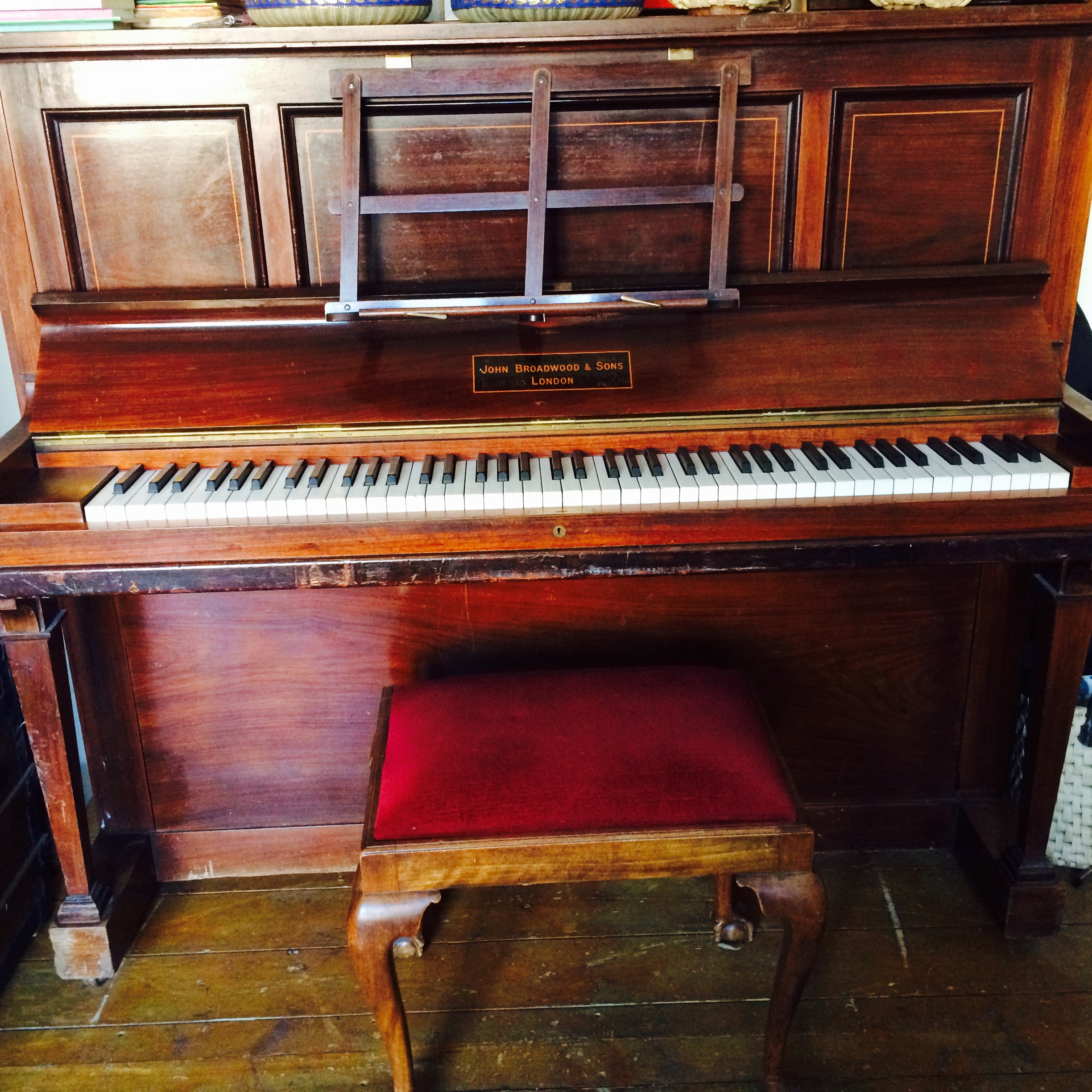
I also still have the piano that I played throughout my childhood; a solid Edwardian Broadwood upright with a massive cast-iron frame. It’s not just a piece of antique furniture, it’s more like my oldest living relative; a valued member of the household. It’s worked hard to keep up with the developing musical styles of the 20th century. It’s been my partner in half a century of musical exploration and has given me the opportunity to concentrate and apply myself to something quite different from anything else I do.

These days there’s no drudgery involved. I play purely for pleasure, when I want to and for no one but myself and without any decontextualized scales or arpeggios. But this is far from a casual messing about at the keyboard. Part of the pleasure is the highly focused and repetitive work required to be able to play a whole piece reasonably well. For an amateur with little time, this means practising a very few pieces over a long period, mostly Bach preludes and fugues or some of the easier Goldberg variations. It’s a small but very important part of my life.

Our various keyboards are tools, pieces of technology fashioned around our hands to help us communicate better with others. As with any tool, regular use breeds familiarity, confidence and skill. The tool becomes an extension of our body, broadening our reach and impact on the world.

On their own, without tools, our hands have a very limited musical potential. But, give them a keyboard connected to an instrument and those hands can really sing. The keyboard is a vital intermediary but in the end it’s all about the music we make and what it does to us.

Other posts on similar themes:

Lessons without words: 10 things music teaches us about life

Mastering my Zenit

FullSizeRender (1)

Posted in Culture, music, Teaching and learning | Tagged , , , , , | 2 Comments

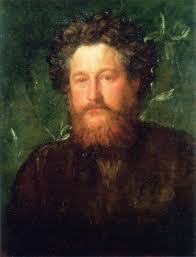
‘Useful work v. useless toil’ by William Morris

Introduction:

This lecture from 1884 is a clear and powerful statement of Morris’s political and economic manifesto, which also informed ‘News from Nowhere’ (1890) his visionary fable of life after a revolution. His critique of the waste and inequality inherent in capitalist production and his call to rethink labour from the point of view of need, usefulness and pleasure are still relevant today. His vision of the workplace as a place of study and intellectual activity (and we might add to this the educational setting as a place of creativity and production) helps us reflect on the relationship between ‘life’ and ‘work’ at a time when the boundary is more blurred than it was 130 years ago. Morris also understands that there are limits to growth and is moving towards the notion of a sustainable economy well ahead of his time.

In his suspicion of the impact of machinery, mechanisation and urbanisation, Morris idealises manual labour and this leads him to what seems like a rather static semi-rural idyll which will fail to satisfy the modern reader as a serious aspiration for a better future. He sees that technology can enslave but is hesitant about its potential to liberate. This is understandable given the 19th century experience of industrialisation and urban poverty. His scorn for the ‘middle class’ will seem harsh to us as it fails to fully acknowledge the vital social contribution of workers in public and other service industries: education, health care, transport, utilities, distribution etc. Even without wasteful competition, a complex economy needs management and co-ordination and it is hard to imagine Morris’s craft-based artisan economy providing the necessary incentives for technical and social experimentation and innovation. On the other hand it may be exactly where we are heading if technology allows us all to be designers and manufacturers of our own bespoke goods.

I have taken the liberty of abridging and adapting the lecture a little while trying to preserve Morris’s key arguments. All errors and misunderstandings are mine. The full original text can be read here (about twice as long as this abridged version). There is also a good analysis of both Useful work v. useless toil and News from Nowhere in Part 3 of Hassan Mahamdallie’s excellent Crossing the ‘river of fire’: the socialism of William Morris.

download

Useful work versus useless toil

Lecture given to the Hampstead Liberal Club by William Morris (1884)

Abridged and adapted (2014)


1. All work is not intrinsically good:

Most people nowadays assume that all work is useful and desirable and that even when someone is doing work which seems useless, they are earning their livelihood and deserve congratulations and praise. It has become an article of faith that all labour is good in itself; a convenient belief for those who live off the labour of others.

First, we need to acknowledge that humans must work or perish. Nature does not give us a free ride and we can’t achieve our livelihood without working. So what do we get from our compulsion to work? It is in our nature to take pleasure in work and yet there is some labour which feels like a curse rather than a blessing.

2. Distinguishing between good work and bad work:

I believe there are two kinds of work; one good – which lightens life, the other bad – which burdens life. The difference is that one has hope in it and the other hasn’t. It is right to do the one and right to refuse to do the other. The hope which is present in work and makes it worth doing is threefold: hope of enough good rest, hope of a product worth having and hope of pleasure in the work itself.

The hope of rest is the simplest and most natural part of our hope. There is some pain in all work and while we are working we need to know that the time will come when we can stop. The compensation for physical pain is physical rest.

Regarding the hope of product, we feel compelled to work but it is up to us to make sure that we really do produce something that we want to use. This makes us better than machines.

The hope of pleasure in the work itself may seem a strange idea but I think that all living things get pleasure from exercising their energies. Someone making something they have willed into being is using their mind and body with the help of memory and imagination. They are creating as part of the human race and are guided by the thoughts of people from the past as well as their own thoughts. Work makes us human and makes our lives happy and eventful.

So work of value carries with it the hope of pleasure in rest, the hope of pleasure in using what is produced and the hope of pleasure in our own creative skill. Any other kind of work is worthless; toiling to live so that we can live to toil.

So now that we have criteria to judge the worth of the work currently being done in the world let us examine its value after so many thousand years of deferred hope, progress and civilization.

3. The unequal distribution of labour:

The first thing to notice is that it is shared very unequally amongst the different classes of society. First, there are people who do not work and make no pretence of doing any. Next, there are those who work fairly hard but with abundant holidays and leisure. Lastly, there are people who work so hard that they do little else and are accordingly called ‘the working classes’ to distinguish them from the middle classes or the rich. This inequality presses heavily on the ‘working’ class and tends to destroy their hope of rest but this is only the beginning of our folly of turning useful work into useless toil.

As for the class of rich people doing no work, they consume a great deal and produce nothing so they clearly are a burden on the community; being kept at the expense of those who do work. Many people see this but haven’t worked out how to get rid of this burden. They may have some hope that voting for a member of parliament might help but we needn’t trouble ourselves with such hope. This class, the aristocracy, has no power of its own and depends on the support of the middle class.

As for the middle class, including trading, manufacturing and professional people, they work hard and might be thought to help the community rather than burden it. But most of them do not produce and when they do produce they often do so wastefully and also consume more than their fair share. The commercial and manufacturing part spend their energies fighting amongst themselves for their share of the wealth which they force genuine workers to provide for them. The others are mainly the hangers-on of these and do not work for the public. They are a privileged class, the parasites of property, professing to be useful but generally with one aim in view; not the production of utilities but the gaining of a position for themselves or their children in which they will not have to work and will be a burden on the community. Other than a few enthusiasts, people of science, arts or letters, they care nothing for their work in spite of the sham dignity with which they surround it. So this is a large and powerful class which produces little and consumes enormously and is mostly supported by the real producers.

The class that remains produces everything and supports itself and the other classes although it is in an inferior position to them. Many of these workers are not producers and are merely parasites of property such as the military who are kept to perpetuate national rivalries and enmities, domestic servants, the army of clerks and shop assistants who are engaged in the service of the private war for wealth which is the occupation of the middle class. This includes those who are engaged in competitive salesmanship or the puffery of wares which has now got to such a pitch that there are many things which cost far more to sell than to make.

4. The waste of consumerism:

Next there is the mass of people employed in making articles of folly and luxury, the demand for which comes from the rich non-producing classes and which most people would not dream of wanting. These things are not wealth but waste. Wealth is what Nature gives us: sunlight, fresh air, the unspoiled earth, food, clothing and necessary housing; the storing and dissemination of knowledge, the means of communication between humans and works of art created when humans are most aspiring and thoughtful – all the things which serve free people. This is wealth and I cannot think of anything worth having which doesn’t come under one of these headings. Are you not as bewildered as I am when you think of the mass of things which no sane person could desire which our useless toil makes and sells?

Beyond this, there is an even sadder industry forced on many workers and that is the making of goods aimed at them and others like them because they are an inferior class. As most workers are too poor to access those goods they naturally want, they must put up with miserable substitutes; coarse food that does not nourish, rotten clothing which does not shelter, wretched housing which makes a tent or a cave seem better. Workers are helping to produce for themselves these shams and mockeries of the luxuries of the rich; for the wage-earners must always live as the wage-payers bid them and their very habits are forced on them by their masters.

The much-praised cheapness of our era is necessary to the system of exploitation on which modern manufacturing depends. In other words our society includes a great mass of slaves who must be fed, clothed, housed and amused as slaves and this compels them to make the slave goods whose use perpetuates their slavery.

To sum up then, civilized states consist of three classes; one which does not even pretend to work, one which pretends to work but produces nothing and one which works but is compelled by the other two classes to do work which is often unproductive.

Civilization therefore wastes its own resources and will do so as long as the present system lasts. These are cold words to describe the tyranny we suffer, so consider what they mean.

There is only so much matter, energy and human labour power in the world. Driven by their needs and desires, people have turned these into useful things. Because we can’t see into the future, that struggle with Nature seems nearly over with human victory nearly complete. Looking back through history, that victory has been faster and more dramatic in the last 200 years than ever before.

However, no one can deny that most humans are poor; so poor that it’s hardly worth asking whether they might be a little better off than their ancestors. This is not the poverty of someone who knows nothing else. For us, civilization has bred desires which it then forbids us to satisfy.

In this way the fruits of our victory over Nature have been stolen from us and the natural compulsion to work in the hope of rest, gain and pleasure has been turned into a human compulsion to work in the hope of living to work!

5. A prescription for change:

So what should we do? Can we fix this?

Well, we need to remember that our victory over Nature was achieved mainly by our parents and indeed by us so it would be folly to sit hopeless and helpless. We can fix this. So what is the first thing to be done?

We’ve seen that modern society is divided into 2 classes, one of which is kept by the labour of the other, forcing it to work and taking from it everything that it can using the wealth to keep itself in a superior position. Also, it can’t use this labour power fairly to produce real wealth but wastes much of it in the production of rubbish.

It is this minority’s robbery and waste which keeps the majority poor. This is not necessary for the preservation of society. It’s been shown by incomplete experiments in co-operation that the existence of a privileged class is not necessary for wealth creation as it only serves to uphold its own privilege.

Therefore, the first step is to abolish the privileged class which forces others to do the work they refuse to do. All must work according to their ability and produce what they consume. Everyone should work as well as they can for their livelihood and their livelihood should be assured and include all the advantages which society can provide for each and every one of its members.

And so, at last, we could have a true society based on equality of condition. No one would suffer for the benefit of another or for the benefit of society. In fact it can’t be called society if it does not benefit every one of its members.

Given that people do live now while so many do not produce at all and so much work is wasted it is clear that if everyone produced and no work was wasted, everyone could gain a due share of wealth and of rest. These are 2 of the 3 kinds of hope previously mentioned. When class-robbery is abolished everyone will reap the fruits of their labour, have due rest or leisure. Some socialists might say we need not go any further than this but I would demand compensation for the compulsion of nature’s necessity. Burdensome work will still mar our life even if the hours are short. We want to add to our wealth without diminishing our pleasure. Nature will not be finally conquered till our work becomes part of the pleasure of our lives.

Freeing people from the compulsion to work unnecessarily will put us on the way to this happy end. As things are now, between the waste of labour in idleness and its waste in unproductive work, it is clear that civilization is supported by a small proportion of its people. With everyone working usefully for its support, the share of work each would have to do would be small and our standard of living would be about the same as what well-off people now think is desirable. We will have labour power to spare and will be as wealthy as we please. It will be easy to live.

6. How to make labour pleasant for everybody:

When revolution has made it ‘easy to live’, everyone is working harmoniously and there is no one to rob workers of their life, we will no longer be compelled to produce things we don’t want and we will be able to consider carefully what to do with our labour-power. I think the first thing we should do should be to make all labour pleasant for everyone. Modern civilization entirely forbids this; how rare for us to feel part of nature, unhurriedly, thoughtfully and happily connecting our lives with those of others and building up the whole of humanity.

Our lives could be like this if we resolved to make all our work reasonable and pleasant. Under the current system of wages and capital, the manufacturer is the master of those who are not so privileged and is able to make use of their labour-power which is the only way that their capital (which is the accumulated product of past labour) can be made productive. They buy the labour power of others with the aim of increasing their capital. If they paid their workers the full value of their labour, they would have failed and so they force a bargain which is better for them than for their workers and which ensures that the larger part of the surplus they produce becomes the manufacturer’s property and is jealously guarded by army, navy, police, prison, fear and ignorance.

7. The impossibility of attractive work under this system:

I am simply pointing out the impossibility of achieving attractive work under a system which robs the civilized world of its available labour-power and forces many to do nothing and many more to do nothing useful while others are overworked. The manufacturer aims primarily to produce profits not goods and it matters nothing to them whether the wealth produced is real or sham. If it sells and yields them a profit it is all right. Because there are rich people who have more money than they can reasonably spend and who buy sham wealth, there is waste. Because there are also poor people who can’t afford to buy things they need, there is waste there too. The ‘demand’ which the capitalist supplies is a false demand. The market in which they sell is rigged by the miserable inequalities produced by the robbery of the system.

This is the system we must get rid of if we want to achieve happy and useful work for all. The first step to making labour attractive is to place capital (land, machines etc.) into the hands of the community and make labour fruitful so that we can work for the good of all and supply the real demands of each and all, in other words to work for livelihood instead of for profit.

When this first step has been taken and we no longer allow some the option of stealing, we will be relieved of the tax of waste and find that we have a mass of labour-power available to allow us to live as we please within reasonable limits. We will no longer be hurried and driven by the fear of poverty. The most obvious necessities will be easily provided for in a community where there is no waste of labour and we will have time to look around and consider what we really want.

In my view the first thing we will feel it necessary to devote time to will be the attractiveness of labour. People who have just waded through a period of strife and sacrifice will not want to put up with a life of mere utilitarianism. On the other hand, the ornamental part of modern life is rotten to the core and must be utterly swept away before the new order of things is realized. None of it could satisfy the aspirations of people set free from the tyranny of commercialism.

8. The ornamental part of life:

We need to start building up this ornamental part of life; its pleasures, physical and mental, scientific and artistic, social and individual, on the basis of work undertaken willingly and cheerfully to benefit ourselves and our neighbours. Such absolutely necessary work as we have to do would take up only a small part of each day but all labour must be made attractive.

How can this be done? This is the question I will try to answer in the remainder of this talk. I know that socialists will agree with many of my suggestions but some of them may seem strange. I am only expressing a personal opinion and not being dogmatic.

For labour to be attractive it must be directed towards some obviously useful end, unless it is being undertaken as a pastime. This usefulness will sweeten otherwise irksome tasks as a social morality will replace theological morality in the new order of things. The day’s work can and will be short and much work which is now a torment will be easily bearable if shortened.

9. The variety of work:

To make someone do the same task day after day without any hope of escape or change turns their life into a prison-torment. It is only the tyranny of profit-grinding which makes this necessary. A person could easily learn and practise at least three crafts, varying the sedentary with the outdoor. For example many people would want to spend part of their life in the most necessary and pleasant work – cultivating the earth. The thing which will make this variety of employment possible is a different form of education. At the moment all education is directed at fitting people to take their place in the economy as it is – either as masters or as workers. The education of the masters is more ornamental than that of the workers but both are commercial. Education should be concerned with finding out what people are fit for and helping them along the road which they want to take. In a duly ordered society young people would be taught the crafts with they have an interest in and adults would have the opportunity to learn in the same schools. The aim of education would be chiefly to develop individual capacities rather than to aim for ‘money-making.

Speaking of variety, one product of industry which has suffered so much from commercialism that it can hardly be said to exist is the kind of popular art which is, or should be, done by ordinary workers going about their ordinary work. It flourished until the rise of capitalism but has been killed by commercialism. The craftsperson fashioned and ornamented the things they had in their hands so naturally and without conscious effort that it was difficult to distinguish where the ornamental part ended and the utilitarian began. This came from the need for variety in work and while the beauty produced was a great gift to the world it also stamped the labour with the mark of pleasure. Now, if you wish to have ornament, you must pay for it and it is produced like any other thing. The worker is compelled to pretend happiness in their work but this has become another burden on them.

10. The need for pleasant surroundings:

Besides the short duration of labour, its usefulness and variety, something else is needed to make it attractive; pleasant surroundings. The misery and squalor which we civilized people bear so complacently as part of manufacturing are acts of folly as great as if a rich person allowed a toilet to be set up in each corner of their dining room, cinders to be spread all over their drawing room and made their family sleep five in a bed. Our present society does this daily as a supposed necessity.

All our crowded towns and bewildering factories are the outcome of the profit system. Capitalist manufacture, landowning and exchange force people into cities to manipulate them in the interests of capital and contracts the space available in the factory for the same reason. This is not necessary, except in order to grind profits out of people’s lives and produce cheap goods for those who grind. There is no reason why people engaged in labour should not follow their occupations in quiet country homes, industrial colleges, small towns or wherever they find themselves happiest.

11. A vision of the workplace as a place of study and intellectual activity:

As for that labour which has to be organised on a large scale, the factory system could at least offer opportunities for a full social life with many pleasures. Factories might become centres of intellectual activity and the work could be varied with tending machinery only a short part of the day’s work. Other work could range from raising food from the surrounding country to the study and practice of art and science. The people engaged in this type of work could not be forced into enduring dirt, disorder or want of room. Science, applied properly, would enable them to dispose of refuse and minimize the inconveniences of factory life; smoke, stench, noise and ugly buildings. Start by making factories decent and convenient like a home and then go on to make them beautiful.

I claim that work can be made attractive by variety, by the awareness of its usefulness and by being done intelligently in pleasurable surroundings. But also, the day’s work should not be wearyingly long, doesn’t this mean that the goods made will be very expensive?

I admit that some sacrifice will be necessary to make labour attractive. We should be content to make the sacrifices needed to raise our condition to the standard desired by the whole community. We should be prepared to sacrifice more of our time to raising the standard of living. People would freely produce those ornaments of life for the service of all, which they are now bribed to produce for the service of a few rich people. A civilized community has not yet lived without art or literature but we could afford to wait a while until we are purified from the shame of past corruption for art to arise again among people freed from the terror of the slave or the shame of the robber.

12. Labour-saving machinery:

In the meantime, the refinement, thoughtfulness and deliberation of labour must be paid for, but not by long hours of labour. We have machines which would be wild dreams to people of past ages and we have not yet made use of them. They are called ‘labour-saving’ machines, but we do not get what we expect. They reduce skilled labourers to unskilled ones to increase the reserve army of labour, increasing the precariousness of life and intensifying the work of those who serve the machines while also piling up the profits of the employers of labour. In a true society these miracles of ingenuity would be used to minimize the amount of time spent in unattractive labour so as to be only a very light burden on each individual.

The use of machinery might well reduce as people learned to take an interest and pleasure in deliberative and thoughtful handiwork which could be made more attractive than machine work. As people freed of the daily terror of subsistence found out what they really wanted and were no longer compelled by anything but their own needs, they would refuse to produce the inanities now called luxuries or the trash called cheap goods. No one would make high-fashion clothes when there were no flunkies to wear them or processed foods when everyone had access to natural, healthier alternatives.

Socialists are often asked how the hardest and most repulsive work would get done in the new order of things. To try to answer this would be to try to build the new society out of the materials of the old but it isn’t hard to imagine an arrangement where those who do the toughest work should work for the shortest time and what I have said about variety also applies. So that no one is hopelessly engaged in performing a single never-ending repulsive task. And yet, if there is any work which is nothing but a torment to the worker then let us see if we can leave it undone, the product of such work cannot be worth the price of it.

We have seen that the dogma that all labour is a blessing to the worker is hypocritical and false and that on the other hand, labour is good when the hope of rest and pleasure accompanies it. We have weighed up the work of civilization and found it wanting but we have seen that the work of the world could be carried out in hope and with pleasure if it were not wasted by folly and tyranny, by the perpetual strife of opposing classes.

So it is peace we need in order to live and work in hope and with pleasure. Peace which is so much desired, if we believe people, but which is so continually and steadily rejected by them. Let us set our hearts on it and win it at whatever cost.

Who knows what that cost could be? Can it be won peacefully? We are so hemmed in by wrong and folly that we must always be fighting against them, apparently with no end in sight. It may be that the best we can hope to see is the struggle getting sharper and bitterer every day until it breaks out openly.

Whatever the nature of our struggle for peace, if we aim for it steadily and single-mindedly, a reflection from that piece of the future will illuminate the turmoil and trouble of our lives and we shall, in our hopes at least, live the lives of human beings and our present lives cannot give us any greater reward than that.

Adapted from a lecture given to the Hampstead Liberal Club

by William Morris, London, 1884

Posted in Culture, History, Politics | Tagged , , , , , , , | 1 Comment

People’s College and Top Academy: which is best?

Imagine two colleges, let’s call them People’s College and Top Academy.

We want to compare them, so we turn to the national performance tables which tell us that the average A-level point score for People’s College is 200 (C-) compared to 230 (B-) for Top Academy. A-level value added is also more positive at Top Academy.

So Top Academy must be better, right?

Dig a little deeper and we discover that Top Academy is quite selective in its intake and their A level cohort of 150 had an average GCSE point score on entry of 6.7 (nearer to an A than a B)

It turns out that 150 of the 300 A-level People’s College cohort also had that same average GCSE point score and those 150 students achieved an average A-level point score of 235 (B), doing better than the comparable group at Top Academy.

The other 200 A-level students at People’s College did as expected given their prior achievement and their average A-level point score was 173 (D-),  so although they achieved the expected pass rates, grades and value added for their prior achievement, they pulled down the overall average A-level point score for People’s College.

The performance tables also tell us that Top Academy has higher value added than People’s College. But Top Academy asked 20 of their students to leave after passing their AS levels with disappointing grades. This removed a number of students who were heading for lower than expected value added. These students moved to People’s College where they brought their lower value added to their new college, driving the People’s College value added score down overall.

The fact that Top Academy achieved higher value added was due to the positive boost provided by the departure of these leavers as well as the drag they brought as joiners to value added at People’s College. In fact if the transferred students were taken out of the calculation entirely, People’s College would actually have higher positive value added.

So, after a short investigation we have established that for these two imaginary colleges:

People’s College A-level students do better than comparable Top Academy students when students with the same prior achievement are compared – like with like.

People’s College students have higher value added than Top Academy students when only those students who followed a full 2 year A-level course in the same college are compared.

And yet Top Academy is clearly ahead in the performance tables…

Although hypothetical, this ‘counter intuitive’ scenario is perfectly realistic. The current competitive context for post-16 recruitment, the range of selective providers, excess capacity and the nature of the performance tables create the possibility of such perverse incentives and paradoxical outcomes right across the country.

‘Aspiration Tax’ postscript:

Another 20 Top Academy students made the wrong choice of course, did badly in their first year and needed to start again on the first year of a two year programme at People’s College. This meant that they would later add to the number of People’s College students who are over 18 at the start of an academic year and who are only funded at 82.5% of the rate for their fellow students aged 16 or 17 despite following exactly the same programmes. This is a funding cut for People’s College which Top Academy won’t face as none of their students will study with them for 3 years.


Posted in Education policy | Tagged , , , , , , , , , | Leave a comment