France: “teachers need to resist”

Following the terrorist outrages of November 13th , French sociologist Francois Dubet reflected on the Café Pedagogique website on the impact of such atrocities on the work of schools and on the role of schools in the aftermath of the Paris attacks.

Should the education system take some responsibility?

“What happened is not a symptom of a French social or educational problem. You don’t kill over 100 people because of social exclusion or poor education. We have to stop pointing the finger at schools when seeking to blame or explain. Education is not responsible for what has happened and cannot on its own stop murder in the streets.

“Educational failure is not an explanation. We need to remember that the perpetrators of 9/11 were brilliant engineers. We need to understand that this terrorism is first and foremost the manifestation of a war.

“We need to challenge educational inequality and segregation but it’s absurd to imagine that these cause terrorism. The causes are to be found in Syria.

What role should schools play following these attacks?

“The role of the school should be to offer a place of safety and calm. School should be a place where life is normal.

“The role of teachers is to resist, to explain that these acts target everyone indiscriminately. They do not in any way call into question the cultural diversity of our country.

“Schools must guard against the stigmatising of any community. If we allow France to be divided by this, there will be serious consequences for the whole of society. If there is a retreat from reason and whole communities are blamed, the terrorists will have won. That is precisely what they want.

“If, on the other hand, we argue that extremists should not be allowed to say whatever they want and that we should ensure the police are able to do their job, those are matters for debate.

“I’m tending towards the pessimistic because I worry that people will connect these acts to the idea of defending oneself against a community and I fear that politicians will play this card for cynical reasons.”

Francois Dubet was speaking to Francois Jarraud in Café Pedagogique 23/11/2015

Posted in Education | Tagged , , , , , | Leave a comment

Learning by walking about.

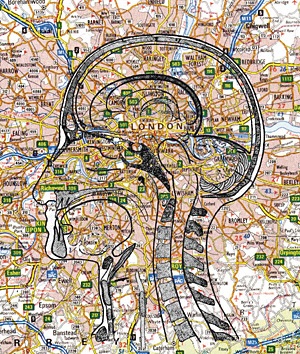
thecityinmanIt was just a walk; teachers and students following a circular 20 mile route around central London.

It was also a personal challenge for each of us; to keep going, to keep up, to map-read, to learn new things and to complete the walk.

It was also a team effort; working together and solving problems collectively.

It was also an experience of urban wandering, observing the public spectacle of city life, trying to make sense of people’s purposes and motivations.

It was also a venture into less familiar parts of our city’s public space, a psychogeographic exploration of new territory.

It was also a lesson in the sharp inequalities of our city from rough-sleepers to Ferrari owners, shops with no prices to people with no money.

It had a soft ambiance: the passing of time, the changing light, the weather, the pace of the day.

It had a hard ambiance: the buildings, sculptures, monuments, prompting questions about why, when, by whom and for whom they were built and how they were paid for.

It had a social ambiance: the buzz of the crowds, the diversity of the individuals in them, the conversations with new people, the sharing of ideas and experiences.

It had a historical ambiance: the clues to the past city and its people and how what they did shapes what we do.

For that day, the city and its people were our classroom and our subject, learnt through experience and dialogue, in short snatches as well as deeper conversations or Socratic questioning.

Guessing at the hidden city inside the buildings and below the ground. Looking for the money, exchange and power relations which make things happen and require people to move around the city the way they do as well as to build or destroy particular buildings.

Walking alongside different members of the group, testing views, exchanging perspectives, sharing stories about the past and the future.

Moving between conversations and making new links, building knowledge and understanding from facts and connections recalled, repeated, reinforced.

When we explore a new environment, we can only experience it through our own senses. The French Situationist philosopher Guy Debord said:

“People see nothing that is not their own image – everything speaks to them of themselves”

But this doesn’t mean that our experience of the world is entirely narcissistic, introspective or purely self-affirming, thinking ‘that’s like/not like me’ or ‘for/not for me’ about everything. Having new experiences or interactions while walking about in the company of others opens us up to the possibilities of change, of being different, thinking instead: ‘it’s possible / I could / I might’. The learner can only start from where they are but they and their teacher know that they can go further.

It was just a walk but it was also a whole curriculum whose apparent informality and randomness concealed objectives and learning outcomes.

The spiral, recursive, social, pedestrian pedagogy of the urban trail may not be the most efficient teaching method but every walk is an educational experience and ‘learning by walking about’ is possible. And great fun.

See also:

A Circle Line Quiz (November 2015)

Walking the Circle Line (November 2015)

Posted in Culture, Education, Teaching and learning | Tagged , , , , , , , | Leave a comment

A Circle Line Quiz.

_45537957_circleonlyOn a recent overground walk of the Circle Line route with a group of students, we asked them one question at each stop. A simple quiz like this can help students get more from an urban trail by encouraging observation, discussion, connections and learning points throughout the walk.

1. Liverpool street: What does the Kinderstransport statue commemorate?

This can prompt a discussion about migration, refugees and displacement and the impact of war on families.

2. Aldgate: What are the other gates of the ancient city of London?

London was a small walled city with gates, who was being kept out or in?

3. Tower Hill: What major event happened in Cable street just East of here in 1936?

Part of a rich history of street protest and anti-racist activism.

4. Monument: What event does this Monument commemorate?

How did this traumatic event change the city?

5. Cannon street: What is Walbrook?

Being aware of the underground waterways which still exist.

6. Mansion House: Who is based in the Mansion House?

The government of the City is a little different to that of Greater London, is it democratic?

7. Blackfriars: Who were the black friars?

Why did Henry VIII dissolve the monasteries? What is the origin of the cappucino?

8. Temple: Which major universities have campuses nearby?

One led to a discussion of the contribution of Rosalind Franklin and Maurice Wilkins to discovering the structure of DNA. The other is where John Kennedy, David Attenborough and Mick Jagger all studied.

9. Embankment: Charing Cross station is here. What other main line stations are on, or close to, the Circle line?

Also an opportunity to try the riddle of the sphinx and see ‘Cleopatra’s needle’, an ancient Egyptian obelisk from 1450BC, presented to the United Kingdom by Egypt/Sudan in 1819 and brought to London in 1877. Not all antiquities in London were gifts…

10. Westminster: How many MPs are elected to the House of Commons?

A chance to discuss how MPs are elected, how long for, and how they contribute to forming a government.

11. St. James’ Park: We’d better behave…whose headquarters is near here?

This gave rise to more than one sensible answer. The one I was thinking of has already moved once in its history while keeping the same name. This can also lead to a discussion of the use of place names as metonyms such as Downing street, Westminster, the White House, Hollywood, Wall street etc…

12. Victoria: Who was she and when did she die?

An era which only ended a little over a century ago.

13. Sloane square: Site of which famous London theatre?

Dedicated to new work by innovative writers. ‘Look Back in Anger’ premiered here in 1956, ‘The Rocky Horror Show’ in 1973 and many others.

14. South Kensington: Which foreign leader had his headquarters near here in World War 2?

This explains some of the strong cultural connections in this area including in the name of a local school.

15. Gloucester road: Which great science university is nearby?

An opportunity to talk about Prince Albert and Albertopolis and the Great Exhibition of 1851.

16. High street Kensington: What’s the name of the big house shared by dukes, duchesses, a prince and a princess?

A multi-occupied royal palace.

17. Notting Hill Gate: Which borough are we in and which borough are we heading for?

With q.22 this can lead to a discussion of the names of the 32 London borough and how they relate to those of the many areas within them – it’s not always straightforward.

18. Bayswater: What’s the local ice rink called?

It’s surprising how many people guessed ‘Lea Valley’

19. Paddington: London’s very own canal district?

London’s network of canals is still used.

20. Edgware road: Who originally built this long straight road?

There was also evidence of their presence near the old London wall at Tower Hill.

21. Baker street: Home of which fictional detective?

And also of a popular university with NewVIc students.

22. Great Portland street: Which London borough are we entering?

We’re about to leave the borough with the most Circle line stations.

23. Euston square: Another great university nearby?

And a major London hospital.

24. King’s Cross St.Pancras: A seriously big book collection nearby?

It gets a copy of every book published in English.

25. Farringdon: Which future Russian leader edited the journal ‘Iskra’ (‘Spark’) in nearby Clerkenwell in 1902/03?

14 years later he was involved in the October revolution.

26. Barbican: What is London’s meat market called?

London also has specialist wholesale markets for fish, fruit and vegetables and flowers.

27. Moorgate: What is the Guildhall and what does the prime minister do there once a year in November?

We did the walk soon after one of these events and it was very topical.

See also:

Walking the Circle Line (November 2015)

Learning by walking about (November 2015)

the-circle-line

This alternative Circle line of the emotions was borrowed from:

http://www.specialneedsjungle.com/carers-week-join-me-on-the-carers-circle-line/


Posted in Learning resources | Tagged , , , , | Leave a comment

Leadership for partnership

TESPublished in the TES on 20th November 2015 as Forget your inhibitions and get in bed with a competitor

As leaders we are expected to champion the interests of our institutions. It’s part of our core purpose, it helps hold our ‘gang’ together. In a market context, our default mode is competitive; if we’re Montagues, the people down the road must be Capulets.

So if anyone suggests a collaboration with another provider, the response is often: “why should we help them?” The assumption being: “they’re out for themselves, they don’t have our interests at heart” Why would the Jets want to come to the aid of the Sharks?

But no institution is an island and we know that our students and staff can benefit in many ways from partnership with others. Surely, mature self-confident organisations can form productive relationships with their competitors?

Yes they can and many do, but it’s not easy. So what do we need if we are to start thinking as system leaders?

Time: Partnership can’t be rushed. It requires an investment of time to understand how others see the world and to help them understand your perspective and the things that matter to you. The assumptions you uncover may surprise everyone.

Trust: A good relationship is based on trust and this needs to be built incrementally at the personal level, particularly between leaders. The foundations of mutual trust are laid as each partner learns bit by bit that others can be relied on to deliver on commitments. Depending on someone else becomes less risky if you know they will be there for you. Asking for help should be seen as a measure of self-awareness, not a sign of weakness. Giving help should be a pleasure, not an opportunity for dominance.

Honesty: It’s important to be honest about differences, strengths and weaknesses. Each institution has its distinctive mission and there’s no point pretending we’re all in the same position. The honesty has to start at the top, where reservations and aspirations can be safely shared.

Respect: This starts with how we talk to each other and about each other. If you are seeking to build a partnership you cannot publicly criticise or share assumptions about the motives or actions of others. You role is to help your colleagues understand the perspectives of others and the rationale of any partnership as well as to hear their concerns and aspirations.

Openness: Listen carefully to what potential partners are saying and remain open to new ideas. Partnership can take different forms and the best project may not be the one which was initially at the top of your list. Start where there is the most consensus, agree shared goals, be open to give and take and try to establish a ‘win-win’ culture where mutual benefit is achieved and celebrated.

Clarity: Be very clear about the direction, purpose and benefits of any collaboration and, once agreed, communicate this widely. Partnership is not about being nice or selfless – although these are great virtues – it needs to be grounded in pragmatic, mutual self-interest.

No one expects you to rush into a passionate embrace with a competitor. The process is more like getting to know a new work colleague than the blind infatuation of falling in love. There may be some awkward conversations and preconceptions to overcome before the relationship works well but it’s best to avoid wildly ambitious expectations. By all means aim high, but be delighted with small steps. Keep up the momentum and encourage colleagues to take ownership. You’ll know things are really working when others start to share pride in the success of partnership work. Ultimately, the real test is whether you can demonstrate that students are benefiting.

Some partnership ideas:

  • Joint purchasing and shared services
  • Joint staff development, sharing ideas and research
  • Joint quality assurance, validating self-assessment or external quality review
  • Marketing non-aggression pact, common promotional materials
  • Shared student enrichment activities and university or employer partnerships
  • A common application process, joint advice and guidance for applicants
  • Sharing specialist staff, joint course planning or delivery
  • Curriculum development and course rationalisation (“if you offer A, we’ll offer B”)

See also:

Sixth forms working together against the tide (June 2014)


Posted in Education | Tagged , , , , , , | Leave a comment

Susan Robertson on private interests and public education

profsusanroberstonWhen private interests into public education simply do not go was the theme of this year’s excellent Caroline Benn Memorial lecture given by Professor Susan Robertson of the University of Bristol on 10th November at the House of Commons.

Susan Robertson’s work draws on anthropology, geography, politics and sociology to help understand the various complex ways education has been drawn into servicing the economy from the global level to the local and individual level.

The lecture offered a broad international perspective on developments in public education policy most of which are harmful and wilfully ignore the evidence of what works best. We were taken on 3 ‘tours’ of global trends in education policy:

1. The rise of market approaches at the expense of public investment:

This involves seeing education increasingly in narrow terms of an investment in ‘human capital’ with a ‘rate of return’. Qualifications rather than actual skills development are seen as a mean of getting ahead or staying ahead. More of the burden of education decision-making is shifted from the state towards individuals and families

2. The increasing influence of private interests on policy:

In an increasingly service based economy, the $43 trillion education sector is seen as a lucrative one, ripe for a corporate raid. Large international companies are now running chains of schools, managing qualifications and producing teaching materials. ‘Venture philanthropy’, ‘school in a box’ and low fee private schools in developing countries are encouraging poor families to choose which child to invest in rather than promoting universal public education.

3. The increasing ‘enclosure’ of the public sphere:

Where the middle class feels it can put its weight behind a public education system, the effects are positive across the board. Conversely, if more parents withdraw from that commitment and opt for private alternatives, they are less likely to support public investment in education and this is likely to lead to greater inequality of provision.

No longer half way there?

In his 2002 Caroline Benn Memorial Lecture The right to a comprehensive education, Clyde Chitty drew extensively on Caroline Benn’s work and quoted from Half Way There, the classic 1970 study of comprehensive education she edited with Brian Simon.

Listening to Susan Robertson’s well researched and objective conspectus it was difficult to disagree with her that we are no longer ‘half way there’. In fact we seem to be going backwards.

Susan Robertson suggested a programme for getting us further towards an education system which might promote social justice. She argued that this required a recognition that public investment and collective action are needed as counters to the trends she had outlined. She also argued that the middle class need to be encouraged to support public education.

In the discussion that followed, we explored some of the challenges that face us as we argue for a more egalitarian and comprehensive public education system in which every young person can thrive. We need to recognise that at a time of anxiety and insecurity much of the ‘common sense’ of our age is pushing us the other way; policies of marketization, choice, competition and  selection seem to many people of all social classes to be the only way to ensure that their children ‘get on’. Rather than simply getting the middle class on board with public education, our aim should be to win a national majority for an expansive, positive, inclusive and aspirational vision of what comprehensive education system can do for us all. It’s not as if there aren’t plenty of local examples of success to draw on, but we’re certainly not there – or even ‘half way there’ – yet.

A comprehensive school is not a social experiment, it is an education reform.

From Half Way There by Caroline Benn and Brian Simon (1970)

See also:

Market madness; condition critical (June 2015)

Archive of past Caroline Benn Memorial Lectures from 2001 onwards.


Posted in Education, Education policy | Tagged , , , , , , , , , | Leave a comment

Walking the Circle Line

On Saturday 21st November, a group of students and staff from Newham Sixth Form College (NewVIc) is walking the entire length of the London Underground’s (inner) Circle Line over ground to raise money to help NewVIc students join some amazing international projects in partnership with Raleigh International in Borneo, Tanzania, Costa Rica, Nicaragua or Nepal next summer. Many NewVIc students have already benefited from these transformational experiences overseas and 2016 promises to be the project’s most ambitious year ever. But without some additional support, these opportunities would be beyond our students’ budgets and the college’s resources.

First we need to get the walk done and you can follow our progress and join in with our Circle Line quiz at every stop by following #circlelinewalk or my feed @eddieplayfair on twitter throughout the day.

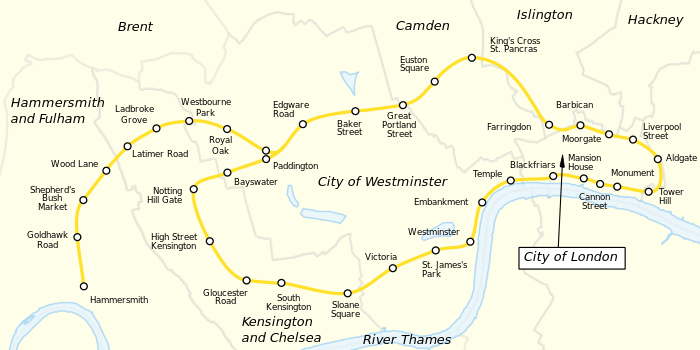
The Circle Line (yellow on the tube map) is no longer strictly speaking circular, since 2009 its route has been more of a spiral starting at Hammersmith and looping round the inner circle to finish at Edgware road. So it’s no longer possible to spend the day on a Circle Line train going round over and over again.

We’re only walking the inner circle, a distance of about 17 miles, from Liverpool Street and back again. This will mean passing 27 stations, most of which are in the City of London, City of Westminster and the Royal Borough of Kensington & Chelsea, there are 2 stops in London borough of Camden, one on the edge of Islington and two on the edge of Tower Hamlets. It therefore serves among the richest parts of our city while also avoiding the ‘West End’ central shopping district. It connects many of London’s main line rail termini and is one of the few tube lines which shares all its stations with other lines.

The first section was opened in 1863 between Paddington and Farringdon as the Metropolitan Railway and the Circle Line was first shown as a separate line in 1949. The line carries over 114 million passenger journeys per year.

London is a city of great wealth, but also of great inequality. Average life expectancy in the areas near Circle line stations ranges from 79 around King’s Cross and Euston Square to 91 around Bayswater and the small sections in Islington and near Tower Hamlets pass through some of the most deprived areas of London as measured by the levels of child poverty.

London is one of the most diverse places in the world. At the Eastern fringe of the City, where our walk begins, the most common family names are Rahman, Hussain and Khanom, reflecting the Bangladeshi heritage of many of the people living in Tower Hamlets. Passing through the City and into Westminster, Robinson and Williams become more common with Chan putting in an appearance in part of Kensington. Moving across towards Bayswater, Paddington and Baker Street, we also find Patel, Malik and Harris, Jones, Ahmed, Edwards and Johnson…one way of mapping central London’s diversity.

Another interesting way to map diversity is to ask what the most spoken language other than English is by tube station used. For the Circle Line, French predominates around many stations, Arabic around Paddington/Edgware Road and Chinese around Westminster/Embankment/Temple. Bengali appears as the second most spoken language around Aldgate/Tower Hill and also around King’s Cross/Euston Square.

Maps of London’s inequalities and its diversity are available via the Mapping London site. The Londonist site also has many different versions of the tube map including one which suggests alternative names for every station, some of which more appropriate than the current ones!

The Circle Line has inspired a collection of stories From Here to Here (2005) which celebrates our diverse, cosmopolitan city and was dedicated to the victims of the terrorist attacks of 7th July 2005. It also inspired Heads and Straights by Lucy Wadham (2013) in the Penguin Underground Lines series. This is an autobiographical tale of bohemians, punk, family and the King’s road in the 1970’s.

We hope you enjoy following the progress of our hardy explorers around the Circle Line and that you have a go at our twitter quiz. Please also consider sponsoring us to help cover the costs of sending NewVIc students to Costa Rica, Nicaragua, Borneo, Tanzania or Nepal in the summer of 2016.

See also:

A Circle Line Quiz (November 2015)

Learning by walking about (November 2015)

700px-Circle_line_&_London_map.svg

Posted in NewVIc | Tagged , , , , | 1 Comment

Cracking Oxbridge

Nationally, 93% of young people in England are educated in state-funded schools and colleges, but only 61% of Cambridge university undergraduates are drawn from the state sector, a figure which has recently fallen. At Oxford university the proportion is less than 57%. It seems the various efforts to shift this under-representation are having little effect.

The challenge is particularly great for students who were eligible for Free School Meals (FSM). As Tim Dracup has pointed out here, the latest destination data for England (2013) highlights a ‘continuing failure to increase the proportion of Free School Meal (FSM) students entering Oxford and Cambridge.’ This figure has been stuck at a total of 50 for 3 years in succession while the figure for the Russell group as a whole has grown strongly (up 46% in those 3 years). As Tim says: ‘this desperately low figure is hardly a ringing endorsement of our collective efforts to improve fair access to Oxbridge’.

Despite a very strong increase in the number of students progressing to the most selective Russell Group universities from our sixth form college (from 42 in 2012 to 93 in 2015), we have still not ‘cracked’ Oxbridge either. Despite all our work with high achieving students and excellent academic enhancement projects with Oxbridge colleges, our numbers actually progressing to either Oxford or Cambridge universities fluctuates within the range 0-3 per year.

Based on the most recent national destinations data, publicly funded sixth forms nationally and in London would expect around 8-9% of their ‘Russell group A-level cohort’ to progress to Oxbridge on average. So at NewVIc we should realistically be aiming for 5-6 students per year to progress to Oxbridge; something which should be possible based on what we know about our highest performing A-level students.

Such a single-figure increase may be small, but it is a worthwhile aim if we want more working class, black and minority students to access what Oxbridge has to offer. Multiplied across the many other sixth forms facing the same challenge, this scale of increase would make a significant difference. Whatever we think of the assumption of a steep hierarchy of universities in England, we have a responsibility to work towards better representation of our students at the pinnacle of that hierarchy.

Speaking at a conference on this subject in 2014, I described the challenges we face as being about geography, applications, culture and partnership and I made some suggestions for further action: engaging more strategically with London and other major cities through local sixth form hubs, improving the interview process and setting local targets for applications and offers.

But actually I think that something more radical has to be done if students from Newham and other ‘disadvantaged’ areas are to have a fairer share of Oxbridge opportunities and if we are to help change the class and ethnic profile of these two universities and start to make them more representative of the national cohort of academically successful students.

We know that many of the key Oxbridge selection decisions are made at college rather than university level so I’d like to make a practical proposal for consideration:

At least one college in each of Oxford and Cambridge universities could set itself a target of recruiting 93% of its undergraduates from state-funded sixth forms. They might also consider proportional geographical targets, targets for black and minority ethnic students and for students eligible for free-school meals.

This would involve just one college in each university taking a policy decision to try to fairly represent the national profile of students with respect to the institutions they studied at, together with some other characteristics. By doing so, they would be recognising that there are many very qualified young people who are not progressing to Oxbridge and demonstrating that they are serious about recruiting them. It would also show their commitment to a more representative student body.

The proposal will no doubt be criticised for discriminating against students from private fee-paying schools, white students, better-off students etc. Such a plan would indeed require a college ‘quota’ for certain categories, but in the face of such stubborn under-representation it is the equivalent of a political party using women-only shortlists in some constituencies for a few years to kick-start a much-needed shift towards gender parity. It would not prevent private school applicants from getting places and it would demonstrate to the other colleges that greater equity does not require any drop in standards.

The creation of at least one college in each university with a large majority of state-educated students could promote a new culture of inclusiveness which might start to catch on across the rest of the university. Strong candidates from publicly funded sixth forms would be more likely to apply to places which clearly welcomed and valued them and the overall proportion of students from ‘non-traditional’ backgrounds would start to increase. Gradually, the barriers which some potential applicants experience would be overcome and the sense that ‘this is not a place for people like me’ would be replaced by the reality that ‘there are plenty of people like me here’.

This is not a new suggestion, something similar was proposed a year ago by Lorna Finlayson, a research fellow at King’s College, Cambridge in a Guardian opinion piece here.

Something more clearly needs to be done if we really want to shift the profile of Oxbridge undergraduates towards that of the population as a whole. So let’s start by asking all the colleges in both universities which of them will be the first to aim for a ‘representative’ intake and see if any of them have the vision to take this historic first step.

See also:

The Oxbridge Challenge (July 2014)

Russell Group numbers soar in Newham (August 2015)

FSM admissions to Oxbridge still showing no improvement – Eponymous (October 2015)

Oxford and Cambridge need colleges exclusively for state school pupils – Guardian (November 2014)

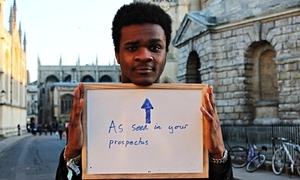
Photo from the ‘I too am Oxford‘ campaign.

i-too-am-oxford-main-004

Posted in Education policy, NewVIc | Tagged , , , , , , , , , | Leave a comment

Reviewing post-16 education in London

Principals and chairs of governors from most of London’s colleges assembled at City Hall last week for a briefing on the post-16 area review process. It’s not often that this group meets and although it happened without any great fanfare it may turn out to be an important milestone. The meeting was convened by the Greater London Authority working in partnership with London Councils, the London Enterprise Panel and the colleges themselves.

We heard from all the key partners about how the process will be managed. We can expect a rolling programme of reviews in the 5 sub-regions, probably starting in the spring of 2016. Each will be led by a steering group on which all colleges and other key stakeholders will be represented. There will also be a pan-London steering group to take a London-wide view.

It was reassuring to hear from those leading this process that:

  • London needs a city-wide vision for post-16 education and skills
  • The process is not simply driven by the need to make savings
  • There is no ‘blueprint’ or preferred institutional configuration
  • Significant providers who aren’t currently in scope could be encouraged to opt in

A sixth form college perspective:

I was asked to say a few words from the perspective of London’s 12 sixth form colleges and this is what I said:

London’s 12 sixth form colleges are making an important and distinctive contribution to raising the participation, achievement and progression of 16-19 year olds across London.

We offer a broad academic curriculum and many of us also offer a wide range of vocational programmes at all levels. If we have a specialism it’s the education of 16-19 year olds.

Our university progression rates are above the London average, which is itself above the national average, for all students and for disadvantaged students eligible for free school means (FSM).

15% of all young people in London who progress to university attended one of our 12 sixth form colleges.

20% of all disadvantaged young people in London who progressed to university attended one of our 12 sixth form colleges.

We are very committed to partnership: with each other, including at governor level, with schools, universities and employers and we have a strong record of promoting social mobility and community cohesion.

Research shows that we provide excellent value for money compared to all other post-16 providers

We have wide travel to learn areas which don’t fit neatly into LA areas.

As London embarks on these Area Reviews we need to do justice to the Sixth Form College educational experience.

We were asked to highlight one key opportunity and one key challenge:

A key opportunity is to make sure we learn from the success and popularity of London’s 12 sixth form colleges in order to help us raise achievement and progression across London in a way which provides both excellence and value for money.

A key challenge is to find ways to involve those other substantial specialist 16-18 providers in planning for a better system. This includes those in the school sector such as 16-19 schools and academies and sixth form centres.

Looking forward to a better future?

In the discussion I made two additional points:

We are all going to be investing a great deal of time and effort into the subregional steering groups. We will be improving our understanding of the system and building new trust and relationships which could serve our learners well. This is an investment in partnership which should not be lost after the process is over. The steering groups will have a role in monitoring the implementation of their recommendations, could they evolve into a new collaborative system?

London is currently carved up between 3 Regional School Commissioners as part of a wider patch. They inevitably have an interest in post-16 provision as some of it is in the academies they oversee. Would it not make sense to have a single education and skills commissioner for London, perhaps supported by sub-regional commissioners?

Finding hope

The advance planning for the London Area Reviews has been inclusive and consultative so far and this bodes well for the credibility and transparency of the process.

This is a difficult time for colleges with no shortage of reasons for anxiety. Funding cuts, structural and curriculum change do not make for an easy life. We have to seek out signs of hope wherever we can.

It was a grey November afternoon when we arrived at City Hall but as we left the meeting in the early evening, the bright lights of London’s skyscrapers twinkling from across the Thames seemed to suggest the possibility that if we worked together we could build a better future for London’s post-16 students.

See also:

The problem with England’s post-16 area reviews (September 2015)

Imagining a better future is the first step (August 2015)

What’s at stake in the new post-16 area reviews? (July 2015)

FullSizeRender (9)

Posted in Education, Education policy | Tagged , , , , , , , , | 4 Comments

My NewVIc story: Nazia Sultana

NaziaFrom plays to novels to poetry, English literature is the thread which sews together many of our life’s experiences. I have always been fascinated by words; their power to make us laugh, cry and change our outlook on the world we live in.

Before enrolling at NewVIc, my year 11 English teacher at Forest Gate Community School gave me a poem called Invictus by William Ernest Henley and asked me to focus on the last two lines:

I am the master of my fate,

I am the captain of my soul

Those lines helped me to understand that our ambitions and success lie in our hands. I left secondary school determined to fulfil all the goals I had set myself. One of those goals was to be more confident in my writing; thus I joined NewVIc’s creative writing group where I was able to meet other people who had similar interests to me. Contributing to a college based youth magazine meant I could receive honest and helpful feedback and gain inspiration for my writing. I carried on my passion for writing at university at King’s College London (KCL) where I joined the creative writing society. This year we are working on new and exciting projects including publishing our own anthology.

NewVIc is a warm, uplifting and inviting college that helped me realise my true potential. Although I had always loved English, I hadn’t expected to be confident enough to pursue it at degree level. However, my NewVIc teachers such as Sue Landeryou were always supportive of me and encouraged me to continue. Sue also supervised my Extended Project where I explored female representation in Disney films and books. This was a great opportunity for me to become more independent as I had to carry out research, record findings, and plan every stage of a substantial research project.

Being on NewVIc’s Honours programme meant we were able to experience university seminars and discussions and this proved to be very helpful once I started at King’s College as I was able to express my views more confidently without feeling intimidated.

I am now in my second year studying English language and literature at KCL. Undoubtedly, the first couple of weeks at university were daunting. A new place, new people and, of course, a whole lot of new books to read. University is often said to be a time when we find out who we really are and what path we want to take in life. A lot of this is decided amidst the chaos of Freshers’ month. The Freshers’ Fair brought me face to face with all the strange and wonderful societies you can join, from the cheese-eating society to the very welcoming Bangladesh society. I knew I would be unlikely to stay committed to all of the clubs I joined throughout the year, but getting involved is the best way to get to know new people. After attending the Bangladesh Society’s Fresher’s dinner I knew that this would be a lasting commitment and I have taken part in a wide range of outreach projects with them since I joined.

Two of my favourite projects were: visiting the elderly in their care homes and delivering workshops for young people in local secondary schools.  This year, I am planning an event on the topic of Shadism; an internalized form of racism which discriminates between individuals based on skin tone. Unfortunately, this is common in many of the South Asian, Hispanic and African communities. Thus, I plan to address this issue to help create more awareness of this subject. There will be speakers as well as spoken word artists who will be expressing their thoughts touching on colonialism and how this has led many individuals to desire to be lighter skinned.

I started at NewVIc as someone who was reluctant to leave my comfort zone and left as someone who openly welcomes change. The words of Rabindranath Tagore come to mind:

Let me not pray to be sheltered from dangers but to be fearless in facing them.

Nazia Sultana – NewVIc class of 2014

Read more guest blogs in the My NewVIc story series here


Posted in Guest blogs, NewVIc, Students | Tagged , , , , , , | 2 Comments

Private affluence and public envy.

People who campaign for greater social equality sometimes get accused of ‘the politics of envy’. The idea being that anyone who keeps tediously pointing out the gap between rich and poor in our society is simply jealous, choosing to go on about the super-rich simply because they aren’t as well-off themselves.

This seems to me a weak argument. It drags an important national debate down to the personal and emotional level and deflects attention from the issue itself. If we can’t argue against excessive wealth inequalities without being seen as spiteful then we might as well give up on any project for social change.

I’ve never bought the line that being rich makes people bad or that being poor makes people good, I just happen to want a more equal society because I think it would benefit everyone. Highlighting the suffering at the bottom and the excesses at the top has always been part of making that case.

In my professional role, when I look at the resources which are available to some private fee-charging schools to do essentially the same job as we are doing in publicly funded schools and colleges I have to admit to just the slightest tinge of envy.

Public funding for full time sixth formers in England is now pitched at around £4,600 per student per year, with a few variations for regional weightings and programme costs. The average private school fees are around £13,000 per student per year with some of the most expensive schools charging far more: £30,000 (Wellington) £26,400 (Westminster), £22,600 (St.Paul’s).

If our students were funded at the average private school fee rate of £13,000 this would represent nearly £20 million additional income per year for our college. This kind of budget boost would allow us to pay for our new £9 million library, theatre and reception building without any need to use reserves or take out a loan. In fact we could invest in superb new buildings and facilities every year without incurring any debt. We could also spend £5 million to increase teaching time by at least 50% to give our students a genuinely full-time learning experience and we could use the remaining £6 million on enrichment and academic enhancement activities, trips abroad and partnership work with schools, employers and universities. We could give every student a tablet and free meals and offer really outstanding volunteering, mentoring and networking opportunities to all current students and alumni.

And that’s just based on the average private school fees. Think what we could do with Wellington levels of funding…

But this is not a time for dreams. We need to get real. Faced with the prospect of a difficult public spending review, our budgets are set to move in the opposite direction. Even the possibility of parity between public funding for 16-18 year olds and 11-16 year olds seems like a distant hope. Even this modest aspiration would add around £2.5 million to our annual budget.

So while we may not be contemplating ‘public squalor’ quite yet in publicly funded sixth form education, there are certainly plenty of examples of ‘private affluence’ to compare us to.

This is not an attack on private schools. But next time we are told by one of their heads how much more they do to develop students’ character and social skills it might be worth remembering the funding gap between the fees they charge and the sums which the state is currently prepared to invest in educating sixth formers.

And maybe allow us a little moment of envy.

See also:

Existing state-funded colleges offer better value for money (March 2014)

Posted in Education, Education policy, NewVIc | Tagged , , , , , , , , | Leave a comment

The outstanding lesson

We were lucky enough to have Harriet Harper deliver a NewVIc lecture at Newham Sixth Form College on 14th October. Harriet is a former HMI and now helps to train teachers for the post-compulsory sector. We were delighted to be joined for this lecture by several teachers from local secondary schools in Newham.

Harriet’s focus was on the practice of highly skilled teachers in post-16 settings based on her account of 20 real lessons which had been judged ‘outstanding’ (grade 1) by inspectors as well as clearly standing out among others of their kind.

Harriet started by acknowledging that defining outstanding teaching is problematic and contentious and she rejected the use of narrow, instrumentalist checklists of approaches. Teaching is an exciting and intellectually challenging activity. Rather than starting from a detailed definition of excellence and then seeking evidence to confirm it, she had extrapolated the common features of what teachers did in the 20 lessons chosen and grouped them together into five broad themes for further discussion and reflection.

This common-sense approach to describing and analysing excellent teaching meant that we were not being offered a guide to delivering an outstanding lesson. Instead, we were invited to relate elements of our existing practice with descriptions of outstanding lessons. Rather than telling the skilled practitioners in the room what to do, Harriet Harper was encouraging us to be reflective in structured systematic ways and to learn from each other.

This reminded me that one of the main tasks of college leaders has to be to create an institutional culture which supports and promotes teachers’ natural desire to share, analyse, reflect, experiment, evaluate and celebrate with a view to developing their teaching further and doing a really good job – not for observers or inspectors but for their students. We suppress this at our peril.

The 5 common features of these outstanding lessons were:

  1. Planning: The teachers planned them extremely well. This included giving careful thought to what they wanted students to learn and a careful choice of teaching and assessment methods as well as resources.
  2. Passion and enthusiasm: The teachers were passionate and enthusiastic about both their subject and their teaching. This commitment was authentic and they were keen to guide students towards constructing meaning for themselves.
  3. Questioning: The teachers demonstrated considerable expertise in the way they asked questions; thinking about the structure of the questions and using them to check understanding, elicit information and views and encourage thinking and discovery.
  4. Challenge: The teachers demanded high standards and students responded by meeting these expectations. The lessons felt ‘hard’ in a way which reinforced student motivation.
  5. Respect: Teachers had established respectful and professional relationships with their students and created a safe and welcoming environment but not at the expense of purposefulness and challenge.

Ten myths:

Harriet also exploded some common myths about what teachers must do when they are observed and showed how none of these were essential features of the effective lessons, although they could contribute if used well. The 10 myths were:

  • Reading out learning outcomes at the start of every lesson.
  • Presenting the perfect lesson plan.
  • Putting on a performance.
  • Putting students into groups or pairs.
  • Changing activities frequently.
  • Avoiding student presentations when being observed.
  • Always using technology.
  • Using students’ ‘learning styles’ to plan.
  • Always addressing equality and diversity explicitly.
  • Never deviating from the lesson plan.

Harriet’s excellent book Outstanding Teaching in Lifelong Learning (Open University Press, 2013) contains comprehensive accounts of all 20 outstanding lessons which come from a broad range of post-16 learning including Classical civilization, Geography, Physics, Motor vehicle studies, Hairdressing and Bricklaying. Taken together they represent a really deep analysis of how skilled and reflective teachers do what they do so well. These great lessons all seem to have taken place without the need for rigid templates, extraordinary technical wizardry or oppressive monitoring regimes.

I think all of us who were present would warmly endorse Harriet’s sensible and thoroughgoing approach and I would certainly recommend her book to any post-16 teacher looking to develop their practice further.

See also:

The skilled learner DOES (June 2015)

Harriet Harper book

Posted in Education, Reviews, Teaching and learning | Tagged , , , , , | Leave a comment

England’s engines of mobility

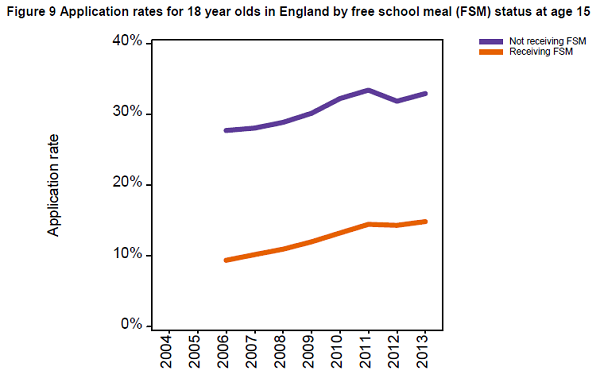
England’s sixth form and further education colleges are among the most significant engines of social mobility as measured by the number of 16-18 year olds eligible for Free School Meals (FSM) progressing to Higher Education. This contribution needs to be recognised and valued if we are serious about promoting social mobility when FSM students are still progressing to HE at less than half the rate of non-FSM students.

Based on government destination data for 2012, just 25 sixth form providers account for over 20% of the total number of FSM students progressing to university for England. As there are over 2,500 sixth form providers in England, this means that less than 1% of institutions provide more than 20% of all FSM students who progress to university.

Of these top 25 sixth forms, 13 are sixth form colleges, 10 are further education colleges, 1 is a sixth form centre and 1 is a school. 15 of the 25 are in London. As a group, they have an average progression rate for FSM students which is 12% above the national average and all but two of them are themselves above average.

Area reviews of post-16 provision across England have now started and they will be seeking to evaluate the contribution of colleges to their local communities including the promotion of social mobility. This measure of their success must surely be one useful key indicator to inform their work.

Sixth form % FSM

students

to HE

FSM

students

to HE

Newham sixth form college (NewVIc) 63% 265
City and Islington college 60% 246
Leyton sixth form college 64% 179
Birmingham Metropolitan college 40% 172
Sir George Monoux college 60% 156
Joseph Chamberlain sixth form college 55% 127
Richmond-upon-Thames college 57% 114
Salford City college 49% 113
Westminster Kingsway college 61% 104
St Francis Xavier sixth form college 74% 104
Loreto college 57% 103
The Manchester college 46% 101
Luton sixth form college 63% 101
Tower Hamlets college 57% 97
Christ The King sixth form college 64% 96
Oldham sixth form college 64% 96
Ealing, Hammersmith & West London college 52% 94
Bolton sixth form college 53% 90
Brooke House (BSix) sixth form college 64% 90
Xaverian college 61% 85
Sir John Cass school 68% 82
Haringey sixth form centre 66% 79
Uxbridge college 56% 78
Bury college 41% 78
Havering sixth form college 65% 72
Top 25 sixth forms for FSM progression 57% 2,922
England 45% 14,252

See also:

London’s engines of mobility (October 2015)

NewVIc breaks all its university progression records (September 2015)

Russell group numbers soar in Newham (August 2015)

From free school meals to university (April 2015)

ucas-figures-application-figs-by-FSM-2013

Posted in Education, NewVIc | Tagged , , , , , , , , | Leave a comment

Scale and efficiency in upper secondary education

In which country has the national audit agency investigated the cost of upper secondary education and found it to be costly and inefficient? The figures have only recently been calculated and it seems that this phase is more expensive than the equivalent in any other European country.

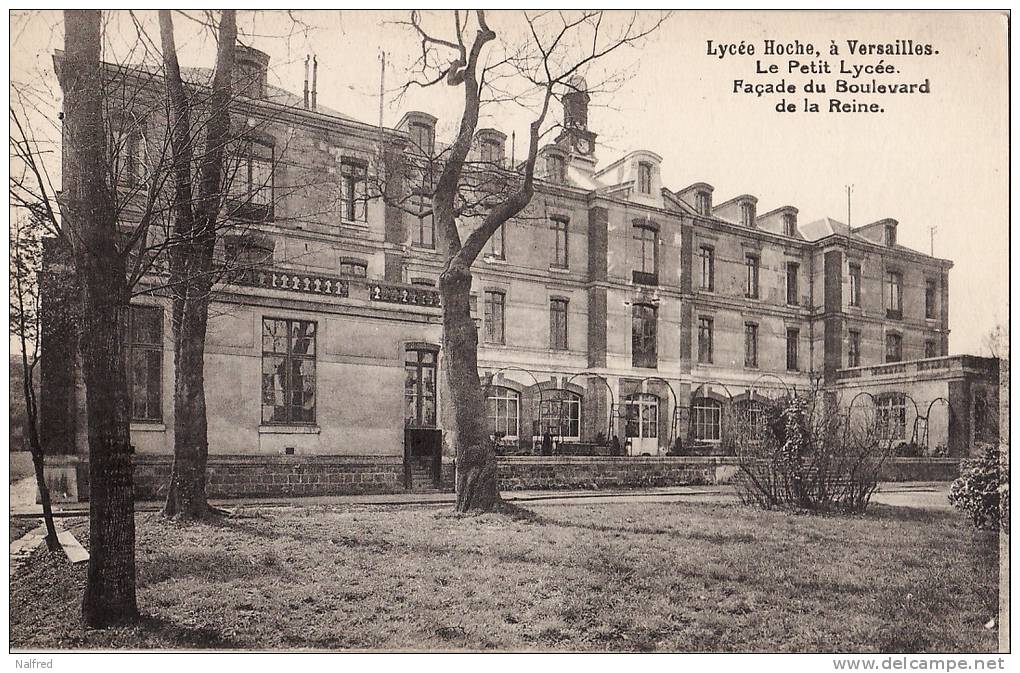
The country in question is France and the phase is the 15-18 age group covered by the country’s lycées or senior high schools.

According to the French Cour des Comptes, equivalent to our National Audit Office, every hour of teacher contact in a lycée costs the French state twice as much on average as the equivalent in the UK: 10,102 Euros compared to 5,017 Euros. To add further to the differential, upper secondary students in France receive an average of 17% more hours of teaching; 1,108 hours per year compared to 950 in the UK.

In fact, the UK figures probably include Year 11 (equivalent to the first year of the lycée) which will distort the average. The reality for English sixth forms is that the state caps our funding at the equivalent of 600 hours per year per student and so there is no funding for any further hours. In effect, sixth formers in England are being taught for around 54% of the hours of an average French sixth former.

Part of the problem in France is the proliferation of specialist pathways. These options are twice as expensive to offer as the core subjects – mainly because they run on relatively small student numbers. This has led to calls to simplify the Baccalaureat school leaving exam.

But the most significant factor is the size of institutions. France has 4,291 lycées and for historical and political reasons, many of them are very smallaround half of them have less than 500 students (ie: year groups of less than 170) and over 10% of all lycées have less than 100 students (barely 33 per year group).

The Cour des Comptes is suggesting an optimal size of around 800 students per lycée and the government is also proposing a 6.5% cut in teaching hours. If this could be achieved, it would still leave French teenagers with over 1,000 hours of contact time per year, or more than 30 hours per week. It would also create institutions which would still be smaller than many of their English counterparts.

On the other side of the channel, England’s 92 sixth form colleges have an average size of 1,700 students aged 16-18, more than twice the size suggested for the new ‘big’ French lycées. Also, our funding has been cut to the bone and we can barely afford to provide the 15-17 hours a week tuition which passes for a ‘full time’ programme.

Nevertheless, English schools are still being encouraged to open new sixth forms however small and inefficient they may be. There are around 2,200 school sixth forms with an average size of 208 students each. If England chose to move towards a universal sixth form college model, all these students could be accommodated in just 270 sixth form colleges.

At the other end of the spectrum, England’s 219 General Further Education and Tertiary Colleges have an average of 2,389 16-18 year old students each; hardly small-scale or inefficient. However, the imminent post-16 area reviews seem set to promote the creation of even larger colleges.

In England, post-16 is the lowest funded of the phases of education while in France it is the most costly. Perhaps each country could learn from the other and start to converge towards equitable and sustainable investment in upper secondary education and a sensible and viable scale of institution which allows us to offer the full range of options which young people need.

Based on:

La cour des comptes veut changer le lycée pour réduire son cout (08/10/2015)

petit lycee

Posted in Education policy | Tagged , , , , , , , , | Leave a comment

London’s engines of mobility

If we use the proportion of students eligible for free school meals (FSM) progressing to university as a measure of social mobility, it’s clear that the ‘London effect’ is very marked.

London’s FSM progression rate in 2012 was 58% compared to the national rate of 45% and it was the only English region with above average FSM university progression.

5,449 of the FSM students who progressed to university in 2012 are from London, this is 38% of England’s total.

30 of the 32 London boroughs have FSM progression rates above the national average. 20 of them are in the top 25 nationally for FSM progression.

Within this London effect, the college sector is playing a substantial role, accounting for all the top 10 providers in the city. Half of Inner London’s FSM university progressors come from the area’s 17 colleges with the other half coming from over 200 school sixth forms.

Sixth form % FSM students to HE FSM students to HE
Newham sixth form college (NewVIc) 63% 265
City & Islington college 60% 246
Leyton sixth form college 64% 179
Sir George Monoux sixth form college 60% 156
Richmond upon Thames college 57% 114
Westminster Kingsway college 61% 104
St. Francis Xavier sixth form college 74% 104
Tower Hamlets college 57% 97
Christ the King sixth form college 64% 96
Ealing, Hammersmith & W. London college 52% 94
London 58% 5,449
England 45% 14,252


See also:

England’s engines of mobility (October 2015)

NewVIc breaks all its university progression records (September 2015)

Russell group numbers soar in Newham (August 2015)

From Free School Meals to university (April 2015)

Posted in Education, NewVIc | Tagged , , , , , , , , | Leave a comment

Tamsin Oglesby’s ‘Future Conditional’

When a play is dismissed by the Daily Mail as ‘lefty tosh’ it’s probably going to be worth seeing. I enjoyed Tamsin Oglesby’s polemical ‘Future Conditional’ which was full of debate and far from one-sided. This pacey ensemble piece which has just finished its first run at London’s Old Vic theatre exposes the contradictions, hypocrisies, prejudices and obfuscations of what passes for educational discourse in England today.

The play’s action shifts rapidly from the playground where anxious parents scheme about how to navigate secondary transfer in the interest of their children, to the classroom where learning actually happens and on to the boardroom of the ‘Education and Equality Commission’ where well-meaning but clueless experts seem unable to reach any kind of agreement about policy.

If some of the play’s protagonists, whether parents or policy wonks, seem a little stereotypical this is because they reflect so many of the reheated stock positions which are regularly presented to us as worthwhile educational ideas. If the spokespeople for these ideas seem a bit 2-dimensional, it’s because their ideas are pretty thin.

Cutting through all of this is the story of Alia, the gifted recent arrival from Pakistan who is grateful for the education she has received in England and may have the opportunity of a place to study English at Oxford university. Alia has experienced much discrimination and family trauma before arriving in England and we see our class-ridden system through her eyes. It is Alia who has the vision and the naivety to suggest a simple practical solution to the inequity of admissions to ‘top’ universities.

Some of the best writing is in the monologues, such as Hettie’s agonised justification to her friend Suzy for sending her son to a private school:

“…It’s not that there’s anything wrong with the school…he loves his class, his friends, he’s doing really well but, I’m not saying he’s a genius or anything, but his teacher’s been going on about him being exceptionally gifted, whatever, I mean he is very good at maths and they all say he has a real hunger to learn and that maybe he would benefit from a more focussed, you know, learning environment. God only knows, I bloody don’t…”

Or Alia’s devastatingly clear-sighted analysis of our chaotic system:

“You have your specialist school, you have your faith school, you have your selective school, you have your academy school, you have your free school, you have your music school, you have your public school…you pretend to weigh them all equal but you cannot weight them all equal, it is like weighing eggs against flour. And then you ask parents to choose. But parents do not choose by logic, they choose by tribe. And the tribe on top, of course, it wants to stay on top…But what is fair for one tribe is not fair for every tribe.”

Alia is patronised by the policy experts but her subsequent proposal for widening participation in elite universities is at least considered. However, as the head of an education charity, Bill, says:

“It’s not going to happen…because it would work”

‘Future Conditional’ is polemical in the best theatrical tradition. It judges the stories we tell ourselves to justify selection, segregation and elitism against the benchmark of fairness, universalism and equality and finds those stories unconvincing. What a pity the Daily Mail preferred to sneer at it without engaging with the argument.

So thank you to Tamsin Oglesby and this great production for reminding us that if we really want an education system which offers the best possible opportunities to all young people, we need some bold new ideas to debate – including Alia’s.

future conditional

Posted in Culture, Education policy, Reviews | Tagged , , , , , , , | Leave a comment