Education 2022: market or system?

What will education in England look like in 2022? An election is the decisive moment where we are offered, and can select from, alternative futures. Following an inconclusive general election outcome which has delivered a hung parliament, we now await the programme of our next government. Here are the outlines of two very different possible futures: do either of them overlap with our own hopes?

1. A market:

Following the 2017 election, the political majority at Westminster remained broadly committed to our current direction of travel. Continuing public austerity meant less public spending on education and the new national funding formula for schools redistributed the diminishing resource with catastrophic consequences for many areas of the country. After Brexit, the standards rhetoric became even more strident around Britain needing to become ever more globally competitive and ‘win the race to the top’ both economically and educationally in the PISA tables. Politicians’ response to Britain’s greater economic isolation became even more uncompromising about demanding personal responsibility for high standards and ‘no excuses’ from individual students, teachers, schools and colleges if they achieve anything less than average in various national measures.

The language of the education market became the norm and by 2022 the landscape is dominated by a small number of competing national chains, now known as companies, with national contracts. These are the ‘big six’, each of which operates across all regions and in primary, secondary and post-16. Each company has a strong brand identity and has the capacity to innovate at company level, it supports its own teacher training and development and its own research capacity. Many of them also produce teaching and assessment materials commercially and offer a range of paid-for services to students and parents. They have massive budgets and are not subject to any local scrutiny or accountability and most are quoted on the stock exchange. They maintain close relationships with the national commissioners and politicians who sign off their contracts, regulate their activities and decide the performance measures they will be judged by. They are generally regarded as ‘too big to fail’.

The various national companies offer a range of unique selling points and distinctive strengths to their customers. Some of the chains are a little more focused on ‘character’ and other on elitism and specialisation, some emphasise sports or the arts a bit more while others have a slightly more technological bias. These ‘flavours’ are often linked to particular commercial partnerships.

In order to stimulate competition, the government has encouraged the trend towards greater selection and stratification of schools to permit companies to offer ‘different types of school for different types of learner’ with a variety of selection points at different ages. So although each company aims to cater for all types of learner, their size allows them to engage in ‘cherry picking’ and segregation of students with particular aptitudes and talents at a younger and younger age. Specialist technical schools and colleges are common as are highly selective ‘super-grammars’. One company’s initiative to create a hyper-selective national residential sixth form college aiming to get every one of its students into Oxbridge soon led to the other companies following suit and selection for some of these colleges now starts at age 14.

All the companies market themselves vigorously and their slick TV commercials tell inspiring personal stories of student growth, fulfilment and success within the company system. At the local level, schools are defined in terms of their parent company rather than their school name and the company is the brand that really counts. Students generally study within a single company throughout their schooling, benefiting from continuity of staffing and ethos and this is seen as a strength. People even claim to be able to identify which company a student was schooled in based on their behaviour and attitudes.

The school and college curriculum is increasingly driven by the perceived needs of the economy, concentrating either on the ‘core’ subjects or technical tracks which, it is claimed, will help students find their place in the workforce and beat the global competition.

As public funding has continued to fall, companies are allowed to charge for more and more of the ‘extras’, including company-franchised mentoring and tutoring, sports, music, arts and outward-bound activities. A loan system operates which provides funds for the least well-off students – with the debt added to any subsequent higher education fee debt.

University fees have been uncapped and there is real competition on price. School companies have negotiated bulk deals with university groups offering preferential loans and bursaries to high achieving students. Adult education is purely about investing in one’s marketable skills and people have to borrow to pay a private provider for it, or persuade their employer to pay.

The national companies’ dominance of the market has led to some spectacular scandals and market failures, the solution to which is always seen as better regulation or changes in company management. Public campaigns on education are generally focused on specific company difficulties rather than offering any coherent critique of the system. When a complete reform of the system is proposed it is derided as ‘unrealistic’. Education debates or industrial disputes tend to be about the ineffectiveness or monopolistic excesses of a particular national company or the difficulties faced by innovative new start-up companies.

Many parents and students are satisfied customers of the company they have chosen, they buy into its ethos and feel loyalty to it. This education market is diverse and seems to offer something for everyone, although the ‘top’ companies seem to find ways to move low-performing students out of their provision. Nationally, the achievement gap is widening but somehow this is glossed over as the spectacular results of the highest performing students are highlighted.

As the 2022 election campaign approaches, one of the major parties is advocating a personalised ‘national lifelong learning fund’ which the state will guarantee to the national companies to fund their students’ education from 14 onwards to be repaid by the individuals to their company once they get a job and demonstrate sufficient personal character, grit and resilience. By 2022, the politics of education has become consumer politics and there is very little advocacy of a democratically accountable public education, let alone the neighbourhood comprehensive school.

2. A system:

Following the first 2017 election, a consensus began to emerge at Westminster that education was not benefiting from the unfettered market. During the campaign for the second 2017 election, politicians of all parties were struck by the level of popular dissatisfaction with the incoherence and chaos people were experiencing and impressed by the desire for change as part of a growing wider public support for universal public services. Continuing with the reforms of the previous 5 years was clearly not an option and the new majority in parliament supported the broad notion of a National Education Service.

The politicians agreed that the key principles for such a service might perhaps be found in the imagination and daily practice of the people actually concerned with education rather than in the corridors of Westminster or Whitehall. So within a few weeks of the election they launched a national Great Debate about the purpose and organisation of education in England. This willingness to listen to people turned out to be their best decision.

The Great Debate aimed to involve everyone in discussing a few simple questions:

  • What do we want from education?
  • What is an educated person?
  • How do we ensure that everyone gets the best possible education?

The initial Great Debate was given a month in order to focus everyone’s minds and instil a sense of urgency. It was conducted on-line, using social media, in public meetings large and small, inside and outside school classrooms and in outreach activity to ensure that everyone, including children and young people, had the opportunity to express their views. Public involvement in the process was very high, different opinions were respected and the views of ‘experts’ and education professionals were given equal weight to those of everyone else.

As the Great Debate got going, people got excited. They were being listened to and they were setting the agenda. Having voted for genuinely public education system, they were now being asked how to shape it. The discussions generated many brilliant ideas and the deliberation and aggregation process throughout the month meant that the most popular themes started to emerge and people could return to the debate at different stages.

It became clear quite early on that there was a real consensus that a common national education system for England needed ambitious social, economic and personal objectives which could address the needs of all its people.

One of the most popular emerging themes was “education needs to be like the NHS” and that was actually one of the key outcomes: a groundswell of support for a comprehensive national education system based on agreed common aims, cooperation and universalism rather than competition and selection.

Another outcome was a real celebration of the work of teachers and pride in the work of students. Many participants said that learning directly about what happens in our schools, colleges and universities had surprised and impressed them and inspired them to get more involved themselves.

Following this Great Debate, the school curriculum was redefined in terms of human flourishing as well as the fundamental knowledge and skills that everyone needs to build on to be a successful contributor to society. There was support for both breadth and specialisation at upper secondary level with no options being closed off at any age.

Once the national aims were agreed, the new system needed to be built from the existing one with collaboration around the nationally agreed shared aims, core entitlements and funding as givens. The English regions were given the right to elect education councils to oversee the development of the system in their region using all the educational resources available. These elections gave the new councils a strong mandate to develop a distinctive approach for their area within the national aims. The limited funding available was equalised across the phases and boosted by releasing the ‘partnership premium’, spending previously tied up in competition and duplication. There was room for specialisation as well as regional and local innovation and some regions are now leading on different themes and sharing their work nationally and they have created new forums for action research, evaluation, curriculum and professional development.

The talents and skills of the nation’s young people were increasingly recognised and celebrated including their contribution to community and cultural life and the impact of their research. These were valued within the school leavers’ National Baccalaureate.

By 2022, we are also starting to see a renaissance of adult education in various forms as universities work with other parts of the education service to reach out more and respond to the needs and interests of all adults in their region. Reading groups, current affairs groups, cultural activity, community organising and volunteering feed into university extramural programmes with a consequential strengthening of both local and virtual community solidarity.

In fact, the Great Debate which started in late 2017 never really stopped. People found that they wanted to contribute to education and to help shape the new system. This momentum was built on through local education forums across the country which informed the work of the new education councils and helped hold them to account between elections. People’s attachment to their education service and the idea of public service generally was strengthened by this activity.

Educational inequality has not been abolished in 2022 but there is evidence that the gaps are narrowing. Not everyone in 2022 is satisfied with the rate of progress and funding remains tight. People are proud of the ‘new’ system, positive about its contribution to society and optimistic about its future. There does seem to be a consensus around the aims and values established through the Great Debate.

By the time of the 2022 election, all the major parties are committed to the system and the policy differences are mostly about resource allocation and curriculum priorities. One of the parties is advocating another Great Debate about a universal Basic Income.

There is choice and diversity within this comprehensive system and we hear very little advocacy of greater competition or market incentives. There is friendly rivalry between different parts of the service as they strive to offer the best to their communities but this is combined with a commitment to sharing what they do best to help the whole service improve.

In conclusion: making our path

These are just two of many possible futures for education: one shaped by the market or one organised around people’s needs. We need to decide which vision of the future most appeals to us and use democratic means to achieve it.

In one of his poems, the Spanish poet Antonio Machado says: “there is no path, the path is made by walking.” Ultimately, it will be up to us to decide which direction we want to walk in.

Adapted from ‘Education 2020: market or system?’ a talk given at the Society for Educational Studies annual seminar, Cambridge in February 2015 and ‘Market madness: condition critical’ (in Forum vol.57, no.2, June 2015)

See also:

Market madness: condition critical

Posted in Education, Education Futures, Politics | Tagged , , , , , , , , | Leave a comment

Sixth form student research continues to grow

The steady rise in Extended Project Qualification (EPQ) entries in England’s sixth forms suggests that student research is increasingly valued. However, less than 6% of all advanced sixth form completers have the opportunity to achieve it and many are studying in sixth forms where it isn’t available.

The 37,892 EPQ entries in 2016 represent a 4% increase over the previous year and this continues the upward trend of the past 7 years. Nationally, 63% of EPQ entries come from over 1,300 school sixth forms, 26% of entries come from 182 colleges (with 78 sixth form colleges accounting for the great majority: 21% of the total) and 352 private fee-charging schools account for around 11% of entries. This still means that 44% of all sixth forms do not offer the EPQ at all.

The average number of EPQ entries per sixth form college is 101 – well above the average for any other provider type (17 for state funded schools and 12 for private schools). 15 of the top 20 centres by size are sixth form colleges and for the third year running the list is headed by Hills Road Sixth Form College with 1,043 EPQ entries. 2nd is Esher with 421 entries, 3rd is Barton Peveril with 349, 4th is Bilborough with 347 and 5th is Peter Symonds with 287.

The pass rates for EPQs are generally high with a national average of 91%. Once again the most successful provider type is sixth form colleges with an average pass rate of 95%.

The EPQ is not the only way to accredit student research but it does offer UCAS points and is valued by universities as a sign of students’ academic curiosity as well as their research and presentation skills. A good EPQ allows a young person to investigate a question which interests them critically, analytically and in some depth. Their topic might be a deeper exploration of a theme being studied in one of their subjects, it may arise from the interaction of their subjects or the spaces between them, or it may be something entirely personal and unrelated. At its best, it can be an original contribution which involves some primary research and offers a genuinely new insight. The EPQ is an opportunity for students to produce their version of an apprentice’s ‘masterpiece’ which demonstrates their commitment and their promise and makes a tangible contribution to their community. It should be something they can proudly present to a wide audience and which provokes discussion and reflection.

At a time of continuing squeeze on public funding for sixth form education which makes a 4 A level programme unaffordable for most, an EPQ can be a good way to broaden students’ programmes and build on their wider academic interests. However, it attracts no additional funding for a 3 A level students and many providers will feel they cannot afford any additionality.

At its best, the product of student research projects provides evidence of mastery and skill which can hold its own in the wider world and this could form part of everyone’s sixth form graduation or matriculation. For today’s visual or performing arts students, this evidence could be similar to their current portfolios, artefacts or student devised productions. For students of other disciplines, it might be a student-led community project, social enterprise, publication or the more traditional written essay. Digital platforms offer a great opportunity to share and discuss these products widely and sixth form teachers, university academics, professionals, employers and local residents could all play a part in supporting, assessing and celebrating student research. Universities could extend and deepen their support for developing a research culture – particularly where EPQ entries are low or non-existent. Regional partnerships could provide training and resources for sixth form staff and students across a wide area.

The London picture

Looking at London in more detail, it is evident that despite growth overall, the availability of EPQ provision is patchy and becoming even more polarised, with most London borough entering below the London average proportion of the cohort (see table below). On average, only 5.5% of the eligible second year cohort across London is entered for an EPQ although this percentage varies widely from borough to borough with some of the ‘lowest’ boroughs experiencing a 3-year decline against the overall upwards trend.

2016 EPQ entries by London borough

No. of entries / proportion of eligible cohort / 3 year trend (2014-2016)

London borough 2016 % cohort Trend
Sutton 346 11.2 Down
Southwark 151 10.3 Up
Ealing 216 8.7 =
Lambeth 165 7.4 Up
City of London 15 7.1 Up
Wandsworth 258 6.8 Up
Kingston 185 6.4 Up
Hammersmith & Fulham 225 6.3 Up
Greenwich 135 6.1 Up
Richmond 150 5.9 Up
Croydon 276 5.4 Down
Bromley 255 5.2 Down
Merton 53 5.1 Up
Tower Hamlets 142 5.0 Up
Bexley 84 4.9 Up
Brent 123 4.5 Up
Hillingdon 202 4.3 Up
Lewisham 149 3.8 Down
Barnet 200 3.7 Up
Barking 135 3.7 Up
Westminster 121 3.7 Up
Enfield 93 3.5 Down
Waltham Forest 133 3.3 Down
Harrow 167 3.2 Down
Camden 105 3.1 Down
Redbridge 105 2.7 Up
Islington 18 2.7 Down
Kensington & Chelsea 56 2.4 Down
Havering 82 2.3 Down
Hounslow 72 2.2 Up
Haringey 63 2.2 Down
Newham 71 2.1 Up
Hackney 38 2.1 Down
London total 4,589 5.5 Up

Data drawn from the underlying data in the 2016 performance tables.

[Health warning: Borough data is for the borough providers are based in, not the borough students live in – this will have a distorting effect where a borough is served by a large provider whose main campus is actually in a neighbouring borough – this is quite common in London]

A few suggestions:

  • The possibilities and the benefits of expanding student research are evident but there aren’t enough incentives for more sixth forms to promote this important work: the Education and Skills Funding Agency (ESFA) should consider incentivising the EPQ in the same way that high achieving students on larger programmes attract more funding with a longer term aim of including research skills as part of national programmes of study.
  • Providers themselves should aim to increase EPQ take up overall: A target of at least 5% moving towards 10% of the cohort in every sixth form would be a perfectly achievable goal.
  • EPQ delivery lends itself to an area partnership approach and universities and employers are well placed to support this as it is very much in their interest to develop young people’s independent research skills. Local networks covering each area could be tasked with promoting and supporting EPQ provision across their patch.
  • EPQ entries shouldn’t only be targeted at A-level students who have already demonstrated good research skills and initiative: we should aim for a more inclusive and ambitious approach where the EPQ is seen as a way of developing those skills in all students including those for whom this is a steeper learning curve. The high cohort participation in some colleges are partly a reflection of the very high prior achievement of their students as well as of a strong research culture (eg: Hills Road in Cambridge at 96% of the cohort), but some more comprehensive providers also manage participation well above average (eg: Regent College in Leicester at 20% of the cohort).
  • Promoting and expanding the use of the Foundation (level 1) and Higher (GCSE level) Project Qualifications in schools and colleges would help to build skills and confidence and put in place the stepping stones many students need to help them work their way up to a fully fledged EPQ. Sixth form providers could offer to help Year 11 students achieve a Higher Project (GCSE level standard) in order to develop their research skills and prepare for progression. [I couldn’t find any data on HPQ entries in the Key Stage 4 Performance Table data – I’d be grateful if anyone can point to where this can be found]

See also:

More sixth formers doing research projects (February 2016)

Promoting a sixth form student research culture (September 2014)

EPQ chief examiner John Taylor wrote an excellent piece in the TES with 8 top success tips for teachers, 4 of which are here

Posted in Education | Tagged , , , , , , , , | Leave a comment

Brecht’s radical Galileo

Brecht’s ‘Life of Galileo’ is a great piece of theatre with universal appeal. It’s also a particularly good one for science students because it brings the scientific method to life. Galileo’s struggle to get acceptance for the ‘Copernican’ heliocentric model of the solar system took place nearly 400 years ago and even though the Catholic church has admitted it was wrong to force him to recant in 1633, it took them quite some time to come round to this view – officially not till 1992.

Now that even his most implacable opponents have accepted his evidence, what can this historical episode still have to say to us, in the age of space travel, satellites and quantum mechanics? Brecht uses the story to remind us of the subversive power of reason. In the 17th century, as now, rational evidence is capable of calling into question long-held assumptions and the existing order. Simply by asking the right questions and relying on observation, we are capable of overturning established dogma.

Brecht’s Galileo is far from being a high-minded theorist. He has plenty of human frailty as well as a being a cussed rationalist who believes in methodical observation, questioning and putting his own theories under the most rigorous scrutiny. He teaches us the central importance of theory building, doubt and falsificationism:

We’ll question everything, everything, all over again. And we won’t run at it in great big boots, we’ll go at a snail’s pace. And what we find today, we’ll strike from the record tomorrow. And only when we find it once more will we write it in. And when we find something we want to find, we’ll look at it with fierce suspicion. (Scene 9)

And later:

As I see it, to be a scientist needs particular courage. Science is knowledge won through doubt. (Scene 14)

In his very first speech, in Scene 1, Galileo describes the movement and turbulence he sees in a world where the existing order appears so settled and unchanging:

The Pope, cardinals, princes, captains, merchants, fishwives and schoolboys thought they were stuck dead still at the centre of that crystal ball. But now we’re flying headlong into outer space.

Where belief sat, now sits doubt. The whole world says – that’s what the old books say. Now let’s look for ourselves. The most solemn truth gets tapped on the shoulder. All that was never doubted, we doubt.

Overnight the universe lost its centre and this morning they are countless. Each and none at all is the centre.

Brecht’s Galileo is quick to see the revolutionary social implications of such questioning of authority.

…a wind of questions lifts the gold embroidered robes of princes and prelates to show – just fat or thin legs, legs like our legs..…Suddenly there’s a lot of room! (Scene 1)

And later, in Scene 14:

By giving knowledge of everything to everyone, it breeds sceptics…Our new age of doubt delights the people. They tore the telescope from our hands and pointed it at their tormentors.

Galileo confronts, persuades and cajoles his detractors – most of whom are the powerful beneficiaries of the established order: cardinals and aristocrats. But it is in the moving speech of the ‘little monk’ that he has to address the fears the common people might have about turning the existing order upside down. The monk comes from a family of poor peasants from the Campagna. He is already turning to science and is conflicted about the impact the new ideas might have:

When I observe the phases of Venus I see my family…I see the roof beams above them, black with the smoke of centuries…in their hardship there is a kind of order…Whatever the disasters, life is regular…From what do they summon the strength to drag their baskets up the stony path?…From the continuity, the sense of necessity given to them by the sight of the soil…by listening to Bible texts…they are told that the whole theatre of the universe is built around them, so that they…can play their parts well…

What would my family say if I told them that they are really on a small lump of stone, spinning endlessly in empty space around an…insignificant star, one among many?  There is no part to play…no meaning in our misery…

Galileo responds:

Why is nothing left?… You’re right, it’s not about the planets, it’s about the peasants of the Campagna. ..Virtues don’t depend on misery my friend. If your family were well off and happy, they’d have all the virtues being well of and happy beings…The victory of reason can only be the victory of reasonable people…I see the divine patience of your people, but where is their divine anger? (Scene 8)

Towards the end of his life, Galileo reflects on the moral duty of a newly empowered scientific establishment. In a speech in Scene 14, added by Brecht after the Manhattan project and the use of nuclear weapons at Hiroshima and Nagasaki, he has Galileo say:

If only scientists had a Hippocratic oath, like the doctors, vowing to use their knowledge only for the welfare of mankind! But now, all we have is a race of inventive dwarfs who can be hired for anything.

Joe Wright’s brilliant new production of ‘Life of Galileo’ at the Young Vic, starring Brendan Cowell as the irrepressible lead, brings out the play’s humanity as well as communicating all the key ideas. The staging in the round creates a constant sense of movement and places the action in both the centre and the periphery of the theatre. The play’s egalitarian message is reinforced by the mingling of cast and audience. The spectacular projections onto a planetarium dome help to illustrate the scientific observations; the sun as a broiling furnace, the moon with its mountain peaks casting their shadows and the 2-dimensional view of the movements of Jupiter’s moons revealed as circular orbits when seen in 3 dimensions. Limiting the period-specific details reveals the play’s timeless case for human rationalism and restless curiosity.

For the science students who were seeing this for the first time, the excellent staging, casting, music and ensemble gave them a fantastic introduction to Brecht and to the story of Galileo. They left the theatre buzzing with questions and ideas – and, I hope, an even greater desire to move forever onwards.

See also:

Paradigm shift (October 2014)

Tamsin Oglesby’s ‘Future Conditional’ (October 2015)


Posted in Culture, History, Learning resources, Science | Tagged , , , , , , , , , , , | Leave a comment

The habits of democracy.

For educators, elections are a great opportunity to teach our students about the democratic process with all its strengths and limitations. We rightly emphasise the need to register and the importance of voting (”people fought for this…you can’t complain if you don’t vote” etc.). We organise hustings, mock elections and we try to bring some of the excitement of the election campaign into our educational work. In the UK, we’ve certainly had plenty of opportunities for this since 2014, with 2 general elections, European parliament elections, the EU referendum and, in London, the GLA and mayoral elections. In fact, from an educational perspective, implementing the Chartist demand for annual parliaments would be a pretty good way to promote our students political education.

Elections are the unmissable appointments in democracy’s calendar; the festivals no citizens can afford to ignore. Voting is the essential act of democratic decision-making; the great opportunity to make our voice heard, to choose between alternative interpretations of the present, alternative visions of the future and alternative representatives to trust with a mandate to act on our behalf for a period.

But if voting is the apogee of the democratic process, it requires a whole structure of understanding and experience to support it. In the excitement of the contest between parties and the build-up to polling day itself we must remember that a vibrant, effective democracy depends on a whole fabric of awareness of the world, how it works and how it can be changed. The actual act of voting, while essential, is actually one of the least frequent of what we can describe as the habits of democracy.

So, what are these habits and how can we develop them? Quite simply, we need to create as many opportunities as possible, as often as possible, for young people to reflect on issues of public concern, to consider a wide range of views, to question assumptions, to debate with others and to critically evaluate alternative positions and claims. This needs to include practical experience of deliberation, consensus-building, and decision-making as well as learning to cope with losing an argument or a vote.

In our college this has meant developing a vibrant and representative Student Council and Student Union. Participation in our Student Union elections is regularly the highest in the education sector and turnout is above the national rate for 18-24 year olds (2015 general election). Our student governors are also exemplary representatives, contributing to the highest level of corporate decision-making. It has meant consulting students about issues which matter to them and listening carefully to what they have to say. It has meant developing our students’ debating and advocacy skills through The East London Citizens Organisation, debating societies, Model United Nations and Free Speech projects with English PEN. It has also meant getting students to think about the importance of democracy itself as one of our core values. Amongst other things, our discussions about this year’s US and French presidential elections or about early Athenian democracy help to emphasise the point that not all democratic systems are the same and that no democratic system is perfect.

Our college is a founding member of ‘Votes for Colleges’ which builds on ‘Votes for Schools’ and will offer sixth formers across the country the opportunity to consider and vote on a key question of public policy every week. The case for and against a particular proposition will be evidenced, giving everyone the tools they need to engage in a considered debate and to make their own mind up. The fact that the vote takes place on a single day and that national results are publicly shared makes it all the more real. The national ‘Votes for Colleges’ programme was launched at NewVIc on 8th May and we would encourage every sixth form in the country to join up. We are convinced this can make a real impact on young people’s ‘habits of democracy’ – building and strengthening them across the country.

What we do on polling day is clearly vitally important but what we do in the months and years in between elections is just as decisive. If elections give breadth to our democracy by seeking to involve every citizen, education can give it depth by ensuring that every citizen is equipped for meaningful involvement. Our democratic instincts have to be supported by democratic habits – and these need to be learned and practiced. Our schools and colleges need to be the incubators of those habits, fostering and nurturing them every single day of the year. The future health of our democracy depends on it.

See also:

Young people debate free speech in the House of Lords (December 2016)

London Citizens’ Mayoral Assembly: 28th April 2016 (April 2016)

Young people discuss the future of London (March 2016)

Young people and the election (April 2015)

Voting and the habit of democracy (May 2014)

Votes for Colleges


Posted in Education, NewVIc, Politics | Tagged , , , , , , , , | Leave a comment

Citizens of somewhere, citizens of anywhere.

Speaking at the Conservative Party conference in October 2016, the prime minister said:

“If you believe you’re a citizen of the world, you’re a citizen of nowhere. You don’t understand what the very word ‘citizenship’ means.”

This sounded like a rejection of the potential for any kind of global governance or sovereignty and a reassertion of the primacy of the nation state as the main source of political authority and cultural identity.

However, Theresa May did also promise that after Brexit:

“…the Britain we build … is going to be a global Britain…we will not retreat from the world…now is the time to forge a bold, new, confident role for ourselves on the world stage: keeping our promises to the poorest people in the world, providing humanitarian support for refugees in need, taking the lead on cracking down on modern slavery wherever it is found, ratifying the Paris Agreement on Climate Change.”

So, working in partnership with other states for the greater good may be important, but the self-interested nation is the right level to decide how to address the challenges we face, both local and global.

Coming from a different political tradition, the commentator Giles Fraser wrote in The Guardian in September 2016 in praise of a localism “where roots were set, where generations were born and died, where the British values of social togetherness were nurtured”. He criticised the cult of the ‘global citizen’ as epitomised by the ‘beautiful nomad’ of the advert for Pullman hotels, who has little respect for roots or for locality and who believes only in the things that they have made, bought or chosen.

In other words, to use David Goodhart’s taxonomy in The Road to Somewhere, we have to choose between being ‘somewhere’ and grounded or ‘anywhere’ and rootless. Goodhart fills out these categories by adding that the ‘anywheres’ are better educated and more socially liberal than the ‘somewheres’ and, hey presto, we have a neat dichotomy – just like Brexit / Remain. Apparently, it’s not possible to identify strongly with a place and a culture while also being open to change and influence from outside or showing care and solidarity with people who are very different to us.

These stereotypes are inadequate to describe the complex identities, affiliations and values of human beings trying to make sense of the world. We face a range of difficult problems as individuals and as a species. These problems do not fit neatly into the categories of local, national or global. Most of the environmental, social and political challenges we have to confront manifest themselves at every level and require determined co-ordinated action at every level . Rather than putting all our eggs in the nation-state basket, we need to make sure that we share out our democratic sovereignty at different levels to ensure effective action and accountability at the right level;  local, regional, national and global.

We’re perfectly capable of understanding these questions of scale and impact and to be responsible and rooted citizens of our local communities and nation states while also thinking of ourselves as citizens of the world. We don’t have to hand all sovereignty to a single level of government – it is far more effective and less dangerous if it is shared out.

So let’s reject the false choice between being either inward-looking and parochial or outward-facing and internationalist and embrace our capacity to be both ‘somewhere’ and ‘anywhere’ at the same time.

See also:

What is social capital (July 2016)

The global economy of care (May 2016)

Project Hope: for a democratic Europe (April 2016)

Citizenship education and British values (September 2016)

Education for solidarity (June 2015)

The University of Nowhere (April 2017)

Posted in Politics | Tagged , , , , , , | Leave a comment

Design for Learning.

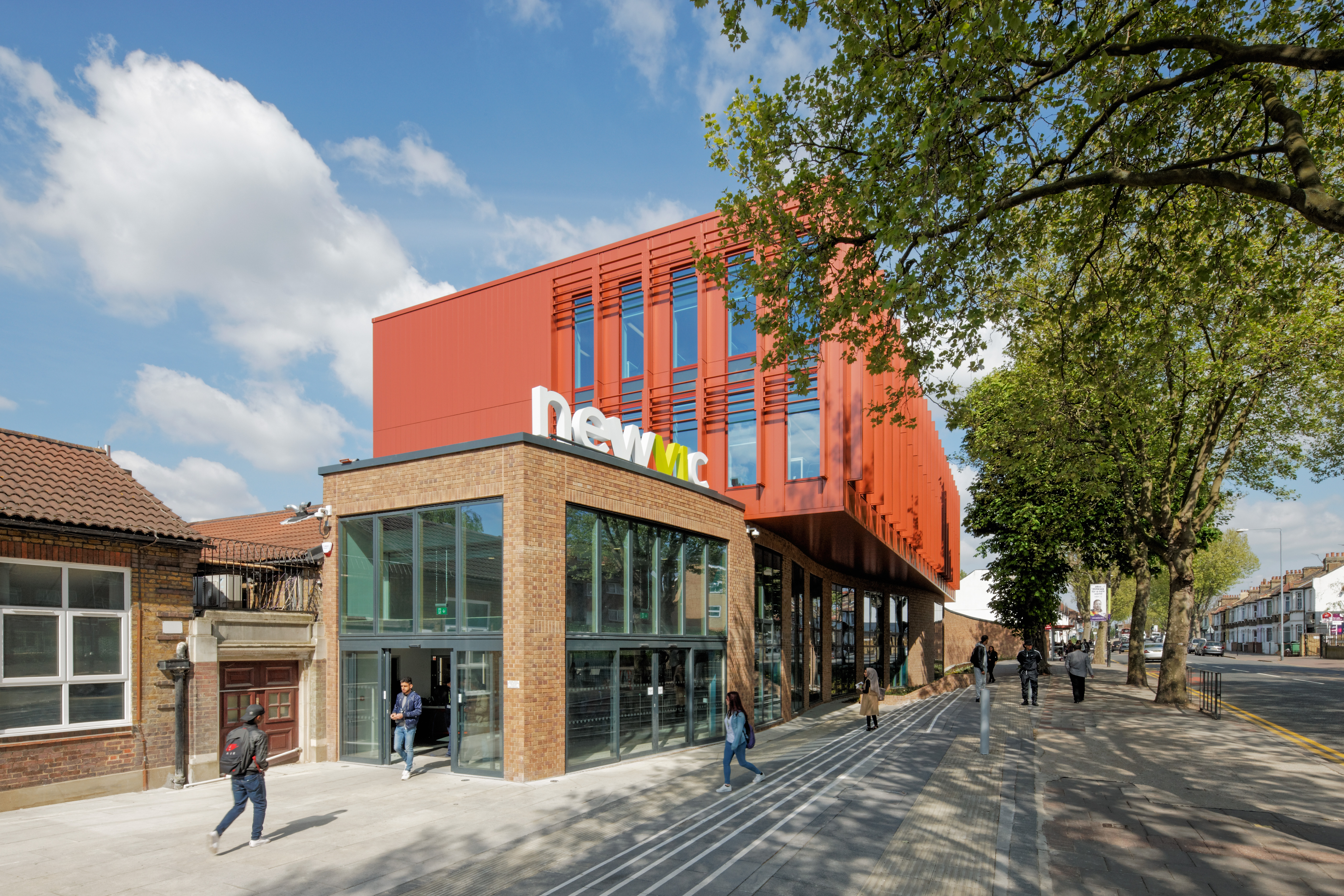
Newham Sixth Form College (NewVIc) celebrates its 25th anniversary this year and we are delighted to be unveiling a wonderful new building for our Silver Jubilee. In nearly a decade this is the only substantial new permanent addition to our campus and it’s one we’ve paid for entirely ourselves; through a combination of capital reserves and borrowing. Over the years we’ve put up some good quality temporary buildings to increase our capacity as student numbers have risen, but until now, nothing which can be described as a major long term enhancement of the student experience.

At a time when there is precious little capital on offer from the government to renew the college estate, we wanted to make sure that whatever investment we made would address our most urgent needs. We had very high expectations for this project given that there might not be another one for a while. We haven’t been disappointed; our new building exceeds all the ambitions we had for it and has already transformed the college for students, staff and visitors alike.

How did we set about doing this? First we refreshed our campus masterplan; this is a blueprint for completely rebuilding the college campus over the long term. The plan has been approved by our governors and is phased, with each of the 5 phases able to stand on its own without depending on the next. We know we can’t afford to deliver the whole plan without generating income or substantial public investment but we wanted to make a strong start with the first phase.

We identified our key requirements for Phase 1 after an objective survey of the condition of all our facilities and widespread consultation with students, staff and other stakeholders about what we needed most. We knew how much we could afford to spend and the consensus was that we needed 2 main things:

  • Much larger and better library and study facilities for students. Our existing library was under enormous pressure and really needed to be 3 times bigger.
  • A much better entrance and reception area with more generous circulation and social space. Our entrance was very congested and thousands of people were expected to enter and leave the building straight from a narrow pavement on a busy road.

Very early on in developing the brief, it became clear that this new building could be an important addition to the streetscape and reveal to the outside world more of the excitement of what happens inside the college as well as creating a better public realm around our entrance. We also realised that we would have to demolish our Drama studio and this gave us the opportunity to create a bespoke theatre and performance space in the new building. This led us to the idea of a very transparent double height ground floor which would act as a window into the college with the new learning resource centre (LRC) above it over several floors.

Our brilliant architects Shepheard Epstein Hunter (SEH) worked closely with us on the brief and developed an excellent design which has created beautiful and functional spaces in what was the somewhat constrained edge of the campus; with various level changes and connections between new and old buildings to contend with. We made every effort to be good clients by sticking to our aims, making timely decisions and avoiding changing our minds. The way SEH listened to us and responded to the challenges of the site was really exemplary.

At the heart of the project was the student learning experience. We based the design of our new LRC on what we know about how our students learn and how they want to study. Students themselves were fully involved and we can genuinely say that we now have an LRC designed around their needs.

The sixth form college setting sits between the more regimented school learning environment and that of a university where learners have much more autonomy about when, where and how to study. Funding is very tight and teaching hours are limited, so English sixth formers have a lot more time for independent study than their counterparts in other countries. We need to help them to make the transition from closely managed school children to mature, autonomous undergraduates. They will be spending a substantial amount of time in the Learning Resource Centre; whether working individually or in groups. We were clear that our LRC should feel like a university library and the configuration and layout of furniture and resources should naturally suggest how students might best use them.

The day we opened the new LRC to students for the first time this March, we watched with interest to see how they would use the new areas. It was wonderful to see students immediately ‘get it’ with very little prompting. All the careful design and layout of the spaces over 3 floors really paid off; project rooms, group study tables, silent study areas, soft furnishings for reading and all the associated technology – it all made sense to the people they were designed for and they settled into their new LRC as if they’d never known anything else.

Opening mid-year has meant that everyone can remember how things were ‘before’. The feedback from students has been fantastic and in the weeks since it opened we’ve seen the number of visits to the LRC more than double. Spring is turning to summer and as we move towards the public exam season, our students work into the evening bathed in sunlight filtered through the tree canopy and benefit from an aspirational vista right across East London to Canary Wharf and the City beyond.

Adjectives like ‘inspirational’ and ‘transformational’ are overused, but in this case they really do accurately describe the impact of our great new building.

Based on a talk given at the Education Construction Network (ECN) Breakfast Event on 27th April 2017.

More about NewVIc: The college of the future (March 2016)

Posted in Education, NewVIc, Teaching and learning | Tagged , , , , , , , | Leave a comment

Our NewVIc Story: Kate and Matthew Neal

Matthew: Kate and I both attended NewVIc from 2010 to 2012.

Kate: That’s where we met actually.

Matthew: Yes, we met on the first day in our first lesson together; Geography.

Kate: I was running late and remember walking in and spotting Matt straight away.

Matthew: I, on the other hand, was completely oblivious to the world. Before NewVIc I was a pretty shy person.

Kate: But I told him a terrible joke and he opened up a bit after that.

Matthew: Our friendship was cemented when we discovered we were in the same lesson after lunch; drama. Drama has always been one of my favourite subjects. It was one of the reasons I picked NewVic. I knew that their theatre department was great and that I would be able to do well there. Drama has always been a real place of freedom for me. It was the one subject which allowed me to explore who I was whilst gaining better empathy for others.

Kate: Yes, drama is about starting with an idea and building and improving it. In drama lessons there is space to take risks and make mistakes, knowing that the teachers would be there to help you improve.

Matthew: After a couple of weeks hanging out together and being in the same lessons, we started dating.

Kate: Which meant that we could help each other…

Matthew: …and distract each other.

Kate: But we both wanted to do well so we didn’t let it get in the way.

Matthew: I was also studying English Literature and Philosophy…

Kate: …whilst I did English Language and Literature and Music Performance. I loved singing and have done from a young age. I wanted to keep improving and learn more about how music is put together. Music Performance was a practical way of doing that. The teachers always pushed me to try different styles which led me to a deep love of jazz. The one to one support they gave me were extremely helpful too. My singing teacher gave me a lot of confidence in myself. It must have worked because I got a distinction star. Despite my love for Music, it was Geography that I chose to do at University.

Matthew: We spent a lot of time looking at different universities. We applied separately but we both got into Staffordshire University. I studied English and Creative Writing. I loved reading from a young age. Although I was never great at the academic side of things, I studied English Literature at NewVIc because of my love of books. My teachers really helped me improve my essay writing skills. They had a real passion for stories, for picking them apart and seeing how and why they worked. We also learnt a lot about critical theory which is a fundamental part of English at university. Their passion for studying books was contagious and opened me up to a whole new layer of reading.

Kate: As I said, I did Geography. Although I had lived in London my whole life I had a real passion for the natural world. In my lessons at NewVIc I had always opted for natural over human geography, a choice not shared by most of the class. This led me to do a lot of supported independent study. My teacher helped me find the right books and resources to tackle a different exam topic. I also spent a lot of time in the library studying. This supported individualised approach really helped me at university, as I already had some of the skills needed to organise and motivate myself to do well. Being diagnosed at NewVic for visual dyslexia and dyspraxia also meant that I could get the help I needed both at college and at university. And it explained why I was never really into reading.

Matt: We both gained firsts at university and wanted to come back to Newham to work. We got married in August in Plaistow and moved into a flat on Barking Road. We got a job with a local charity, Alternatives Trust East London, as part of their Education Department; REALationships. Now we work with young people in schools and colleges delivering Relationship and Sex Education and running drop-in sessions. Newham, and NewVic gave us so much and we really want to give back. Our work with REALationships allows us to work with young people and really make a difference. We were inspired to help young people in Newham by having so many good teachers who were patient when we were slow to learn and who never stopped pushing us to be better. REALationships had been around whilst we were at NewVIc, coming in with stalls, providing helpful relationship advice and a place to ask questions.

Kate: They helped me and Matt in our relationship by answering questions we had and by being non-judgemental. It’s great that we can now be working with them to help other young people get the same support.

Matt: And it’s great to see NewVIc is still full of aspirational students and inspirational teachers.

Kate Neal and Matthew Neal – NewVIc class of 2012.

You can find out more about REALationships and Alternatives East London here:

Kate.Neal@altel.org.uk

Previous My NewVIc story posts:

My NewVIc story: Kabir Jagwani

My NewVIc story: Raymond Fernandez.

My NewVIc Story: Amritpal Gill.

My NewVIc story: Nazia Sultana

My NewVIc Story: Supreet Kaur

My NewVIc story: Joseph Toonga

My NewVIc story: Rumana Ali

My NewVIc story: Zakiyah Qureshi

My NewVIc story: Husnain Nasim

My NewVIc story: Airey Grant


Posted in NewVIc, Students | Tagged , | Leave a comment

My NewVIc story: Kabir Jagwani.

My journey at NewVIc started in 1998 after I achieved 10 GCSE’s at secondary school and went on to do A-Levels in maths, physics and performing arts at NewVIc. A mixed combination because I wanted to balance my options with science and arts subjects. It was at NewVIc that I was inspired by my maths teacher; he made students feel comfortable and confident when tackling new topics and gave beautiful examples for every mathematical concept covered with step by step instructions. He allowed us to make mistakes and to work through our misconceptions. I had an incredible 2 years and made some amazing friends. The college provided really good facilities and I was also able to work on my table tennis and cricket.

At the end of my 2-year programme I decided I wanted to do some part time teaching and got a job working for the London Borough of Newham teaching ICT on summer school programmes. I then went on to study Electrical and Electronic Engineering at the University of East London where I achieved a 1st class Honours degree. I was offered the opportunity to study for a Post Graduate Certificate in Education (PGCE) in secondary mathematics where students were paid to do the course because of the shortage of maths teachers. After my PGCE, I was offered a teaching post by a few schools but decided to enhance my skills working at Stoke Newington school as a data manager to learn about student tracking programmes.

After that, I was offered a position at The Cumberland School with a good starting salary. I decided I would do a year and complete my NQT programme in order not to lose the value of my PGCE. Time has flown and I have been working at Cumberland since 2005. Since then, I have moved into a middle leader role as work-related co-ordinator and a few years later I achieved my Chartered London Teacher status. I then achieved my greatest goal, becoming an Advanced Skills Teacher (AST) which requires a very rigorous external assessment. Working as an AST enabled me to further develop my leadership skills and I was then promoted to my current role of Associate Assistant Head.

I have taken on many roles and responsibilities and been part of the leadership team at a time of change and implementation of new models for the curriculum, the school day and assessment. I am working to devise an intervention programme for our year 7 intake which requires looking at primary school data and placing pupils on the correct intervention pathway to improve their numeracy or literacy skills by providing them with extra support in small groups. My other roles include planning and teaching the key stage 3 and 4 curriculum in ICT and Mathematics. I help to create and share resources, update schemes of work. In the past I have also coached the school cricket team, helped organise diversity events, judged a talent contest and the Jack Petchey Speak Out challenge, mentored and run the PGCE and schools direct programme. I have provided informal support for colleagues and been involved in a lot of coaching. I have run internal professional development sessions to all staff on: Stretch and Challenge, The Outstanding Lesson, Visible Learning, TEEP and many more. I have supported newly qualified teachers when they join the school and had some amazing opportunities to support pupils on educational visits to places such as the Globe Theatre and a 3-day visit to Paris.

The passion I have for education has come from my own experiences at school, college and university. I was born, brought up, studied and worked in Newham and this is my chance to give back to the place which has given me the opportunity to work with young people which is surely the most rewarding career a person could ask for.

Kabir Jagwani – NewVIc class of 2000

Previous My NewVIc story posts:

My NewVIc story: Raymond Fernandez.

My NewVIc Story: Amritpal Gill.

My NewVIc story: Nazia Sultana

My NewVIc Story: Supreet Kaur

My NewVIc story: Joseph Toonga

My NewVIc story: Rumana Ali

My NewVIc story: Zakiyah Qureshi

My NewVIc story: Husnain Nasim

My NewVIc story: Airey Grant

Posted in Education, Guest blogs, NewVIc | Tagged , , , , , , , | Leave a comment

Dear candidates…

How to talk about post-16 education in the election campaign.

Dear candidates,

The general election campaign has started and you’ll be wanting to talk about all sorts of issues and hoping to win support. You can’t expect to be an expert on every policy area but you will need to have a quotable opinion on pretty much everything. No doubt your party will provide you with talking points and brief you about how to phrase things.

Education should be an important election theme and the 16-19 or ‘sixth form’ phase deserves its share of airtime.  We know you like soundbites and political shorthand, so here are just a few brief tips on how to talk about post-16 education in England and some suggestions about what to avoid saying.

1. Stereotypes:

Please avoid the easy stereotypes. Remember that 16-19 year olds are as diverse as any other age group and don’t come in neat types, so you might want to avoid labelling them as ‘academic’ or ‘practical’, ‘bright’ or ‘less able’. You might also want to steer clear of assumptions about them based on how well they achieved at 16, whether they happen to study in a college or a school sixth form or whether they’re planning to progress to university or not. Don’t make assumptions about providers either, based on what they’re called; they are pretty diverse too, whether they’re schools, sixth form colleges or further education colleges.

2. Skills:

Please don’t idolize ‘skills’ in isolation. Education is about both knowledge and skills. They are essential and inseparable and we’re as much a ‘knowledge economy’ as we are a ‘skills economy’ so please don’t talk about the ‘skills’ sector when you mean ‘colleges’ or ‘training’. Education and training are both necessary to equip people for work but they don’t of themselves create jobs. Please don’t promise that apprenticeships will solve unemployment or skills shortages; they are jobs with training and are not an employment panacea. Remember that vocational students go to university too, so find out more about vocational courses before describing them as confusing or inadequate and don’t assume that the elusive ‘parity of esteem’ can just be bought or wished into existence.

3. Selection:

Please recognise selective practices where they exist. Remember that there are plenty of comprehensive sixth form providers and there’s nothing natural or necessary about selection at 16 although selective sixth forms have proliferated. Before celebrating the ostensibly higher achievements of selective providers, make sure you ask who they keep out. If you are opposed to schools deciding who to select at 11 or 14, consider how you can justify the same practices at 16.

4. Choice:

Please don’t assume that opening new providers is always a good idea. Remember that 16 year olds are already free to choose where to study although they don’t all have the same range of options open to them. Opening more sixth forms and offering people more choice sounds like a good idea but increasing the number of providers can often lead to a narrowing of options as new sixth forms tend to want to offer the same things, jeopardising a broad, viable offer in many places.

5. Funding:

Please tell us what kind of education you think all young people should be entitled to and tell us about your priorities for any new investment. At the moment, we are barely funding 17 hours of teaching per week for our 16 and 17 year olds, and 18 year olds receive even less. What do you think we should do about our current low ambitions and part-time offer for this age group?

We would also love to know how you think education should be better organised and to hear your aspirations for the future society which today’s young people will live in.

16-19 education is critical to our future as a country. It needs to feature in this general election campaign, so please do talk about it. Good luck making yourself heard and good luck with your campaign.

See also:

Shaping an alternative education policy (April 2017)

Sixth form resolutions for 2017 (January 2017)

What future for Sixth Form Colleges? (December 2016)

Going beyond (October 2016)

Posted in Education, Education policy | Tagged , , , , , , , , , , , , , | Leave a comment

Education and the French presidential election.

This Sunday, 23rd April and then on Sunday 7th May, French voters go to the polls to elect a new head of state. This will be followed shortly afterwards by parliamentary elections on the 11th and 18th June.

All the leading candidates agree that France’s unitary national education service; ‘l’éducation nationale’, faces many challenges and needs reform. So what are their competing visions in this important policy area?

This post briefly compares the stated education programmes of the 5 candidates scoring highest in the opinion polls and from left to right:

  • Jean-Luc Mélenchon (La France Insoumise)
  • Benoît Hamon (Parti Socialiste)
  • Emmanuel Macron (En Marche)
  • François Fillon (Les Républicains)
  • Marine Le Pen (Front National)

Only two of these will make it through to the second round and currently this is a very close call between four of the candidates (Mélenchon, Macron, Fillon and Le Pen) who are polling at very similar levels.

In terms of additional investment, 3 of the candidates have committed to training and recruiting more teaching and support staff with Mélenchon promising an additional 60,000 posts, Hamon 40,000 and Macron 9,000 over their term of office. Fillon proposes to introduce performance-related pay, greater institutional autonomy over teacher recruitment and more school-based training.

Macron and Hamon have both set themselves specific targets for maximum class sizes in primary schools and in designated disadvantaged areas: 25/20 from Hamon and 12 (infants) from Macron who is also proposing greater incentives for staff to work in disadvantaged areas. Hamon wants to offer the option of nursery education to children aged 2 and above in disadvantaged areas and Fillon suggests compulsory education should start at age 5 rather than 6.

Mélenchon is in favour of a fully funded national programme of extra-curricular activities for all school students, Hamon proposes a 25% increase in such activities including a new ‘Arts for all at school’ scheme and Fillon also suggests an extension of after-school homework clubs. Le Pen would end all ‘cultural’ or mother tongue language classes.

Fillon and Le Pen are both keen to introduce school uniform rules and Macron wants to ban the use of mobile phones in primary and secondary schools. All the candidates are in favour of some kind of civic or military service for 16-25 year olds – whether compulsory and military (Macron and Le Pen) compulsory and civic (Mélenchon) or voluntary (Hamon and Fillon).

All but two of the candidates (Hamon and Macron) are critical of the recent major reform of the secondary curriculum and would revisit it. This reform saw schools gaining more autonomy to manage some of the weekly hours of teaching using more individual support and thematic interdisciplinary project work covering 2 different themes per year such as: health, the environment, ancient civilizations etc.  with a view to helping students make more sense of their studies. A new ‘Brevet’ qualification for 15 year olds was introduced, graded through a combination of continuous assessment of a common core, some oral exams and written exams in maths, science, history, geography, technology, French and moral and civic studies.

In upper secondary education, Mélenchon wants to extend the vocational baccalaureate from 3 to 4 years and to create a national careers service. Hamon wants parity of esteem for all bac routes and Macron is keen to extend the bilingual and European streams while reducing the number of compulsory subjects in the bac and introduce more continuous assessment. Fillon also values vocational education and training, seeing this as part of a strategy to reduce unemployment. Le Pen wants to introduce vocational streams from age 14 and sees the bac as a tool for selection and guidance with more emphasis on basic skills and an end to all interdisciplinary projects.

Mélenchon also offers specific policies on Higher Education, with a plan to abolish university fees with effect from this Autumn as well as to create more affordable student accommodation.

Each of these candidates, if elected, would fully expect to be able to shape the system and implement their specific proposals across the board because France still has an education service run along national lines.

One thing is clear, whether they come from the left, the right or the centre and whatever their policy differences, none of the candidates for France’s highest political office is advocating the ‘Anglo Saxon’ competition and ‘choice’ market reforms which have taken hold in the US and UK. There is little appetite in France for anything which might undermine the idea of a single national education service based on national values, with national standards and serving national objectives.

See also:

Market autonomy or democratic autonomy? (May 2016)

Scale and efficiency in upper secondary education (October 2015)

Educational inequality in France (May 2015)

Inspectors make the case for comprehensive colleges (January 2015)

Posted in Education, Education policy, Politics | Tagged , , , , , , , , , , , | 1 Comment

Shaping an alternative education policy.

The Labour Party National Policy Forum Consultation 2017.

Labour is currently consulting on its Early Years, Education and Skills policies and the consultation document merits the attention of anyone who is interested in developing alternatives to the current direction of travel in English education policy.

The consultation paper starts with a vision and then poses key questions in each of the main policy areas; early years, schools, further education and adult skills and children’s social care and safeguarding. This response offers a few initial thoughts on the broader vision while being mainly concerned with post-16 education policy.

The vision: egalitarian, social and economic

The very first sentence defines education for self-realisation in broadly egalitarian terms:

“…to make sure that everyone, whatever their background, is given the opportunity and skills to reach their full potential and live a good life.”

This section goes on to describe the objective of “a world class education system…excellent schools and well-funded services…” and to highlight the gaps in attainment between lower-income children and their wealthier peers which “are evident before they even start school”.

Both economic and social imperatives are addressed; the general aspirations of ‘reaching one’s full potential’ and living ‘a good life’ are counterbalanced with statements about how essential education is to future economic health and t achieving a skilled workforce.

Going beyond the broad aim of giving everyone the opportunity to “live the life they want to” this section could benefit from more specific examples of how education can help us to achieve our economic, social and personal objectives. It could offer some aspirations around education’s potential to develop active citizens, shape communities, promote social solidarity and help us cope with changes and challenges.

The need for a system

There is also the commitment to create a National Education Service (NES) “open to all throughout their lives”. This is a good overarching policy framework which could be used to signpost solutions to many of the problems of our fragmented and divided education ‘non-system’. The idea of mobilising all publicly funded education providers to serve the whole community could be a real vote-winner if it can be attractively fleshed-out. Using the NHS paradigm for education implies a big shift in the way we think about our schools and colleges. People will need to understand what a National Education Service might look like in their area and how it might benefit them. This requires concrete examples of how a fairer and more effective system could be assembled from the somewhat dysfunctional set of elements we currently have.

In order to make the case for an NES, there also needs to be a clear critique of the marketization of education. Providers in all phases in England are operating in a market where they compete for students and under a high-stakes accountability regime where any performance below average is seen as failure. The school section suggests the need for “a permanent infrastructure of support services to help them function effectively” and “evidence-based…sustainable school improvement” but more work needs to be done on how to build such a high-performing and supportive system starting from where we are now. The question of balancing local or regional democratic accountability with a national service standard will also need to be addressed.

Modernising and improving access to further education and adult skills

This section rightly highlights the under-funding of 16-19, further and adult education following several years of disproportionate cuts. A commitment to re-balancing per capita investment between pre-16 and post-16 students would certainly be welcome. As with the schools section, more is needed on how we might move from a market based on competition to a system based on networking and collaborating.

The critique of current apprenticeship policy is welcome, but this section seems to equate further education with skills training and therefore assumes purely economic objectives for the sector. The overall narrative has nothing to say about what the educational aims of a 16-19 phase should be and there are no questions about what young adults could expect from a National Education Service. Surely, the promise of the good life and the wider social aspirations sketched out in the first section should apply as much to sixth formers, FE students and adult learners as to their younger selves. Older teenagers may be closer to the labour market but they are also closer to full, active citizenship and adult social responsibilities.

To address the questions:

Does our further education system provide for the skills we need in a future economy?

We need to establish educational objectives for all 16-19 year olds which include an entitlement to a broad curriculum including a range of subject domains, literacy, numeracy, citizenship and work-related learning including work placements or internships. The ‘future economy’, just like the present one, requires people to have a good grounding in foundational knowledge as well as experience of using wider skills including communication, collaborative, creative and research skills as well as sector-specific skills.

How can we improve access for adults that want to re-skill and develop the quality of workplace learning? What role can universities play in this? How can we raise the quality of apprenticeships? What can we do to address the skills gap and promote better strategic planning for apprenticeship and training? What role do University Technical Colleges have to play?

Colleges and universities are already working with employers to develop advanced and higher level apprenticeships for over-18’s which can work, further qualifications and progression opportunities. This is where apprenticeship investment should be directed. Adults could be offered an entitlement to further education or training throughout life, prioritising for public funding those who have received the least or achieved the least.

For under-18’s, the priority should be making a broad and stimulating educational offer available to all – including an entitlement to good work-related learning. This should be available wherever they are studying and whatever their prior achievement or skills levels. Low-level apprenticeships for 16 year olds with low prior achievement are not on their own a good route to progression or higher skill employment.

Compelling ‘signature’ policies needed

This consultation is the first step towards developing policies which can be put to the electorate with a view to winning power. As well as deciding how much additional investment can be found for education from total public spending, any party also needs some concrete ideas which symbolise their approach well and can win votes.

What might such ‘signature’ policies look like, based on an ambitious, egalitarian and life-long vision of a National Education Service? I would suggest two:

  • Create a National Baccalaureate for all young people to aim for – generally by 19. This would be a single coherent national framework which would accredit a range of subject and work-related learning and skills. Achieving a full diploma would be recognised as a challenging and valued milestone for all young adults and a passport to further progression.
  • Extend the National Citizens Service to include all volunteering and civic activity with the opportunity to ‘earn’ a fee-discount for university or adult education based on the number of hours of activity. This would be a mutual ‘something for something’ way to move towards lower fees while promoting community development and cohesion at the same time.

The consultation period closes on 31st May 2017 and submissions can be made until then via: www.policyforum.labour.org.uk

See also:

Going Beyond (October 2016)

Education: what’s it all for? (January 2016)

Developing Labour’s vision for education (September 2015)

Starting to think about a National Education Service (September 2015)

For a National Education Service (July 2015)


Posted in Education, Education policy, Politics | Tagged , , , , , , , , | Leave a comment

From ‘slumming’ to solidarity.

The evolution of responses to urban poverty and inequality.

Part 2. From London to Chicago and back again

Two selective and interlinked chronologies:

London

1884: Toynbee Hall in Whitechapel was founded by Canon Samuel Barnett and his wife Henrietta Barnett (1851-1936).

1889: Charles Booth published the first edition of Life and Labour of the People in London while working at Toynbee Hall and with the help of Toynbee Hall residents, School Board visitors and other researchers, including Beatrice Potter who later married Sidney Webb.

1889: Mansfield House in Plaistow was established by students of Mansfield College, Oxford. This settlement pioneered an early version of free legal aid ‘The Poor Man’s Lawyer’, organised orchestras, choirs, dramatic and leadership development, ‘brotherhood and civic societies’ encouraging participation in politics. It’s first warden Percy Alden was also a Fabian and a councillor on West Ham Borough Council and later became MP for Tottenham, first as a Liberal and then for Labour.

1892: The associated Canning Town Women’s Settlement was established. Its first warden was Rebecca Cheetham, serving until 1917 and also active in public life. From 1903 to 1939 she was a co-opted member of the Education Committee of West Ham Borough Council, England’s first Labour controlled council (from 1898), overseeing the rapid development of new schools and colleges.

1903: William Beveridge joins Toynbee Hall and works with Barnett on unemployment relief.

1905-1909: Beatrice Webb and Charles Booth serve on the Royal Commission on the Poor Law with Webb producing a minority report advocating minimum levels of welfare.

1910: Clement Attlee becomes Toynbee Hall secretary for a year, and wrote on ‘The teaching of citizenship in public schools’ for the Toynbee Record. His 1920 book ‘The Social Worker’ drew on his experience at Toynbee Hall.

Chicago

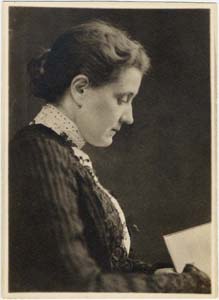
1888: Jane Addams visited Toynbee Hall in Whitechapel having previously been to London in 1883 and been deeply shocked by the poverty she saw in East London.

1889: Jane Addams and Ellen Gates Starr founded Hull House, ‘a community of university women’ in the Near West Side of Chicago, an ethnically diverse community of recent European immigrants; Italian, German, Jewish, Greek, Irish, Polish etc. The aims of Hull House were: to focus on the causes of poverty through Research (gathering information, mapping inequality), Reform (eg: through campaigning, legislation or local government) and Residence (living and working within the community).

Hull House helped to establish the first juvenile court, the first public playground, bathhouse and public gymnasium and influenced legislation on child labour, work safety, unemployment pay and immigrant rights and campaigned on women’s suffrage. The settlement also organised a day-care centre and kindergarten as well as a public dispensary, equivalent to today’s food banks.

By 1920 there were around 400 settlement houses across the U.S. drawing inspiration from Hull House.

1939: Saul Alinsky started community organising in the Back of the Yards district in Chicago. He helped to create an overarching community organisation, The Back of the Yards Neighbourhood Council (BYNC), made up of representatives of community groups providing strength in numbers and solidarity for collective bargaining and to win agreed demands.

1940: Alinsky founded the Industrial Areas Foundation (IAF) which promotes community organising across many urban areas of the U.S.

1985: Barack Obama worked as a community organiser with the Developing Communities Project in Chicago’s South Side.

1996: Obama was elected as an Illinois state senator, a U.S. senator in 2004 and U.S. president in 2008.

London

1942: The Beveridge report identified the Five Evils of: Squalor, Ignorance, Want, Idleness and Disease and proposes substantial welfare reforms.

1989: Citizens Organising Foundation, now Citizens UK, was formed by Neil Jameson who was trained with the IAF.

1996: The East London Communities Organisation (TELCO) was formed at an assembly of over 1,300 representatives of 30 member organisations as a chapter of Citizens UK. Successful campaigns include that for the London Living Wage, Community Land Trusts, Safe Havens, Refugees Welcome and organising regular interventions aimed at holding elected politicians to account.

While there are far fewer university settlements in London today than a century ago, Toynbee Hall is still active in advocating against poverty and for social change. Its vision is of a future free from poverty:

“Our mission is to support people and communities to break down the barriers that trap them in poverty. We act with ambition, integrity and with the courage of our convictions, using evidence-based social action to shape what we do and give us an authoritative voice to challenge, influence and make a difference. Inquisitive and collaborative, we seek out relationships with people, communities and partners to develop, as well as to share our knowledge and understanding; facilitating and supporting them to design their own solutions to tackling poverty. We are open-minded, inclusive and transparent; learning from what we do; seeking fresh and alternative perspectives to shape and influence our practice.”

Different perspectives?

Although there is a continuity of values and approach in the various traditions of urban social action, the practitioners did not always highlight it themselves.

George Lansbury knew the work of Toynbee Hall well but never worked there himself, unlike Clement Attlee, his successor as Labour leader. In his autobiography, Lansbury remarks: “The one solid achievement of Toynbee Hall has been the filling up of the bureaucracy of government and administration with men and women who went to East London full of enthusiasm and zeal for the welfare of the masses and discovered the advancement of their own interests.” He hadn’t always been so critical, but the scorn was real.

Alinsky had similar criticisms of Hull House. A more ‘professionalised’ Hull House was still active and influential in Chicago when Alinsky started community organising. He frequently criticised the methods of the settlement houses. In a 1983 interview, Sidney Hyman who worked with Alinsky in the BYNC and whose sister had been a Hull House resident summarised his objections: “Going to work for Jane Addams at Hull House was a romantic thing to do for young, sensitive women. [Their noble purpose] was to help, but it was always the Lady Bountifuls who were doing the helping. Now Saul comes along and turns it around and sort of sets the whole Hull House idea on its head. He says he doesn’t want the ‘hellfare’ worker, he doesn’t want the Lady Bountiful; he wants people to help themselves and that became a very romantic idea.”

Addams and Alinsky can be characterised as representing opposite poles on the spectrum of social engagement. Addams offers a more fluid, responsive, non-ideological approach, open to the possibility of different paths to success while not against confrontation when deemed necessary. She talks in co-operative, relational terms, always seeking connections between the private and public spheres. Alinsky sees every campaign as a competition or a confrontation; a battle to be won by ensuring that your side builds its collective power. He speaks in goal-oriented terms and uses the language of warfare with ‘tactics’ and ‘victory’ against an ‘enemy’.

Alinsky’s tactics are rooted in his understanding of a ‘real’ world of constant struggle and his tactics can appear ‘stronger’ as well as more pragmatic. Addams herself was very critical of well-meaning but ineffective charity work which was not based on an understanding of the needs of the community.

Both emphasise the need to listen and learn from people and to give the disenfranchised a genuine voice and both were absolutely determined to bring about a fairer, more just world. Alinsky’s privileges confrontation whereas Addams sees the choice of less antagonistic means as prefiguring a shared vision of a better world; the way we get there is part of creating the kind of destination we want.

Barack Obama’s reflections on his time as a community organizer in Chicago seems to bridge this gap:

“Be open with the issues. Include the community instead of going behind their back, sometimes you need to include people you don’t like. You’ve got to bring people together. If you exclude people you’re only weakening yourself.”

Obama was one of the two major progressive politicians who went on to lead their countries and regarded their first-hand experience of community work as formative and decisive, whether in London or Chicago:

“The social service movement of modern times…has arisen out of a deep discontent with society as at present constituted…It is the expression of the desire for social justice, for freedom and beauty, and for the better apportionment of all things that make up a good life.” Clement Attlee

“It’s by working with this organisation and this community that I found my calling…The measure of my life would be public service.” Barack Obama.

The role of education

Hull House always had a strong educational purpose, organising plays, free concerts and lectures and discussion circles (eg: the Plato Club), classes in language, literature, history, art and domestic activities as well as cultural events and clubs for children and adults. It took its research role very seriously, producing the ‘Hull House Maps and Papers’ which researched demographics, including ethnicity, housing, working and sanitation conditions with the same concern for accuracy and comprehensiveness as that shown by Booth in his maps of London poverty.

Hull House had strong links with the ‘Chicago School’ of Sociology and became the urban branch campus of the University of Illinois at Chicago and is still maintained as a museum by the university.

There are parallels in London in the educational work of Toynbee Hall, Mansfield House and other settlements. They can also be seen in the development of the urban studies think tank, the Institute of Community Studies, founded in 1954, now known as the Young Foundation and actively involved in social innovation.

Citizens UK established an Institute for Community Organising in 2010 as part of its Centre for Civil Society to train community organisers. TELCO has many educational institutions in membership and many of its key activists come from schools, colleges or universities. For a few years, Queen Mary University of London offered a Masters in Community Organising and a central mission of the University of East London (UEL) is to be London’s leading university for civic engagement:

“…extending an invitation to all our students and staff to participate in the ‘living lab’ that east London represents, becoming ‘best in class’ in confronting the very challenges that our students face, providing them with the opportunity to become change agents who help to transform their own communities, working with our communities to deliver applied and sustainable solutions to the societal and environmental challenges that we face, empowering our students and staff to become ambassadors and active citizens for the long term benefit of their communities.” (UEL corporate plan)

The many challenges which face us require this kind of educational response, one where the connection is made between learning, reflecting and acting and which should have at its heart the public university and a network of other civic institutions. Such a network might combine the best practices and traditions of a University Settlement, a Danish Folk school, an Extramural Department or Adult Education Institute, a Further Education College, a Community Centre and a ‘Think-and-Do Tank’.

Such a co-ordinated response needs to draw on community involvement, equality and trade union campaigning as well as on the best of rigorous research and teaching. This local engagement is not about single-issue indoctrination but needs to be anchored in core values of equality, democracy, solidarity and mutual respect while not shying away from differences and debate.

At our college ‘Obama Day’ in 2009, I asked the audience to imagine what we could do for ourselves and our community if every one of us became community organisers, even for just one hour a week. What could we achieve with nearly 2,700 hours of concerted community activity per week; the equivalent of approximately 80 full time community workers?

Community activity could become a central part of our educational culture. Instead of simply encouraging our students to engage in occasional volunteering or charity projects we could embed Service Learning in all our school, college and university programmes. The educational and social impact of making Service Learning part of the educational experience of all young people and adults would be phenomenal. Education could place itself at the heart of building greater social cohesion and responding to community needs and could support a renaissance in social and community development.

This is the second of 2 posts based on a talk given to the East London History Workshop on 19th January 2017.

See also:

From Toynbee to TELCO – via Chicago, part 1. From settlement to social activism

Barack Obama community organiser

Jane Addams and Toynbee Hall

Women and the Settlement Movement  by Katharine Bentley Beauman (Radcliffe Press, 1996)

Slumming – Sexual and Social Politics in Victorian London by Seth Koven (Princeton, 2006)

‘Community Organizing: Addams and Alinsky’ by Maurice Hamington

Posted in Education, History | Tagged , , , , , , , , , , , , , , , , , , , , , , , , , | Leave a comment

Informed careers education.

Using our data to inform excellent careers education information advice and guidance.

In common with all post-16 providers, we want all our students to be ambitious and progress to positive outcomes. It’s one of our key values – Ambition: we have the highest expectations of everyone. We are very proud of our high standards of careers education, information, advice and guidance (CEIAG) and last year 91% of our students who applied progressed to university. Our data confirms that more disadvantaged students progress to university from our college than from any other provider in England and more young people progress to university from our college than from any other Newham sixth form.

Given that many of our students are only with us for 2 years, we are having conversations with them about their aspirations before they even join us. Pretty much every interaction includes a focus on planning for progression; whether at open days, interviews, induction, enrolment and from then on. Helping to inform and guide young people through these big decisions is a natural and integral part of their post-16 educational journey.

Some of the more formal ways we do this include: careers guidance from specialist careers advisors, exploring career options and pathways including through work placements, visits and internships, an explicit tutorial unit focused on progression, help with the university, apprenticeship or job application process, mentoring, coaching and interview practice and, where appropriate, help preparing for specific admission tests: BMAT, UKCAT, LNAT etc.

Everything we do has to start from the needs of individuals, building on their own understanding and relationship with society and the economy and we need to see this work in terms of developing young people’s self-knowledge and self-development. Inevitably, this is inextricably linked to their identity, their self-image and their sense of status and worth.

Young people’s choices will be influenced by their own experience of study and work, their level of responsibility and self-confidence, their resilience and their appetite for risk-taking. They will be thinking about the support they need and the networks they can draw on from key people in their lives: family, friends, professionals, colleagues and mentors. They will also have to face a number of fears and anxieties about possible obstacles to success; real or perceived.

We need to remember that our students’ journeys are not always smooth linear paths from ambition through to progression and we need to keep as many doors open as possible and allow for the possibility of changing routes.

Our careers work must be integrated and embedded into the student experience and we need to avoid deterministic assumptions about fixed pathways or simplistic binary choices such as ‘HE versus work’. We need to bust the many myths which young people pick up about their possible options and help them to embrace the possibility of change and manage a degree of uncertainty about the future.

The aggregated data we generate and use are about groups but they are built from individual personal decisions and achievements – each of which is highly specific and contingent. Those data help us answer key questions about our student journeys:

  • Who? The demographics of different choices and pathways, by gender, by ethnicity, by learning needs…
  • From where? Based on students’ prior institutions, their prior achievement, the course or course type they have followed…
  • How? What do we know about their journeys, the support they did or didn’t receive, the development or enrichment activities they engaged in and how they reached their destination, eg: first choice, insurance, extra, clearing etc…
  • To where? What their first and later destinations are; what university degree course, at which university, what job, in which sector…

The data we collect can help reveal important underlying issues and trends, inform our practice and support improvement. While they can answer many questions we need to beware of assuming causation where we have only found correlation.

We can use these data to target or prioritise particular relationships with key stakeholders, for example with a local university with a great course in a field which is not currently attracting its share of applicants from your sixth form.

We can also use these data to benchmark against ourselves and others, for example if we are not getting the same proportions of equally qualified applicants into similar courses.

We can use these data to help us develop our careers resources, processes and staff training and to work with others to share good practice.

Ultimately, we also need these data in order to demonstrate value added and improvement but we need to be very clear about what we mean by success. Setting ourselves arbitrary or inappropriate success measures does not help our students, so ‘increasing the proportion of applicants who progress to their first or insurance choice rather than through clearing’ is a better target than ‘getting more students into university X’.

The following are all possible fruitful sources of data to inform practice:

  • Those students who haven’t progressed or remain NEET.
  • Those students who progressed to apprenticeships or employment rather than higher education.
  • Those students who delay entry to university and progressed more than a year after leaving.
  • Those students who progressed having started at college at Foundation or Intermediate level.
  • Those students who progressed having come to the UK at 15 or 16.
  • Those students with learning difficulties or disabilities.

Our own data need to be held in a single authoritative and up-to-date database to make it easy to analyse and question. We also need data from elsewhere: from government statistics of course but also from partner organisations. This is where we need to develop better data sharing protocols and systems as we still do not have any entitlement to comprehensive data about the achievements and journeys of our former students. The occasional letter from a university informing us of the graduation of one of our former students only begs the question ‘what about all the others we know attended your institution?’

Data are essential tools to help us inform the vital, individual and human-centred business of doing careers work. We need to see our data set as a rich, dynamic seam to mine; starting points for further questions which can help us better understand and enhance our contribution to young people’s decision-making in a complex world.

Based on my talk at the ‘Excelling at Careers Education and guidance’ conference on 29th March 2017 with Modern Government.

See also:

Is vocational education in England really ‘inadequate’? (Jan 2016)

University progression for the NewVIc class of 2015 (Dec 2015)

NewVIc breaks all its university progression records (Sep 2015)

Where do all our A level students go? (Jan 2015)

Vocational education: rejecting the narrative of failure (Jan 2015)

How to achieve high university progression rates (June 2014)


Posted in Education | Tagged , , , , , | Leave a comment

The Mathematics of Survival


Poetry gives our language the wings to fly and in difficult times we need strong wings. Starting with just the alphabet, the poetic form allows our ideas to soar. Just like those in our previous anthologies, the student poems in this new collection launch themselves off the page with power and passion – refusing to be tethered.

Thank you to all these NewVIc poets for their contribution to an algebra of humanity starting from a mathematics of survival. Thank you also to Joelle Taylor, Kat Lewis and English PEN for their continued support and commitment to helping our students develop their work.

 “This is a book for those who read over the borders of a page. This is a book for people who write in the margins. This is a book for people who live there too.”  Joelle Taylor, facilitator, English PEN

“The sparkling talent in this group of young writers is fed by their fresh and curious eyes. I believe in a future where these voices are loud.” Kat Lewis – facilitator, English PEN

“The dark vision conjured by the brilliant writers featured in this collection is not an easy one to process…but the creativity and bravery of the young people whose eyes we see through in the Mathematics of Survival is a powerful lesson in resilience to all of us.” Rebekah Murrell – Acting head of programmes, English PEN

Here is a very brief selection from the collection:


This is for

The boy who sits quietly at his desk

In the centre of a battlefield

Studying the mathematics of survival…

From ‘For Hope’ by Abad Mohammad


…This is for

Those in London with little to share

Climbing a ladder of life that is barely there

Getting madder every day

Forgetting the words they were about to say

From ‘Working Classes’ by Jack Galbraith


He needs a compass to navigate the channel

Gets so lost he cannot untangle

When he sails on her seas

He just goes with the breeze

Lost in the Bermuda triangle.

From ‘Navigation’ by Yusuf Mohammed


I am made of mosaic memories

Even though they are cracked-up memories

If I am a stained glass window

One of the panes is broken

There is a hole in the centre of me

Left by a bullet that scattered my family

From ‘Stained glass’ by Vinushan Jegatheesan


Some of the poems relate specifically to the refugee experience:

Day 105…Now here I am in this boat, falling apart and broken, like us. We wanted to get out and now here we are: lost in the vast emptiness. Alone. …

From ‘Dear Diary’ by Rebecca Cavanagh


…I come from the red sea seeping along dustry streets

I am a stone thrown in to the crimson tides

We are the ripples in the red sea

Reaching your shores.

From ‘Humanity’ by Naveed Khan


The constraints of the ‘alphabet poem’ also stimulated some great work from A to Z:

Alone.

Bloodshed…she dragged her feet across the dry, barren wastelands –

Yelling, screaming crying…but no one came.

Zoned, this entire land was nowhere, isolated from the reaches…

From ‘Is lar nishtay jadki lapari’ (‘Nowhere for the child to go’) by Ikra Nawaz


An introduction to the cruelty of human beings

Because we all seem to live life looking through an idealistic and naïve spyglass crafted by our super-ego

Can it be that our own values divide us rather than unite us?

Vanquish the notion that equality is unachievable,

Working as a collective does not generate hate –

Xenophobia does!

You must realise your potential and importance,

Zealousness will do the rest.

From ‘The humanistic alphabet’ by Hannah Maria Khan


Creative beings

We are writers…

From ‘We are writers’ by Minal Khan, Esa Ahmed and Habib Rahman


The Mathematics of Survival is the latest in our series of collaborations with English PEN which includes Brave New Words and (un)mute. It features contributions from NewVIc students from across the college’s programmes including the Foundation level Step-Up course. The full collection is available as The Mathematics of Survival ISBN: 978-0-9957234-0-5

See also:

Young poets ‘write the wrong’ (June 2015)

Seeking refuge in poetry (September 2016)

Young people debate free speech in the House of Lords (December 2016)

Posted in NewVIc, Poetry | Tagged , , , , , | Leave a comment

The University of Nowhere

Announcement: April 1st 2017

As the United Kingdom launches the process of leaving the European Union with little clarity about its destination, a new kind of higher education provider launched today is set to re-define the university destination.

The University of Nowhere will break free from outdated notions of a university for either ‘somewhere’ or ‘anywhere’ and will specifically aspire to prepare its students to be ‘nowhere’. It’s mission will be truly aligned to an ‘exit’-ential paradigm, inspired by the Prime minister’s words: “If you are a citizen of the world you are a citizen of nowhere”.

Future citizens of Nowhere will absorb ‘nowhere’ values of sub-democracy, infra-equality, dislocated-universalism and dis-respect. They will be equipped with a toolkit of powerful ‘nowhere’ skills to help them achieve un-mastery, in-coherence and post-social dis-integration.

Aiming to be truly beyond-trend and well ahead of the curve, the university will help to establish a new zeitgeist for our post-diverse world, moving beyond thought-leadership – beyond thought itself. The university will be neither fact-factory nor wisdom-workshop but post-factual and un-wise.

Going forward, departments led by eminent professors Zamyatin, Huxley and Blair will specialise in the radical new disciplines of Fake News studies, Science Denial, Linguistic Obfuscation, Disruptive Logic and Fuzzy Innovation.

The project is a collaboration between the University of Poppleton (prop. Laurie Taylor at T.H.E.) and the Accademia San Seriffe, drawing on the degree awarding reputation of Chump University, North Virginia.

The university’s inspirational motto will be ‘Going Nowhere…Fast’

To facilitate communication, all teaching will be in the universal language of Esperanto.

Courses are open to all but please check the date of this announcement before applying.

See also: University Gold (October 2016)

Posted in Education | Tagged , , , | 3 Comments