The Blunkett review and education’s democratic deficit

The Blunkett review is to be welcomed and its implementation would clearly help recreate an education system where there is none. However, it does not fully address English education’s democratic deficit.

“Standards not structures” never made much sense as a mantra. Politicians are right to signal that high standards for all are their main policy aim but the idea that the way education is organised has no bearing on standards is simply crazy. One just needs to look at England where we now have a chaotic non-system of competing providers and distorted markets which can only be described as “confusion not coherence”. We have a highly interventionist government which refuses to intervene in the one effective way it should; to develop an effective national education system.

Whoever wins next year’s general election will inherit the fractured landscape of English education. The challenge will be how to start healing the fractures and create a functional system which is actually capable of achieving high standards for all.

Enter David Blunkett, with his Review of education structures, functions and the raising of standards for all published a few weeks ago and commissioned by the Labour Party to inform their manifesto for 2015. The document is long and contains many detailed recommendations which have already attracted much comment (see below for a list). It was driven by two overriding objectives:

  • To raise standards and offer equal opportunity for all children.
  • To bring about coherence, consistency and collaboration to the education service.

These are vital aims and the 40 recommendations are mostly very welcome practical steps towards the creation of a system; something which is taken for granted in most countries but is quite impossible under the current English free-for-all with its plethora of competing schools, chains, sponsors and constant government-inspired market interventions.

In his introduction David Blunkett also provides a much better case for the importance of education than does the current draft Labour manifesto (see my comments on this here). Instead of the drear language of economic instrumentalism and guff about winning the global “race to the top” we are told that:

“A grasp of who we are, where we are and where we come from is essential to our sense of identity.”

“We have to provide the opportunity to build those thinking and critical skills which allow the analytical faculties to develop – to be able to challenge as well as to make sense of the world around us.”

The introduction ends with a flourish:

“Education is the great liberator; it can unlock what William Blake called those mind-forged manacles”.

Bernard Crick’s former student shows his commitment to education for citizenship and his belief in the liberating power of education and this gives real heart to the document. Labour would do well to adopt these sentiments as well as agreeing the recommendations.

At the centre of the Review is the proposal to create independent Directors of School Standards (DSS) who would be charged with driving up standards and would intervene or facilitate intervention where necessary, for example via Community Trusts or Education Incubation Zones. They would encourage schools to share good practice and be empowered to broker collaboration. They would be appointed by groups of local authorities from shortlists approved by the Secretary of State and relate to a forum and stakeholder panel. They would report annually to various elected representatives in ways which would encourage questioning and debate.

This is an improvement on what we have now. The Regional Schools Commissioners (RSCs) currently being introduced will only oversee part of the school system, will be biased in favour of particular solutions and will have no real accountability to local people or their elected representatives.

However desirable though, the introduction of Directors of School Standards will not address the democratic deficit at the heart of English education. To be effective, such a key player as a DSS, with their vital responsibility for system-building, system improvement and system-change within their area, should have real local legitimacy. This is much diluted if it is exercised via representatives from a group of local councils. If not directly elected themselves, I would suggest that the DSS should be appointed by, and accountable to, a directly elected education authority. There is a good case for these strategic authorities to be regional or city-wide and to take on responsibility for 16-18 education as well. In London, for example, that authority could be the Greater London Authority.

Some people argue that we shouldn’t fetishize local democracy, that elections do not guarantee improvement and that one election every 4 years cannot address today’s real problems. Clearly, electoral politics does not solve everything but giving up on the democratic oversight of local public services denies us all our voice and leads to rule by technocrats and experts or, worse, the anarchy of the market.

Every citizen in England has a stake in education and has a right to know, for their area:

  • Who decides education policy and priorities?
  • Who defines and sets standards and tackles underperformance?
  • Who ensures the system is working fairly for everyone?
  • How do we get to question, debate and challenge them?
  • How can we remove and replace them?

Education policy is too important to leave solely to the secretary of state, to experts or to the market. It should be subject to scrutiny and debate locally as well as nationally. I think we should be arguing for elected education authorities, not as the only solution but to help create a new democratic space for education to be debated. We should trust ourselves to shape this debate and to elect people on the basis of their education policies. We might be surprised by how much better we can make things and any new DSS or RSC worth their salt should be delighted to report to an elected body supported by an engaged and vibrant local education community.

More commentary on the Blunkett Review:

Fiona Millar in The Guardian is broadly supportive of Blunkett’s “essential first step”

Richard Hatcher asks “where would the power lie?”

Robert Hill welcomes the proposals but has 3 caveats

John Howson criticises the proposals for their bureaucracy and lack of democracy

Local Schools Network’s Janet Downs welcomes the proposals but has reservations

Laura McInerney and Matt Hood compare Labour and coalition proposals

Matt Hood on what the middle tier should look like


Posted in Education, Education policy, Politics | Tagged , , , , , , , , , , | 1 Comment

Barack Obama, community organiser

ObamaI was asked to speak on “Obama as a role model for young people”. To do this I think we need to understand what shaped Barack Obama. He didn’t come from nowhere. Like all of us he comes from somewhere and he was shaped by many things: his African American heritage and history, family, upbringing, education, environment and political circumstances. I’m going to focus on one particular aspect: Barack Obama as a community organiser.

In 1985 as a 24 year old graduate, Barack Obama decided to become a community organizer in Chicago’s South Side for the Developing Communities Project (DCP) a church based community group based in a diverse white, black and Latino working class neighborhood that was reeling from steel-mill closures. He earned $13,000 a year, plus $2,000 for a car; an old Honda Civic, which he drove for the next three years organizing more than twenty congregations to change their neighborhoods.

Obama worked in the organizing tradition of Saul Alinsky who made Chicago the birthplace of modern community organizing by helping citizens to confront officials or people in power with clear demands rather than using personal connections. This tradition goes back further in Chicago. In the 1880’s Jane Addams set up Hull House as a “settlement house” where she and others worked on education and community improvement projects and campaigns with some of the poorest new arrivals in the city, thus “inventing” modern social work. Addams herself was inspired by the work she saw at Toynbee Hall, a settlement house in Whitechapel, East London and still going strong today.

The DCP protected community interests and helped win employment training, playgrounds, after-school programs, school reforms, asbestos removal from homes and other public amenities. “There was no campaign without Barack,” says a former colleague “He was there to get people to organize when they wouldn’t organize at all.” Despite some victories, this work did not completely transform the South Side or restore all the lost industrial jobs but it did change the young man who went on to be elected senator for Illinois in 2004. “I can’t say we didn’t make mistakes” Obama recalls “Sometimes I called a meeting, and nobody showed up. Sometimes people said, ‘Why should I listen to you?’ but I grew up to be a man, right here, in this area. It’s by working with this organization and this community that I found my calling. There was something more than making money and getting a fancy degree. The measure of my life would be public service.”

After a transient youth Obama had found a home, a political identity and a community with which he connected to. He honed his talent for listening, learned strategy, practiced bringing different people together and developed a faith in citizens that has influenced his campaign messages.

People who worked with Obama during that time describe him in glowing terms: dedicated, hard-working, dependable, intelligent, inspiring, a good listener, confident but self-effacing. They expressed admiration for the way he trained strong community leaders while keeping himself in the background and the way he could turn general problems into specific, winnable issues. “Be open with the issues. Include the community instead of going behind the community’s back sometime you need to include people you don’t like. You’ve got to bring people together. If you exclude people, you’re only weakening yourself. If you meet behind closed doors and make decisions for them, they’ll never take ownership of the issue.”

But Obama grew restless and eventually went to Harvard Law School. A friend recalls: “He said you can only go so far in organizing. You help people get some solutions, but it’s never as big as wiping away problems.” Obama kept his ties to DCP and worked out of its office when he ran a drive that registered 150,000 new voters in 1992 and became the springboard for his own grassroots campaign for the Illinois State Senate.

As a presidential candidate, Obama often referred to his community organizing, he asked supporters to treat his campaign as a social movement in which the candidate is just “an imperfect vessel of your hopes and dreams.” A former colleague from the DCP says, “Everything he does reflects that community organizing experience. I see the consensus-building, his connection to people and listening to their needs and trying to find common ground. I think at his heart Barack is a community organizer. I think that’s what he’s doing now. It’s just a larger community to be organized.”

As US president, Barack Obama has faced major global challenges which he can’t solve through direct action on his own or through single issue campaigning. These issues have tested him but his politics of unity which appealed to many voters has its roots in his work as a bridge builder. President Obama still shows these roots: a faith in ordinary citizens, a quest for common ground and a preference for defining issues in winnable ways.

The tradition of peaceful direct action can be traced via Martin Luther King, who influenced Obama, through to Mahatma Gandhi who was a big influence on King.

Community organising doesn’t just happen in Chicago or in the US. It’s also right here on our doorstep in London. It’s part of the volunteer tradition in Newham and the work of London Citizens in East London, including the London Citizens’ campaign for a London living wage.

So, Barack Obama is a role model for young people for many reasons. One of those is his commitment to listening to people, working with people, trusting people and developing other people’s leadership – all of which came from his background in community organising.

What could we achieve as a community here at NewVIc if we applied some of those same principles?  Several hundred NewVIc students already do voluntary work on a regular basis in the college and in the Newham area. But there are around 3,000 of us, counting students and staff. Imagine what we could do for our community if we all became community organisers, even for just one hour a week. That might be a fitting way to live up to the role model Barack Obama offers us.

Presentation for “Obama Day” at Newham sixth form college (NewVIc) in 2008/09

Some background information drawn from “The Nation” magazine, 2008.

Posted in History, NewVIc, Politics | Tagged , , , , , , , , , , , , | Leave a comment

My NewVIc story: Zakiyah Qureshi

ZakiyahIt started with a dream. A dream come true! My name is Zakiyah Qureshi, I live in Tower Hamlets and I am currently studying Project Management in Construction at University College London (UCL). My journey started at Langdon Park School when I wanted to become an architect and I got involved with the Building Schools for the Future project which aimed to improve school design. This was followed by two weeks of work experience in an architectural practice in year 10. I left Langdon Park in 2010 with 12 A-C grades at GCSE. I then went to a local college where I did my first year of A-level. However I didn’t get the grades needed to continue into the second year and I was devastated. I thought my dream of becoming an architect was over. I am truly blessed to have had support from my family and friends, who continue to encourage and inspire me. Failing taught me not to give up and that there’s always another way.
I then found the Construction and the Built Environment BTEC extended diploma course at Newham Sixth Form College (NewVIc) which I enrolled on. I don’t regret doing a vocational course, in fact it was the best decision I made and it is what got me where I am today.

One of my greatest experiences whilst being at NewVIc was having the opportunity to work alongside Taylor Woodrow and Bam Nuttall design and production team at Tottenham Court Road station as part of the Crossrail project. I was able to look at their plans and to be on-site with the engineers and planners. Crossrail is a massive project with many challenges and risks and this placement gave me a fascinating insight in to how a large scale project is controlled and managed. Also during my time at NewVIc we went out on site and I used that to my advantage to keep in contact with professionals and build a network. I am constantly told how the construction industry needs more females and it’s true so I hope to start encouraging women especially from Black and Minority Ethnic (BAME) communities to get into construction.

Towards the end of the first year at NewVIc my career plan changed to Project Management and I thought that role would suit me best. I went on to apply for universities including UCL. I knew I had to write a good personal statement and I got help from my tutor and I know that having a wide range of experience made a big difference. For some time I wondered: “Should I really apply to UCL? What chance do I have against those who studied A-Levels or the International Baccalaureate (IB)” But I turned those negative thoughts around with self-belief. When I received the email confirming my place I was jumping with joy because after having attending summer workshops at UCL it was the only university I really wanted to go to. I secured my place by getting a triple starred Distinction which is the highest possible grade on an extended diploma and I was also awarded the NewVIc principal’s award by Eddie. I am very self motivated but it’s also good when people acknowledge my achievements.

Whilst studying at UCL I’ve had a lot of opportunities. I am now a director for the student construction society and I have also been on a one week programme with Mace, an international consultancy and construction company offering integrated services across different sectors. Being on the programme I have learnt about different disciplines and their role in the company followed by shadowing a member from the team. In addition we were made aware of how to apply and get on to the graduate scheme.  We also went out on site visits that Mace is currently working on. Mace have worked on major projects such as the Shard and the Aquatics Centre for the London 2012 Olympic and Paralympic games. Mace Macro, which is the facilities management team, has won the contract to run the entire project for the Emirates Airline Cable Car; this includes front of house service, maintenance, ticketing and security.

The exciting part was going to Barcelona for a week this was a project relating to one of our modules called Making Cities; a combined module with architecture and planning students. This was a team effort as we were assigned a specific area to work on and look at how the area has changed and developed over time. As well as identifying the contributions of architects, project managers and planners to the making of Barcelona.

However, studying doesn’t come cheap with travelling, food and course books needed for every subject. This is a challenge when you have a low household income. I receive a grant from the university and student finance help me manage financially.

The quotation I live by is: “all our dreams can come true if we have the courage to pursue them.” My advice for other students is to stay positive, don’t be afraid to ask for help and grasp every opportunity with both hands because it can lead to a new chapter in your life.

Zakiyah Qureshi – NewVIc class of 2013

Posted in Education, Guest blogs, NewVIc | Tagged , , , , , , , | Leave a comment

Science in poetry

Sidereus Nuncius*

I have seen two-horned Venus

Travelling gently in the sky.

I have seen valleys and mountains on the Moon,

Saturn with its three bodies;

I, Galileo, first among humans,

Have seen four stars circle around Jupiter,

The Milky Way split into

Countless legions of new worlds.

I have seen, unbelieved, ominous spots

Foul the Sun’s face.

The spyglass was made by me,

A man of learning but with clever hands;

I’ve polished its lenses, aimed it at the Heavens

As you would aim a bombard.

I am the one who broke open the Sky

Before the Sun burned my eyes.

Before the Sun burned my eyes

I had to stoop to saying

I did not see what I saw.

The one who bound me to the earth

Did not unleash earthquakes or lightning.

His voice was subdued and smooth;

He had the face of everyman.

The vulture that gnaws me every evening

Has everyman’s face.

Primo Levi (1919-1987)

11  April 1984

*The Starry Messenger (Latin)


A letter from Marie Curie

The girl dying in New Jersey

barely glances at the foreign words

but she likes the stamp.

It is a kind of pale blue

she hasn’t seen much of.

The lawyer who brought the letter

talks of a famous scientist

who found the magic ingredient

that made the clockfaces she painted

shine in the dark. He doesn’t say

that each lick of the brush

took a little more radium

into her bones, that in

sixteen hundred years

if anything remained of her

it would still be half as radioactive

as the girl is now,

thumbing through the atlas

she asked her sister to borrow.

He explains that Marie Curie

is anaemic too, but the girl

isn’t listening. She’s found France;

it’s not so big. The lawyer shrugs:

She says to eat plenty of raw calves’ liver.

Lavinia Greenlaw


In the microscope

Here too are dreaming landscapes,

lunar, derelict.

Here too are the masses,

tillers of the soil.

And cells, fighters

who lay down their lives

for a song.


Here too are cemeteries,

Fame and snow.

And I hear murmuring,

The revolt of immense estates.

Miroslav Holub (1923-1998)


from Auguries of Innocence

To see a World in a Grain of Sand

And a Heaven in a Wild Flower,

Hold Infinity in the palm of your hand

And Eternity in an hour.

William Blake (1757-1827)


Who has seen the Wind?

Who has seen the wind?

Neither I nor you:

But when the leaves hang trembling,

The wind is passing through.


Who has seen the wind?

Neither you nor I:

But when the trees bow down their heads,

The wind is passing by.

Christina Rossetti (1830–1894)


More Funny Ideas About Grandeur

(Down House 1844)

‘To Emma, in case of my sudden death.

I have just finished this sketch

of my species theory. If true, as I believe,

it will be a considerable step

in science. My most solemn last request

is that you devote 400 pounds to its publication.’


‘There is a grandeur if you look

at every organic being

as the lineal successor to some other form,

now buried under thousands of feet of rock.

Or else as a co-descendant, with that buried form,

from some other inhabitant of this world

more ancient still, now lost.


Out of famine, death and struggle for existence,

comes the most exalted end

we’re capable of conceiving: creation

of the highest animals!

Our first impulse is to disbelieve –

how could any secondary law

produce organic beings, infinitely numerous,


characterized by most exquisite

workmanship and adaptation?

Easier to say, a Creator designed each.

But there is a simpler grandeur in this view –

that life, with its power to grow, to reach, feel,

reproduce, diverge, was breathed

into matter in a few forms first


and maybe only one. To say that while this planet

has gone cycling on

according to fixed laws of gravity,

from so simple an origin, through selection

Of infinitesimal varieties, endless forms

most beautiful and wonderful

have been, and are being, evolved.’

Ruth Padel


When I Heard the Learn’d Astronomer

When I heard the learn’d astronomer,

When the proofs, the figures, were ranged in columns before me,

When I was shown the charts and diagrams, to add, divide, and measure them,

When I sitting heard the astronomer where he lectured with much applause in the lecture-room,

How soon unaccountable I became tired and sick,

Till rising and gliding out I wander’d off by myself,

In the mystical moist night-air, and from time to time,

Look’d up in perfect silence at the stars.

Walt Whitman (1819-1892)


These poems are all related to science in some way.

What does each poem mean to you?

Do you feel the poetic form has enhanced your appreciation of the science?

More science in poetry from the Poetry Archive


Posted in Learning resources, Poetry | Tagged , , , , , , , , , | Leave a comment

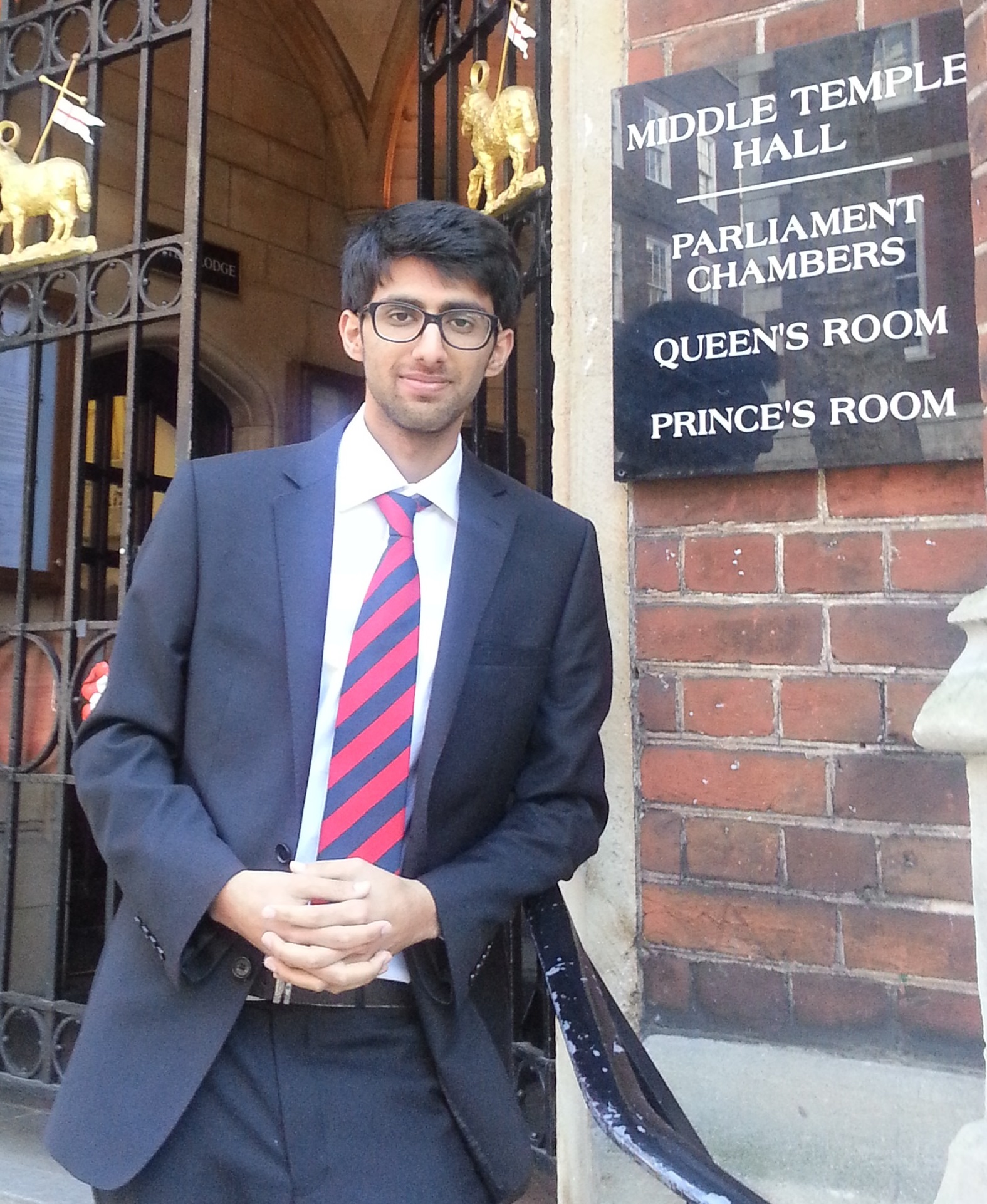
My NewVIc story: Husnain Nasim

Husnain is in his 3rd year of studying law at the university of Cambridge.

Husnain

Knowledge is empowerment and you learn as much about yourself as about the world around you.

With the intention of embarking on this great journey, I arrived at NewVIc in 2009. NewVIc was a vital stepping-stone laying down the foundations I needed to fully reach my potential. I remember reading about the relationship between law and morals in A-level law classes and this triggered my interest in the question “how can law be used as an instrument of social change?” It was also the interplay of the subjects I was studying, including History and Politics, which allowed me to appreciate how civil disobedience in the form of non-violent and peaceful protest in America and India led to legal protection of vital civil and political rights as well as the principles of equality of opportunity and freedom. Moreover, historically assessing how Britain evolved from a monarchical state to a fully-fledged democratic system answered many questions I had about how the present is linked to what has happened in the past. One recurring theme in my studies at NewVIc was the desire to further my understanding of politics and morality.

My teachers were also a major influence on me. They were passionate about their subjects and had in-depth knowledge about their respective fields. I particularly appreciated the essay feedback I received from them, as this allowed me to see where I could improve my written work and my writing style. It was this process of putting in the hard-work, receiving feedback as to how I could get better and then acting on that advice which allowed me to gradually sharpen my writing and analytical skills. I also learnt much about how to balance work and play by participating in a range of activities available at NewVIc, including the debating club, cricket academy and capoeira training! This is something that I appreciated when I progressed to university.

When I arrived at Cambridge University, I was looking forward to meeting new people and participating in the range of societies. I was in for a bit of a shock when I received my first reading list. I had to read around 100 pages for my criminal law supervision as well as dozens of cases and statutory provisions! The workload seemed to have tripled if not quadrupled from my college days. Nevertheless, I managed to get started and make a decent contribution in my supervision.

One key lesson that I have learnt at university is how to manage time and to get the most out of it. Planning is key. Apart from spending hours in front of books, I have also become a member of the Cambridge Union Society, which hosts famous speakers like the Dalai Lama, Boris Johnson and Lord Alan Sugar. I have also taken an interest in the Cambridge University Pro Bono Society and presented to homeless people on landlord and tenants’ rights and responsibilities. I am now in my third year of university and plan to start my masters in Law this year. I want to deepen my understanding of human rights and justice.

My advice for students is to remember that there is no substitute for hard-work and perseverance. This is how you achieve your goals and is the key to success.

Husnain Nasim – NewVIc class of 2011

Posted in Guest blogs, NewVIc | Tagged , , , , , | Leave a comment

Election 2015: Labour’s draft education manifesto

Will education feature as a significant campaign issue in the 2015 general election? Will the major parties be offering us distinct visions of the future of education?

It’s clear that any incoming government will inherit a divided and incoherent non-system. So, will the parties use the campaign to clarify how they see education meeting people’s needs and aspirations or will they simply be trading scandals and arguing about who would cope best with the mess?

From Labour, we now have a draft education manifesto: Education and children. The document is a first effort and can be amended over the next few months. It does not yet reflect the recommendations of the Blunkett review of the role of local authorities in education and the Husbands skills taskforce with its proposal for a National Baccalaureate for 14-19 year olds.

Education and children contains some good proposals but in my view it will need substantial revision if it is to offer voters an inspiring alternative.

The critique of our fragmented and unaccountable school system is cogent and there are welcome commitments on planning for school places, qualified teachers, careers advice, healthy schools, food standards, childcare and early years education.

However, the very first sentence of the document’s introduction firmly signals a purely economic view of education:

“For Britain to succeed in the 21st Century, we must earn our way in the world and win the race to the top, with a high skill, high wage economy. We can only build such an economy with all of Britain’s young people playing their part in making it happen.”

Where is the commitment to the purpose and value of education to individuals and society? Where is the statement about what a national education system should aim to teach all children and young people?  There’s nothing wrong with making a connection between learning and work but as an opening sentence for an education manifesto aiming to inspire people with a vision of a better society, this is distinctly lacklustre. It offers a narrow view of education serving the national economy in a competitive international market and neglects the transformative, human, social, cultural and global aspects of education. A more expansive vision can offer us a lot more than the prospect of endless competition, growth and consumption – a catastrophic “race to the bottom” in which everyone is a loser.

In the Transforming vocational education and skills section we are told that:

“The current Government has neglected vocational education, viewing it as the second class option for young people, who are not being offered a clear, gold standard vocational route through school and college. This is resulting in wasted talent, limitation on life chances and contributing to the current crisis in youth unemployment.”

Whatever one thinks of the government’s reform of further education programmes including vocational courses, it cannot be accused of neglecting this area. Vocational courses are being made more “rigorous” with reforms of content and assessment. The substantial full time vocational courses which have survived the current cull are of high quality and help many thousands of students progress to university or employment every year. The section as written seems to blame youth unemployment on vocational qualifications. Unemployment is mainly about a lack of jobs not a lack of skills. The empty phrase “gold standard” is repeated nine times as if to ward off those substandard qualifications. The document is right to point out that there is a “second-class” problem but if Labour’s new National Baccalaureate is designed as a single overarching framework which includes general and vocational elements it should offer the prospect of finally achieving the much sought-after parity of esteem.

This same section also proposes to:

“transform those colleges with top quality teaching, strong employer links, and high standards in English and Maths into new specialist Institutes of Technical Education….licensed to deliver Labour’s Tech Bacc, driving up standards of vocational education in England.”

What on earth is the point of these new Institutes of Technical Education? Where would this leave people who happen to live in areas where no college has qualified to become an Institute? If colleges are doing the right thing, they don’t need a new status. If they’re not, they need to be supported / challenged to improve. Do we really need a new institutional hierarchy in an already divided education system? This is a very odd proposal for a party which makes a virtue of not messing around with the status of schools.

The section entitled Ensuring strong local support and oversight of schools tells us that:

“A One Nation education system will deliver a radical devolution of power from Whitehall. Labour will empower local communities to have a greater say about education in their area. We will also put an end to the fragmented, divisive school system created by this Government….extend to all schools the freedom academies can use to innovate and raise standards…with these freedoms must come local oversight….real local accountability for all schools.”

The promise of restoring local accountability and some level of system planning is an essential step in the right direction and the Blunkett review proposals should fill in the gaps here. But the missing words in this section are “democratic” and “elected” – surely vital components of any genuine system of local accountability – in contrast to the government’s new network of unelected regional commissioners.

On apprenticeships, the draft promises to:

“drive up the quantity and quality of apprenticeships…expect employers to create significantly more apprenticeships.”

This is welcome, although it is worth remembering that apprenticeships are jobs, and employers need to have the jobs to offer apprenticeships – this is an economic and training issue not an educational one.

The Improving access to Higher Education section is thin on concrete proposals while claiming that:

“The government is reducing opportunities for state school pupils to get into the best universities.”

I don’t believe this can be substantiated; poorer students have not been put off applying to university – quite the opposite. And while privately educated students are still over-represented in many Russell group universities this is not a result of government policy. The “best universities” terminology is used here without being defined; does this mean the “most selective universities” or has Labour bought into the Russell group’s self definition? The issue which should be highlighted is how the whole loans system is becoming unsustainable.

Overall, then, there’s quite a bit of sharpening and polishing needed to make this a platform worthy of a party of government. I think the starting point should be to ask:

  • What are Labour’s core educational values?
  • What is the party’s vision of the purpose of education in a progressive programme for change?
  • How can this be communicated in a popular, vote-winning way?

And there are plenty of experienced people willing to help with this task.

Read more on:

The National Bacc: a one nation curriculum

One nation school, curriculum and education service

10 proposals to improve education

10 principles to shape education

Our common values, our common education

Posted in Education, Education policy, Politics | Tagged , , , , , , | 1 Comment

Post-16 funding: making the wrong choices

I agree with quite a lot of what Michael Gove says about the purpose of education and I like his championing of egalitarian aims. I welcome the fact that he has moved the Conservative party away from selection pre-16. I also like his strong commitment to a broad, liberal education for all and his rejection of academic/vocational binary thinking.

In the post-16 sector where I work, he has levelled and equalised funding for students aged 16-18 wherever they study and extended the entitlement to free school meals to college students. This has not addressed the funding gap with schools or made up for the deep cuts in student financial support but they are moves in the right direction.

However, in the post-16 sector his failure to protect funding rates and his zeal for promoting new providers risk undermining all his worthy objectives and are doing real harm to established and successful sixth form colleges with an apparent disregard for their contribution. Sixth form colleges are entirely outside the 5-16 funding ring-fence and as a result they have been hit by over £100m in cuts over the last 3 years with more to come.

Next year, my college will lose over £300,000 plus a further £120,000 the following year simply because of the number of 18 year olds we enrol. These are ambitious and hard-working young people “doing the right thing”. Because of their starting point, they need an extra year to achieve their goals and many of them will progress to university. As a result we are being charged an “aspiration tax” of nearly 3% of our budget.

At the same time the government has found £45m for a new Westminster-Harris 16-19 free school in London for around 600 students. This is the latest in a series of new 16-19 free-schools and academy sixth forms. At a time of financial restraint, the government is pouring resources into opening new post-16 providers, many of which then under-recruit because they are entering a crowded market. What is the evidence of demand for these new institutions? What will they offer which is distinctively better? Each new provider seems to be more selective than the last and each adds to the frantic competition for well-qualified 16 year olds which we all now have to engage in.

The Department for Education heaps praise on its new creations and trumpets their every success. When a highly selective 16-19 free school in our area announced that 100 of their students had at least one Russell group university offer, this was deemed worthy of national press coverage and DfE cheerleading. What went unreported was the comparable figures for our comprehensive sixth form college serving the same area: 162 this year and 137 last year.

There is an alternative; one based on success and collaboration. Invested wisely and with the involvement of existing providers, £45m could have a transformative effect on thousands of 16-19 year olds across London. The capital’s 12 sixth form colleges offer an unmatched range of courses, great value for money and have an excellent record of success and progression to university for students of all backgrounds and prior achievement. We also know how to innovate and experiment.

£45m could have funded at least 50 extra places in each college for over 10 years, helped build excellent new facilities for all students and created a city-wide network to support gifted and talented students in sixth forms across the capital working with our partner universities and employers.

Our public institutions are precious social assets and we neglect or discard them at our peril. Sixth form colleges may not have been invented by this government but we are delivering its objectives of high achievement, social mobility and social cohesion. Our enduring values have been shaped over many years with the support of our communities and we are keen to contribute to system-wide improvement.

We all know times are hard; all the more reason to invest public money wisely. So perhaps it’s time for a conservative minister to remember the value of conserving and show more confidence in tried and tested public provision by building on the best of our existing institutions.


Posted in Education, Education policy, NewVIc | Tagged , , , , , | 1 Comment

The digital college: learning from France

I have just returned from #Ecritech5, a major French digital education conference held in Nice. I was invited to give a presentation about recent developments in digital learning at Newham Sixth Form College (NewVIc).  For those who are interested and understand French, a video of my presentation will soon be available on the Ecritech site. I also gave a short video interview with Ludovia magazine, also in French, which can be seen here.

As the only non-French representative I personally ensured the conference was international. I found the whole experience fascinating and learnt a great deal, both in terms of the French approach to learning technologies but also in terms of their approach to educational change. This all made it worth my struggle to try and master the educational and technical vocabulary needed to communicate our work in a language I can speak but don’t use much.

I am very grateful to Jean-Louis Durpaire (a general inspector for national education) and Mireille Lamouroux (project manager for digital strategy at the ministry of education) for suggesting that I be invited and for making me feel so welcome. This came out of their visit to NewVIc a few years ago and the subsequent production of a training video for French colleagues about our learning resource centre. This itself arose from the fact that we regularly host French colleagues for a year at a time via the Jules Verne programme; a wondeful international mobility scheme which is fully funded by the French government.

It’s not possible to do justice to the whole conference in one blog. I would simply highlight 5 key questions which interested me:

  1. How are connected digital technologies changing learning?
  2. How are young people responding to e-learning?
  3. How do we promote equality and the central role of public education?
  4. How can we help students create their masterpiece?
  5. How does the French system support educational change and exchange?

1. How are connected digital technologies changing learning?

The introduction of digital technologies has followed the pattern of many previous technological changes. First, a phase of innovation with a few experts and enthusiasts leading the way and most people uninformed or uninvolved, the potential not yet widely understood. Second, a phase of universalisation, where the technology is widely available and many people are aware of its potential and are beginning to come to terms with its implications for their work. Third, a phase of ubiquity or banality, where the technology is so established and widespread that it is a normal, unremarkable part of life, fully integrated into everyone’s work.

Many speakers, notably Yael Briswalter from Grenoble, described the impact of e-learning on education as breaking with the “three unities” of the theatre of the classroom. This refers to the classical unities of drama developed by Aristotle and taken up by French dramatists such as Moliere and Racine in the 17th century. The unities are: the unity of action (one main plot followed throughout), the unity of place (one main location) and the unity of time (takes place within 24 hours). If one thinks of the classical classroom as the stage for a “theatre of teaching and learning” with the lesson content being contained within a specific, common lesson time and classroom location then e-learning has the potential to break with each of these unities. With on-line and particularly mobile devices, content can be drawn from multiple sources and learning can extend well beyond the classroom and lesson time. All this requires schools and teachers to rethink proximity, redesign learning spaces and the use of out-of-class learning.

Teacher-researcher Jean Francois Cerisier, from the university of Poitiers, concluded his brilliant and synoptic presentation with a quote from Marshall MacLuhan: “We shape our tools and thereafter our tools shape us” to remind us that our relationship to technology is not unidirectional or unproblematic.

  1. How are young people responding to e-learning?

Jean-Francois Cerisier shared the findings of his research on young people’s views of e-learning. While some university lecturers are dismayed by the fact that their students use social media during their study time, it turns out that what they are doing is often complementing and enhancing their studies. His view was that connected students liven up classes by drawing on wider sources to challenge their lecturers. The young people he surveyed were quite discriminating about the e-learning they were offered and did not value resources which seemed contrived and didn’t make effective use of the technology.

His team’s research also found that as opportunities to socialise in safe public spaces have receded, young people value social networks as places where they can avoid constant adult oversight. Young people use social media to create and test their social identity and to become socialised.

All this was interesting if not particularly surprising. On reflection it seems that to fully benefit from social media, young people need to have well-developed pre-existing social skills in the real world. This probably applies to other transitions; for example to communicate effectively online, people need good real-world communication skills,

  1. How do we promote equality and the central role of public education?

French educators are concerned about existing digital divides and are determined to ensure that e-learning does not widen the gap further between successful students and those who are in danger of dropping out (the “decrocheurs”). All the speakers emphasised the need to use technologies in ways which promote equality rather deepening inequalities.

There was also an absolute consensus that the market must be kept out of education and the role of commercial suppliers strictly limited. For an English educator who has to operate in a marketised system, it was refreshing that the shared values of public education were a given. Everyone seemed to be aware of the risks of subordinating education to market forces and the threat to teacher professionalism of being seen as merely coaches or guides for learners in a world of commercial learning resources. In fact, Jean-Pierre Veran, an inspector from Monpellier, described his “nightmare” vision of the future as the Illich-esque (or Mitra-esque?) deschooled society where learners simply select resources from an online marketplace and use them with little guidance or cultural context.

Jean-Francois Cerisier reminded us that in the digital age, public schools are more important than ever; playing a central role as places which organise, select and give value to our knowledge, our culture and the social practices we want to pass on.

  1. How can we help students create their masterpiece?

Olivier Rey from the education institute of the Ecole Normale Superieure of Lyon (a higher education Grande Ecole) spoke passionately about the need for students to be proud of their school and what they do there and emphasised the need for school to provide the guidance and support needed for students to learn in depth and take a critical approach to knowledge – all of which requires greater effort than simply engaging with technology. Digital technologies will change our practice just as printing and universal literacy changed them.

I particularly liked his appeal for young people to produce at least one “chef d’oeuvre” by the time they leave school; harking back to the idea of the masterpiece which an apprentice produced to demonstrate mastery. Such a “masterpiece” would demonstrate their skill, represent their learning and symbolise their transition to adulthood by making a recognised community contribution. It would be more tangible than exam certificates and could clearly, but not necessarily, involve a digital product, although it should be more than simply an e-portfolio.

For me, this resonated strongly with our idea of using the extended research project, available in England, as a way of accrediting students’ independent research or collective effort, such as a performance or art-work. Sharing and celebrating these masterpieces could be an important rite of passage for school leavers and a powerful way to link school and community.

  1. How does the French system support educational change and exchange?

One can’t spend time with French educators without being impressed by their commitment to their national education system (“l’Education Nationale”) based on shared values (“valeurs republicaines”). Everyone sees themselves as being engaged in a joint national endeavour whose practices may be contested and debated but which ultimately is a common national project which commands popular support and cross-party consensus.

In particular, the role of inspectors is quite different to that of OfSTED in England. Inspectors in France are influential, committed civil servants who know the schools, the heads and the staff on their patch and work in partnership to improve the whole system. Their shared concerns and the whole tone of their conversation are about learning, disseminating best practice, solving common problems, promoting sustainable and equitable development. They are in the system for the long term and they take a long term view of the schools and professionals who depend on them.

Naturally, in such a system, there are hierarchies and bureaucracies and these can sometimes get in the way of progress. But the French are aware of these risks and seem to be creating ways to promote innovation and grassroots initiatives and speed up change.

I was left thinking how much more our “system” could achieve if it really was a system; a “national education service” in fact. Not fossilised or static, but focused on achieving nationally agreed objectives through public service values and without all the hierarchies and competitiveness which result from a market.

Wishful thinking? Utopian? Well, if the French can do it….

I hope to blog further about some of these issues soon and am also planning a glossary of terms for anyone who wants to try to break through the French-English education language barrier in either direction. I welcome comments in either English or French about any of this.

Posted in Education, Education policy, Teaching and learning | Tagged , , , | Leave a comment

Aspiration tax for the many, jackpot for the few

Now that colleges have received their funding allocations for next year, we know the full extent of the “aspiration tax” on 18 year olds. At Newham Sixth Form College (NewVIc), 472 of our students are over 18 and they will each lose the college about £635 of funding for the 2014/15 academic year amounting to a total cut of around £300,000. This has been “mitigated” by limiting the cut to 2% of the total college budget, leaving a further £119,000 to be cut in the following year, another £252 more per student. This makes NewVIc the hardest hit sixth form college in the country.

I have already written here about how harsh this particular cut is, as it targets those very students who have worked the hardest to progress. They often start from quite low achievement at school or face particular barriers beyond their control. We have shown here that these 3-year students often do very well and many progress to university. Colleges have no way of targeting the cut on these learners as they are on the same courses as their younger classmates and so the hardest hit colleges are those which are the most inclusive and willing to help students take the opportunity to aim high and progress beyond the arbitrary 5 A-C benchmark of success at 16. In short, every student in these colleges will suffer.

When asked about this in parliament, the government minister responsible for colleges, Matthew Hancock blamed the recession and the need to find savings from somewhere:

“…we had to make this change because of the mess left in the public finances.” (Education questions 24/03/14, column 13)

However, in the very same week we received this bad news in our allocation, we also learned of the planned £45million investment in a super-selective new 16-19 free school run by a partnership of the private fee-charging Westminster school and the Harris academy chain. This was widely condemned but robustly defended by another government minister, Lord Nash who described it as:

“…an exciting and innovative project focused on the poorest in society that has never been tried before….giving hundreds of children from low income families the kind of top quality sixth form previously reserved for the better off.”

It is not clear precisely what the Harris Westminster sixth form offers which has not been tried before. What justifies such confident hype, other than being super-selective? No doubt, its cherry-picked students will do very well but will they do better than they would have in London’s excellent range of existing sixth form providers which offer much better value for money? Given that £62million has already been spent on 9 new 16-19 free schools, not all of which are full, it might have been timely to have a pause in new developments to see how well those in the first phase perform.

£45million invested in London’s successful and cost-effective sixth form colleges could have funded the 500 learners proposed for the Harris Westminster sixth form for the next 15 years with several million left over for capital investment to build new facilities in each of the 12 colleges. It could also have created a fund to support gifted and talented students across the capital wherever they study benefiting tens of thousands of aspirational young people. This kind of funding could have genuinely transformed the prospects of young Londoners if decisions about how to invest it had included the very people who have a track record of delivering post-16 success in every part of Greater London.

For those of us trying to provide our students with as much, or more, stretch and challenge next year while making further budget savings, news of this project was evidence that our government seems prepared to invest in a very small number of already successful learners for whom there is no demonstrable shortage of provision at the expense of a very large number of students for whom a bit more investment could make a big difference. In the words of the NUT petition organised in response to this news, it is quite simply evidence of  the wrong priorities.

Posted in Education, Education policy, NewVIc, Politics | Tagged , , , , , | 1 Comment

Russell group offers: hype and reality

Comprehensive sixth form college: 162

Selective 16-19 free school: 100

I wrote here about the misleading use of Russell group offer data to demonstrate the impact of a new 16-19 free school in our area. The fact that 100 students from the highly selective London Academy of Excellence had at least one Russell group offer was seen by some as a triumph worthy of national press coverage.

While not wishing in any way to minimise this achievement, I pointed out that in the previous year, 137 students from Newham sixth form college (NewVIc) had Russell group offers and that 60 of these had subsequently progressed to Russell group institutions, a big improvement on the previous year.

We now have the data for this year and can compare like with like. With only 4 applicants still to hear about potential Russell group offers, 162 NewVIc applicants have one or more Russell group offers, a further increase on last year. Overall, 226 Russell group offers have been made to NewVIc students.

It has not been our choice to engage in a competition about offer numbers and we have never done this before, but if new post-16 providers are going to use offer numbers to claim success, it seems only fair for existing providers to do the same. Our mission is broad and comprehensive and we don’t regard Russell group numbers are the key measure of our students’ success but we do recognise that historic progression rates to the more selective universities have been lower than average in our borough despite very high progression rates to university overall. We want our students to benefit from the full range of university opportunities available and our Honours programme has been very successful in increasing the number of students progressing to more selective universities in an increasingly competitive HE market.

We try not to refer to Russell group universities as “best”, “top” or “elite”. They are brilliant places to study, but so are many other universities. These are simply among the more selective on average and we are increasingly successful in getting students to progress to them.

So perhaps we can tone down the hype and try to avoid making outlandish claims. Instead, let’s celebrate the achievements of all students as well as the fact that different kinds of sixth form provider are making their contribution to an increase in progression to the most selective universities. But please…don’t ignore the contribution of established and comprehensive sixth form colleges like ours.

Posted in Education, NewVIc | Tagged , , , , , | 1 Comment

Existing state-funded sixth forms offer better value for money

Private fee-charging schools promote themselves as market leaders in post-16 education and are increasingly involved in launching new publicly funded sixth form projects such as the London Academy of Excellence and Westminster Harris sixth form. But do they offer value for money? This is surely an important question for whoever is footing the bill, whether fee-paying parents or the state.

The method used in this analysis is very simple. It is based on a crude assumption that A level grades per student are the key output. The income per student is divided by A level points per student to obtain a measure of value for money or “pounds per points”. To keep things simple, only A level points are used.

Newham sixth form college (NewVIc) is used as an example of a publicly-funded sixth form provider simply because I have the data to hand. It is compared to 9 leading London-based fee-charging private sixth forms which offer day (non-boarding) places. Because NewVIc has a comprehensive intake and therefore lower average grades overall, receives substantial additional funding for serving an area of high disadvantage and also attracts inner London weighting, the cost per A level point in other publicly funded sixth form colleges is likely to be even lower than this.

It turns out that every A level point achieved by students at NewVIc costs around £9 whereas the comparable cost in a private sixth form is at least £14 and in some cases above £20.

2013 Final year A level students Income per student / year (£) Points per A level candidate Cost per A level point (£)
Publicly funded sixth form:
Newham sixth form college (NewVIc) 414        5,783 636.8 9.08
Private fee-charging sixth forms:
Dulwich college 194       16,488 933.7 17.66
Westminster school 184       24,390 1142.2 21.35
St.Paul’s boys school 172       20,853 1106.0 18.85
Highgate school 150       17,475 977.1 17.88
Bancroft’s school 123       14,130 966.7 14.62
City of London boys school 119       13,803 982.9 14.04
Forest school 117       15,081 907.0 16.63
St.Paul’s girls school 104       21,168 1048.8 20.18
City of London girls school 90       14,409 1011.6 14.24

There may be many reasons people go private but if the idea is “you get what you pay for” they are not getting a particularly good deal. These providers are also highly selective which makes the job of achieving high average grades much easier. Plenty of NewVIc students achieve the high point scores typical of these private providers and many progress to selective universities although our average point score is lower overall. 60 of our students progressed to Russell group universities last year and our top 32 students achieved an average of 1,000 A level points each typical of the selective private sixth forms.

What this initial analysis suggests is that existing public sector sixth forms are highly cost-effective in terms of results achieved and that where these have a good track record, it would be wise to invest in them, particularly where there is a real need for new places.

More work is needed on value for money in post-16 education and to understand the extent to which different types of provider add real value. But the contribution of private sixth forms is unlikely to be very cost-effective.

Posted in Education, Education policy, NewVIc | Tagged , , , , | Leave a comment

My NewVIc story: Airey Grant

Airey Grant

Airey GrantMy journey begins like that of every other ambitious student; I had big ideas about what I could become when I got older and started to make plans for how I would get there. Although my parents were innocently feeding my ambitions with the “endless possibilities that exist in the world of work”, like the famous saying “too many cooks spoil the broth” and I slowly came to realise that too many ambitions can distract one’s focus. At this point I needed to have one goal, one occupation, one calling that I could commit my life to and build something amazing out of.

Attending Newham sixth form college (NewVIc) brought me closer to this goal. I was happy to be engaged in many extracurricular activities and inspired by great teachers. The teaching I received from the likes of Nazli Koc, Annie John and Saci Lloyd waved away many clouds of uncertainty. I can still remember sitting at the back of room B281 enjoying lectures on the Vietnam war and the civil rights movement. After every lesson I asked myself, ‘why am I so motivated and engaged by this? I asked myself these same questions whilst participating in student ventures as I began to develop a strong interest in business. Despite all this, I was still unsure about which career option to take.

During a long summer holiday preparing for what university had in store for me, I slowly came to my senses. I realised that the combination of good teaching and my involvement in college business ventures had left its mark. In the time I spent reminiscing about good times, my nostalgia solidified and I had an epiphany which led to a clear question: “what if I could inspire young people to turn their interests into a business venture through teaching and practical experience?” This was an important question because from this point I knew that there would be nothing more fulfilling than developing a company that could have the same impact on young minds as NewVIc had on me. My mission was now to provoke the curiosity of young people and maybe, just maybe, get them to think about turning their interests into a venture they could be proud of.

So at university I tried to convert these ideas into action. Together with Nathan, a close friend, I co-founded a company called Guerrilla London. The first line of our mission statement was: ‘we want to train young people in business practices through our entrepreneurial fashion brand’. We learned a lot very quickly and we trained 20 young people by giving them work experience in retail. Although it didn’t work out in the end, working on the business was exciting. The most important thing that we all took from this experience is that we shouldn’t be afraid to fail. What really matters is our ability to bounce back and learn from our mistakes. This knowledge is invaluable as it gets you through the hard times and pushes you to develop something even greater than before!

Now I am delivering exciting, work-based tasks to students with my new company. At Stimuli Development, we are working with university and college students to get young people employed and more entrepreneurial. With NewVIc’s help we are making good progress and we are ready for the challenges to come. Every time I sit back and think about the good times I had at college, my experiences since then and how this all led up to the development of my current company, I always end my thoughts with this clear maxim: ‘Good teachers teach. Great teachers inspire’.

Airey Grant – NewVIc class of 2010

Website: Stimuli-ltd.com                             Twitter: @Stimuli_dev

LinkedIn: Stimuli Development ltd.          Facebook: Stimuli Development ltd.


Posted in Guest blogs, NewVIc | Tagged , , , | Leave a comment

Culture, tradition and values in education

Eric Robinson, who died in 2011, was an outstanding and progressive college principal and polytechnic director. He was appointed deputy director of North East London Polytechnic (now the University of East London) in 1970, led Bradford College from 1973 to 1982, and then Preston Poly, later Lancashire Poly which subsequently went on to become the University of Central Lancashire. Eric worked to create a comprehensive form of higher education; a “people’s university” which could contribute to the education of all and which saw people both as workers and as citizens of a democratic society with a right to share the best of human values and culture.

Eric gave an excellent Caroline Benn memorial lecture in 2009. His critique of economic instrumentalism, the commodification of education and the promotion of institutional choice and diversity was spot on. He eloquently reminded us that markets and privatisation cannot deliver high quality education for all. Five years on, this message is more urgent than ever.

But it was also refreshing to hear him say so much about the role of education in the transmission of culture, the system’s loss of respect for certain traditions and its lack of grounding in social and moral values. These are themes which I think are worthy of greater discussion on both left and the right.

The cultural transmission role is often neglected by educational progressives and even seen as rather a suspect area; territory better left to conservatives as the natural traditionalists. But it was Antonio Gramsci from the left who affirmed the role of school in instituting cultural norms, values and hierarchies. He argued for an egalitarian education system which could give all young people the opportunity to engage critically with the best that was on offer from the cultural traditions available.

We cannot allow the right to be the only champions of a broad liberal education for all. Rather than giving up on the universal liberal education project because it’s “not relevant” or “too challenging” for some young people we need to find ways to democratise it and make it accessible  without dumbing down. We need to draw on more diverse traditions and offer access to both “popular” and “high” culture to all without elitism, snobbery or exclusivity.

Equally, we cannot allow the right to get away with the claim that progressive and secular educators have no moral compass or that cultural diversity or multiculturalism inevitably lead to a weakening of universal values or social solidarity. The real threat to these comes from an excessively narcissistic, individualistic and consumerist culture promoted by commercial interests. One of the key functions of education in a good society should be to put into practice agreed universal values. We should be arguing for schools and colleges to model the good society, to promote solidarity and egalitarian, democratic practices even if the society around them seems deficient in these. As Eric said at the end of his lecture: “In evading the cultural, social and moral dimensions of education we are betraying our children and cheapening ourselves”.

Some strands of modern educational thought seem to lack any respect for tradition; jettisoning the values and lessons of the past and obsessing over novelty and superficial change. A-historical assumptions such as: “globalisation is a completely new phenomenon”, “young people are digital natives and learn in a totally different way”, “the skills needed for tomorrow’s jobs are radically new” cannot be accepted uncritically and need to be placed in a broad context and challenged. In some cases, they may turn out to be transient or surface rather than fundamental changes. We need to respect our painstakingly learnt traditions of rational thinking and critical evaluation and rely on robust evidence before rejecting “old” ideas.

New ideas and new ways of working will clearly be needed to address the global challenges we face and education must prepare people for this. But all new ideas come from somewhere. They arise from people’s critical understanding and engagement with the old ideas; after all they’re all we’ve got! We need to find ways to describe a democratic, egalitarian and critical traditionalism.

In arguing against narrow instrumentalism I think it is wrong to talk of education for its own sake. We engage in learning for our own sake; there’s always a reason for our learning even if only to satisfy our curiosity or to get pleasure from following an apparently useless line of thought to its conclusion. So I don’t think there’s anything wrong with a utilitarian view of education as long as our view of usefulness is broad, social and humanistic and not narrow, purely economic or individualistic.

In the first half of the 19th century, the chartists called for “really useful knowledge” which would help working class people understand their situation and do something about it. Perhaps we need to describe a 21st century version of “really useful” knowledge and skills which help people fully realise themselves as individuals, nurturing family and community members, citizens and workers.

Adapted from an article written in April 2010

Posted in Education | Tagged , , , , , , , , | 3 Comments

Progs and trads: is a synthesis possible?

Dialectical pairings like “radical traditionalism” or “revolutionary reformism” may seem paradoxical but instead of cancelling each other out, the contradictions they contain can make us think about each idea in relation to the other. This is not just an attempt to please everyone or imply that they’re really the same thing. The two ideas are in real tension and this makes us consider whether a synthesis is possible.

In education, the “progressive” versus “traditionalist” debate is a constant. Like the Mods and Rockers of the 1950’s, the Progs and Trads can get pretty entrenched and each side has its evidence base and theorists. But is it possible that “progressive traditionalism” or “traditional progressivisim” might be fruitful pairings?

We need to distinguish between discussions about aims, those about content and those about methods. People can find themselves on different sides depending on what is being discussed.

So if we were trying to work out a Prog / Trad synthesis what questions might we ask? Here is a very rough first attempt at identifying some possible common ground:

Aims:

  • Can we agree that we want all our students to become autonomous, skilled learners and well informed, critical citizens, to develop their critical faculties and to become capable of challenging and questioning received knowledge?
  • Can we agree that we want all our students to be able to function confidently and effectively in society as it is, even if they may wish to change it?

Content:

  • Can we agree that we need to teach something and therefore to make some judgements about what all our students need to know?
  • Can we agree that those judgements are too important to be left entirely to teachers and that there needs to be some democratic process to establish the broad aims and content of educational programmes?
  • Can we agree on the importance of knowledge while recognising that there is a debate to be had about what knowledge matters and that the choice of what knowledge to teach is not neutral or value-free; it is shaped by the culture, values, history and power structures of our society?
  • Can we agree that we need to select “canons” from the culture while recognising their limitations and, having mastered them, our students need the skills to challenge them, contest them and reach beyond them.

Methods:

  • Can we agree that teaching requires a transfer of knowledge and that students can’t “discover” what they don’t know without some external input?
  • Can we agree that students often learn best by following their own curiosity, by tackling problems and asking questions which seem important to them?
  • Can we agree that we need to justify what we do in our classrooms; that students need to understand why we do what we do even if it is not always immediately “fun”, “interesting” or “relevant”?
  • Can we agree that learning by doing works well and that rote-learning is not a very satisfactory way to learn most things?
  • Can we agree that we still have a lot to learn about how students acquire knowledge and skill?

Is it so difficult to answer “yes” to all these questions? Doing so offers the possibility of a real synthesis of our conservative and progressive impulses. It means wanting to pass on our inherited knowledge and traditions and apply the tests of truth, reason and good judgement to everything we study. It also means acknowledging that society is constantly changing and that we need to be open to different ways of seeing the world and to equip ourselves with the knowledge and skills to bring about change for the better without knowing in advance what that change might be.

Does this all feel too proggy? Or too traddy? Such a synthesis would be opposed as too proggy by anyone who believes that our society is pretty much the best it can be and that the knowledge and skills which are most valued today are undoubtedly the only ones worth acquiring and that education is mainly about preparing people to fit into the social structure as it is now, with all its current inequalities and hierarchies. It would also be opposed as too traddy by anyone who believes that there are no universal human values at all, that knowledge is far too provisional to be worth bothering about and that education should allow learners to roam freely with no direction or structure following some natural instinct which comes from within them.

In his brilliant short book “Experience and Education” written in 1938, John Dewey tackled the prog / trad debate of the day, reminding his readers that the “new” education had developed as a reaction to the excesses of traditional education; handing down a static body of knowledge, drilling students and valuing docility and obedience over questioning and participation. But he also warned of the dangers of rejecting all claims of authority or control and all the aims and methods of the “old”. Dewey then went on to develop a new philosophy of experience as a basis for education. “Experience and Education” offers us some very clear thinking which is as relevant in 2014 as it was in 1938.

There is much benefit in a prog / trad dialogue if it starts with agreement about values and if it is based on a rigorous analysis of all our assumptions about aims, content and methods. If we can engage in such a dialogue openly and constructively we might be able to move beyond some of the entrenched positions, faddishness and misunderstandings and make some real progress.

Posted in Education, Teaching and learning | Tagged , , , , , , | 6 Comments

Guess what? Vocational students go to university too

Zakiyah, Shah, Robyn, Natasha and Daiva all have something in common; they are high achieving vocational students who completed advanced courses at NewVIc last year. Together with many others, they achieved the highest possible grades. In their case in: construction, mechanical engineering, childcare, IT and travel & tourism. Some also achieved high grades in an additional A level subject and all 5 progressed to Russell group universities: University College London, Queen Mary University of London, Birmingham and Sheffield. They are studying degrees in: construction project management, mathematics, education, computer science and Japanese studies respectively.

These 5 are among the 13 vocational students who progressed to Russell group universities. This is a small but significant group within the 418 NewVIc vocational students who progressed to university overall in 2013 and the 60 who progressed to Russell group institutions overall. The majority of these were black and minority students living in so called deprived postcodes, over 40% would probably have been eligible for free school meals had we been funded to provide them, and 130 of them came through the 3 year route, the final year of which is about to lose 17.5% of its funding.

Thanks to the vocational qualifications they achieved, these 418 young people now have the opportunity to pursue interesting and valuable professional careers in: dance, theatre studies, surveying, engineering, accounting, law, sports science, architecture, tourism, media, marketing … to mention just a few.

The success of these young people is built on the intensive and challenging vocational programmes they followed; courses requiring the development of deep levels of professional knowledge and mastery. To achieve high grades, students will have produced outstanding assignments, projects and portfolios demonstrating the application of extensive knowledge and a broad range of interconnected skills. This is why so many universities value the excellent preparation they offer for many applied degrees.

Obviously, we are as proud of these achievements as the students are themselves. We celebrate the confidence, creativity and mastery demonstrated by these young people. But is this pride echoed by our national politicians and is the celebration reflected in our national media? Do our policy-makers really understand vocational education?

Sadly, the tone of the national conversation about vocational qualifications is more often distrustful than celebratory; questioning their quality and rigour, making unflattering comparisons with A-levels and implying they are less challenging because they have less external assessment. Substantial and demanding programmes have been confused with smaller or less stretching ones sending out a message of low quality overall. The contradictory rhetoric around vocational courses has done much harm.

Then there is the confused rhetoric of the “forgotten 50%” with its implication that vocational courses are for students who don’t want to, or won’t, go to university. Our experience is that this is clearly not the case: 83% of our advanced vocational students applied and 85% of them obtained university places last year.

So it’s time to really value vocational learning. The reform of vocational qualifications in progress is a welcome attempt to clarify which qualifications are “high value”. The sooner these “high value” vocational qualifications are approved the sooner the many thousands of brilliant students like Zakiyah, Shah, Robyn, Natasha and Daiva can start to get due recognition for their achievements.

 This is an updated version of “It’s time to really value vocational learning” from 2013

Posted in Education, NewVIc | Tagged , , , , , | 4 Comments